|
Canine and Feline Pemphigus Foliaceus—an Update on Pathogenesis and Treatment
犬和猫落叶型天疱疮——发病机制和治疗的最新进展(2024)
作者:Tyler J.M. Jordan, DVM, PhD, Petra Bizikova, MVDr, PhD
翻译:王帆
KEYWORDS
关键词
Dogs Cats Autoimmunity Autoantibodies Acantholysis Neutrophils
犬;猫;自体免疫;自体抗体;棘层松懈;中性粒细胞
KEY POINTS
重点
Pemphigus foliaceus (PF) is one of the most common autoimmune skin diseases of dogs and cats and is histologically defined by loss of cell-to-cell cohesion of keratinocytes within the superficial epidermis, a process known as “acantholysis.”
The pathologic mechanisms that mediate acantholysis and clinical disease in canine and feline PF remain poorly understood but appear to involve immune dysregulation and immunoglobulin G autoantibodies that are directed against the cell surface of keratinocytes.
While canine and feline PF are characterized by prominent neutrophilic inflammation, the role and relative contributions of neutrophils to the pathophysiology of both diseases have not yet been determined.
Treatment of canine and feline PF currently relies on the long-term to lifelong prescription of immunosuppressive drug regimens that traditionally involve systemic glucocorticoids, azathioprine, cyclosporine, mycophenolate mofetil, and/or chlorambucil depending on the affected species.
落叶型天疱疮(PF)是犬和猫最常见的自体免疫性皮肤病之一,其组织学定义为表皮浅层角质形成细胞的细胞间黏附性丧失,这一过程被称为“棘层松解”。“
介导犬和猫PF棘层松解和临床疾病的病理机制仍不清楚,但似乎与免疫失调和针对角质形成细胞表面的免疫球蛋白G自体抗体有关。”
虽然犬和猫PF的特征是显著的中性粒细胞炎症,但中性粒细胞在这两种疾病的病理生理学中的作用和相对贡献尚未确定。
目前,犬和猫PF的治疗依赖于长期至终身的免疫抑制药物治疗方案,传统上涉及全身糖皮质激素、硫唑嘌呤、环孢素、吗替麦考酚酯和/或苯丁酸氮芥(视受累物种而定)。
|
Abbreviations
缩写
DSC1 desmocollin-1
FIV feline immunodeficiency virus
IL interleukin
MMF mycophenolate mofetil
PF pemphigus foliaceus
PSGAG polysulfated glycosaminoglycan
TPE therapeutic plasma exchange
DSC1桥粒胶蛋白-1
FIV猫免疫缺陷病毒
IL白细胞介素
MMF吗替麦考酚酯
PF落叶型天疱疮
PSGAG多硫酸化糖胺聚糖
TPE治疗性血浆置换 |
INTRODUCTION
介绍
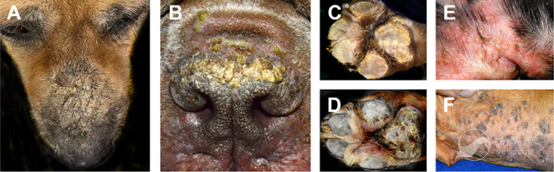
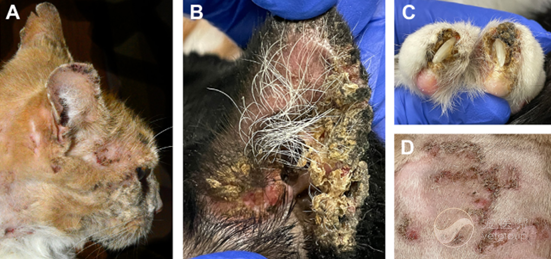
Pemphigusfoliaceus (PF) has long been recognized as one of the mostcommonauto immune skin diseases of dogs and cats. PF in both species is clinically characterized by the development of transient pustules that quickly rupture and evolve into superficial erosions, crusting, alopecia, and scaling. Dogs with PF most commonly present with skin lesions involving the nasal planum, dorsal muzzle, periocular region, pinnae, paw pads, and/or trunk (Fig. 1). Similarly, cats with PF most commonly present with skin lesions involving the nasal planum, haired face, pinnae, and/or claw folds (Fig. 2). Skin lesions in both species are often bilaterally symmetric and may gener alize to other body regions.Up to half of affected dogs and cats present with systemic signs of illness including lethargy, depression, inappetence, pyrexia, weight loss, and varying degrees of pruritus and/or pain. Not surprisingly, PF has been reported to negatively impact the quality of life of affected dogs, cats, as well as their owners.
落叶型天疱疮(PF)一直被认为是犬猫最常见的自体免疫性皮肤病之一。两种PF的临床特征是发展为一过性脓疱,脓疱迅速破裂并演变为浅表糜烂、结痂、脱毛和皮屑。PF患犬最常出现的皮肤病变包括鼻平面、口周背侧、眼周区域、耳廓、爪垫和/或躯干(图1)。同样,PF患猫最常出现的皮肤病变包括鼻平面、面部有毛皮肤、耳廓和/或爪褶(图2)。两种动物的皮肤病变通常是双侧对称的,可能延伸到机体的其他部位。多达一半的患犬和患猫出现系统性疾病症状,包括嗜睡、抑郁、食欲不振、发热、体重减轻和不同程度的瘙痒和/或疼痛。不出所料,据报道,PF对患犬、患猫以及它们的主人的生活质量产生了负面影响。
A diagnosis of PF in both species is established by evaluating each individual ani mal’s history, clinical presentation, and lack of response to appropriate antimicrobial therapy, along with the identification of characteristic cytologic and histopathologic findings. Over the past 2 decades, several advances have been made in our under standing of the pathogenesis of canine and feline PF as well in the therapeutic options that are available to manage both diseases. The current knowledge on the pathogen esis of canine andfeline PF, aswell ascurrent andemergingapproachestoitsmedical management, will be reviewed herein.
两种动物PF的诊断是通过评估每只动物的病史、临床表现、对合理抗生素治疗无效,以及鉴定特征性的细胞学检查和组织病理学结果。在过去的20年里,我们对犬和猫PF的发病机制的了解以及对这两种疾病的治疗选择取得了一些进展。本文将对犬、猫PF的病原学、药物治疗的最新进展作一综述。
Fig. 1. Canine pemphigus foliaceus (PF) is clinically characterized by the development of transient (E) pustules that quickly rupture and evolve into (A-D, F) crusting, erosion, scale, and alopecia. Skin lesions in canine PF often involve the (A) dorsal haired muzzle, (B) nasal planum, periocular region, (E) pinnae, and (C,D) footpads, but may (F) generalize to other body regions as well.
图1。犬落叶型天疱疮(PF)的临床特征是发展为一过性(E)脓疱,迅速破裂并演变为(A-D, F)结痂、糜烂、皮屑和脱毛。犬PF的皮肤病变通常涉及(A)口周背侧有毛皮肤,(B)鼻平面,眼周区域,(E)耳廓和(C,D)爪垫,但也可能(F)发展到机体其他区域。
Fig. 2. Feline PF is also defined by the development of pustules that quickly rupture and evolve into (A-D) crusting, erosion, scale, and alopecia. Skin lesions in feline PF frequently involve the (A, B) pinnae, face, and (C) claw folds, but may (D) generalize to other body re gions as well.
图2。猫PF的定义还包括脓疱迅速破裂并演变为(A-D)结痂、糜烂、皮屑和脱毛。猫PF皮肤病变经常累及(A, B)耳廓、面部和(C)爪皱褶,但也可能(D)发展到机体的其他部位。
PATHOGENESIS
发病机制
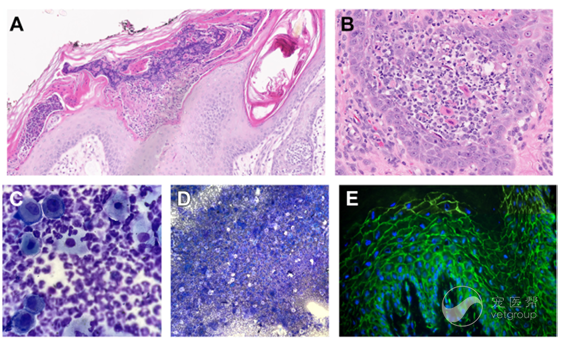
Both canine and feline PF are diseases characterized by loss of cell-to-cell cohesion of keratinocytes within the superficial epidermis, a phenomenon known as “acantholysis.” The identification of dissociated epidermal cells, or “acantholytic keratinocytes,” is a diagnostic hallmark of canine and feline PF and crucial for confirming the diagnosis. Acantholytic keratinocytes can be identified in both cytologic prepara tions as well as skin biopsies from the lesional skin of affected dogs and cats with active disease (Fig. 3). Interestingly, acantholytic keratinocytes in canine and feline PF are almost always accompanied by marked neutrophilic inflammation, which is often intermixed with eosinophils. Indeed, both canine and feline PF are his tologically characterized by the development of intraepidermal pustules containing large numbers of nondegenerate neutrophils and acantholytic keratinocytes.While both canine and feline PF have been found to be associated with circulating and tissue-bound immunoglobulin (Ig) G autoantibodies, neutrophilic inflammation, and dysregulation of the immune system, further research is needed to clarify the roles and relative contributions of each to mediating acantholysis and clinical disease.
犬和猫PF,其特征是表皮浅层角质形成细胞的细胞间黏附性下降,这种现象被称为“棘层松懈”。分离的表皮细胞或“棘层松解性角质形成细胞”的鉴定是犬和猫PF的诊断标志,对确诊至关重要。棘层松解性角质形成细胞可在患活跃性疾病的犬和猫的病变皮肤的细胞学样本和皮肤活检中发现(图3)。有趣的是,犬和猫PF中的棘层松解性角质形成细胞几乎总是伴有明显的中性粒细胞性炎症,这种炎症常与嗜酸性粒细胞混合。事实上,犬和猫PF的组织学特征都是表皮内脓疱的形成,其中含有大量非退行性中性粒细胞和棘层松解性角质形成细胞。虽然已经发现犬和猫的PF与循环和组织结合的免疫球蛋白(Ig) G自体抗体、中性粒细胞性炎症和免疫系统失调有关,但需要进一步的研究来阐明各自在介导棘层松解和临床疾病中的作用和相对贡献。
Fig. 3. The presence of large numbers of dissociated epidermal cells, or “acantholytic kera tinocytes,” accompanied by marked neutrophilic inflammation is a defining hallmark of both canine and feline PF. Acantholytic keratinocytes and nondegenerate neutrophils can be identified in both (A, B) histologic and (C, D) cytologic samples collected from animals with active skin disease. Canine and feline PF are also characterized by the presence of (E) antikeratinocyte immunoglobulin (Ig) G autoantibodies, which can be found in the periph eral circulation as well as skin of affected animals.
图3。大量分离的表皮细胞或“棘层松解性角质形成细胞”伴有明显的中性粒细胞炎症是犬和猫PF的一个决定性标志。从患活活跃性皮肤病的动物采集的(a, B)组织学和(C, D)细胞学样本中均可识别棘层松解性角质形成细胞和非退行性中性粒细胞。犬和猫PF的特征还包括存在(E)抗角质形成细胞免疫球蛋白(Ig) G自体抗体,这种抗体可在外周循环和患病动物的皮肤中发现。
Autoantibodies
自体抗体
Dogs with PF have been shown to possess IgG autoantibodies that are directed against keratinocyte cell surfaces which can be found in both the peripheral circulation and skin of affected dogs (see Fig. 3). The pathogenicity of anti-keratinocyte IgG in canine PFwasfirst established in a pivotal study published in 2009. In this study, IgG antibodies were purified from the sera of dogs with PF, as well ashealthy control dogs, and were passively transferred to neonatal laboratory mice by intradermal injection. Neonatal mice that received IgG antibodies from dogs with PF, but not healthy control dogs, developed histologic acantholysis and macroscopic blisters at the injection site. Interestingly, IgG antibodies from dogs with PF were found to induce skin disease in mice in the notable absence of infiltrating neutrophils, sharply contrasting what is seen in naturally occurring canine PF.
研究表明,PF患犬具有针对角质形成细胞表面的IgG自体抗体,这种抗体在PF患犬的外周循环和皮肤中都可以发现(见图3)。抗角质形成细胞IgG在犬PF中的致病性是在2009年发表的一项关键研究中首次确定的。本研究从PF患犬和健康对照犬血清中纯化IgG抗体,并通过皮内注射的方式被动转移给新生实验小鼠。接受PF犬IgG抗体(而非健康对照犬)的新生小鼠在注射部位出现组织学棘层松解和肉眼可见的大疱。有趣的是,研究发现,PF患犬的IgG抗体在明显没有中性粒细胞浸润的情况下,引发小鼠出现皮肤病,这与自然发生的犬PF形成了鲜明的对比。
It was later shown in 2012 that over 80% of dogs with PF possess circulating IgG autoantibodies that bind to desmocollin-1 (DSC1). Desmocollin-1 is a transmem brane glycoprotein of intercellular adhesion complexes known as “desmosomes” found within the superficial epidermis and plays a critical role in maintaining the cohesion, structure, and functional integrity of the skin. Importantly, the concentration of anti-DSC1 IgG in canine PF sera appears to correlate with disease activity in affected dogs suggesting they may play a key role in disease physiology. However, the pathogenicity of DSC1-specific IgG autoantibodies in canine PF has not yet been directly established or proven.
2012年的研究表明,80%以上的PF犬具有与桥粒胶蛋白-1(DSC1)结合的循环IgG自体抗体。桥粒胶蛋白-1是细胞间黏附复合物(称为“桥粒”)的跨膜糖蛋白,发现于表皮浅层,在维持皮肤的粘合、结构和功能完整性方面起关键作用。重要的是,犬PF血清中的抗DSC1 IgG浓度似乎与患犬的疾病活动相关,这表明它们可能在疾病生理学中发挥关键作用。然而,DSC1特异性IgG自体抗体在犬PF中的致病性尚未直接建立或证实。
In human PF, IgG autoantibodies have been shown to induce acantholysis through several mechanisms including direct interference with binding of adjacent keratino cytes to one another (ie, through “steric hindrance”), as well as activation of intracellular signaling pathways that lead to internalization of desmosomal components and rearrangement of the keratinocyte cytoskeleton. While anti-keratinocyte IgG in canine PF have been shown to be pathogenic, the specific mechanisms by which they induce acantholysis and clinical disease remain unknown. Furthermore, it remains unknown whether the pathogenicity of antikeratinocyte IgG in canine PF is attributed to the subset of circulating IgG autoantibodies that target and bind to DSC1.
在人PF中,IgG自体抗体已被证明通过几种机制诱导棘层松解,包括直接干扰相邻角质形成细胞之间的结合(即通过“空间位阻”),以及激活细胞内信号通路,导致桥粒成分内化和角质形成细胞骨架重排。虽然犬PF中的抗角质形成细胞IgG已被证明具有致病性,但它们诱发棘层松解和临床疾病的具体机制仍不清楚。此外,尚不清楚犬PF中抗角质形成细胞IgG的致病性是否归因于循环中靶向并结合DSC1的自体抗体亚群。
Similar to dogs, cats with PF have also been found to possess tissue-bound and circulating IgG autoantibodies that bind to the cell surface of keratinocytes. While it is assumed that anti-keratinocyte IgG autoantibodies in feline PF play a key role in mediating acantholysis and clinical disease, no studies have been performed to confirm or deny this theory. The specific autoantigen(s) targeted by antikeratinocyte IgG autoantibodies in feline PF also remains unknown.
与犬类似,PF患猫也被发现具有与角质形成细胞表面结合的组织结合和循环IgG自体抗体。虽然目前认为猫PF中的抗角质形成细胞IgG自体抗体在介导棘层松解和临床疾病中起关键作用,但尚无研究证实或否认这一理论。猫PF中抗角质形成细胞IgG自体抗体靶向的特异性自体抗原也仍然未知。
Neutrophils
中性粒细胞
Both canine and feline PF are characterized by prominent neutrophilic inflammation within lesional skin. It has long been speculated that neutrophils in canine and feline PF play a role in mediating acantholysis through releasing proteolytic enzymes that breakdown intercellular adhesion complexes. Indeed, neutrophils are often found to encircle acantholytic keratinocytes, resembling petals of a flower or “rosettes,” in both cytologic preparations and skin biopsies from PF-affected dogs. However, limited to no studies have been performed to directly establish the pathogenicity of neutrophils in canine and feline PF. A study published in 2008 performed transmission electron microscopy on pustules from dogs with active PF. In this study, neutrophils were found to come into direct contact with desmosomes on the surface of acantholytic keratinocytes and release their granules at cellular contact points. Neutrophils were also found to extend their pseudopodia between adjacent partially detached keratinocytes during early phases of acantholysis. While this study supports a pathogenic role for neutrophils in canine PF, it does not clarify if and how neutrophils interact with IgG autoantibodies to mediate disease. Are neutrophils required for acan tholysis, or do they merely accentuate the pathogenic effects of IgG autoantibodies once acantholysis has already been initiated? As previously mentioned, a pathogenic role for neutrophils in canine PF has been questioned after anti-keratinocyte IgGs from PF-affected dogs were found to induce acantholysis in laboratory mice in the absence of neutrophilic inflammation.
犬和猫PF的特征是皮肤病变内明显的中性粒细胞炎症。长期以来,人们推测犬和猫PF中的中性粒细胞通过释放破坏细胞间黏附复合物的蛋白水解酶,在介导棘层松解中发挥作用。事实上,在感染PF的犬的细胞学样本和皮肤活检中,经常发现中性粒细胞围绕着棘层松解的角质形成细胞,类似于花瓣或“玫瑰花结”。然而,目前还没有研究直接确定中性粒细胞对犬和猫PF的致病性。2008年发表的一项研究对患活跃性PF的犬的脓疱进行了透射电子显微镜检查。在这项研究中,中性粒细胞与棘层松懈角质形成细胞表面的桥粒直接接触,并在细胞接触点释放其颗粒。在棘层松解的早期,中性粒细胞被发现在部分脱落的角质形成细胞之间伸展它们的伪足。虽然这项研究支持中性粒细胞在犬PF中的致病作用,但它没有阐明中性粒细胞是否以及如何与IgG自体抗体相互作用来介导疾病。棘层松解需要中性粒细胞吗?还是在棘层松解已经开始后,中性粒细胞仅仅强调了IgG自体抗体的致病作用?如前所述,在发现感染PF的犬的抗角质形成细胞IgG在没有中性粒细胞炎症的情况下诱导实验室小鼠的棘层松解后,中性粒细胞在犬PF中的致病作用受到了质疑。
Of note, eosinophilic inflammation is often present in the lesional skin of dogs and cats with PF as well. Interestingly, eosinophils have been reported to outnumber neutrophils in the lesional skin of some cases of canine PF. A pathogenic role for eosinophils in mediating acantholysis and clinical disease has also not been investigated or established in canine PF. Thus far, neither the presence nor concentra tion of eosinophils in the lesional skin of canine PF have been found to be associated with the nature or distribution of skin lesions, responses to treatment, clinical out comes, pustule size, or the presence or number of acantholytic keratinocytes.
值得注意的是,嗜酸性粒细胞性炎症也常出现在PF患犬和患猫的皮肤病变中。有趣的是,据报道,在一些犬PF病例的皮肤病变中,嗜酸性粒细胞的数量超过中性粒细胞。嗜酸性粒细胞在介导棘层松解和临床疾病中的致病作用也尚未在犬PF中进行研究或确定。迄今为止,未发现犬PF皮肤病变中嗜酸性粒细胞的存在或浓度与皮肤病变的性质或分布、治疗效果、临床结果、脓疱大小、或棘层松解性角质形成细胞的存在或数量。
Immune Dysregulation
免疫失调
Recent studies have focused on characterizing the immune response in the skin and serum of PF-affected dogs using a variety of molecular techniques. Several proinflam matory mediators have been found to be upregulated in the serum of dogs with PF relative to healthy control dogs, including interleukin (IL)-6, IL-8, IL-18, tumor necrosis factor alpha, granulocyte-macrophage colony-stimulating factor, and monocyte chemoattractant protein-1. Similarly, the lesional skin of PF-affected dogs has been found to be characterized by a significant increase in natural killer cells, T-cells, neutrophils, and dendritic cells along with significant upregulation of several proinflammatory mediators including those belonging to T-helper-1, T-helper-2, T-helper-17, and T-helper-22 signaling axes. While it is clear that canine PF is characterized by dys regulation of the immune system at the level of the skin and serum, the clinical rele vance and role of each dysregulated inflammatory mediator, as well as their respective cellular origins, remains unclear. Thus far, no studies have been performed to characterize the differential expression of inflammatory mediators in feline PF.
最近的研究集中在使用各种分子技术描述PF患犬的皮肤和血清中的免疫反应。研究发现,与健康对照犬相比,PF犬的血清中一些促炎介质上调,包括白细胞介素(IL)-6、IL-8、IL-18、肿瘤坏死因子α、粒细胞-巨噬细胞集落刺激因子和单核细胞趋化蛋白-1。同样,研究发现,PF患犬的病变皮肤的特征是自然杀伤细胞、T细胞、中性粒细胞和树突细胞显著增加,以及几种促炎介质(包括属于T辅助细胞-1、T辅助细胞-2、T辅助细胞-17和T辅助细胞-22信号轴的介质)显著上调。虽然犬PF的特征是在皮肤和血清水平上的免疫系统失调,但每种失调的炎症介质及其各自的细胞起源的临床相关性和作用仍不清楚。到目前为止,还没有研究描述猫PF中炎症介质的差异表达。
Drug and Disease Associations
药物和疾病相关性
While the development of PF is considered idiopathic in most dogs and cats, various drugs and drug combinations have been proposed to trigger PF in isolated cases. For example, the onset of canine and feline PF has been reported to be temporally associated with the administration of routine vaccinations, topical and systemic insecticides, antibiotics, as well various other topical and systemic medications. PF due to a cutaneous adverse drug reaction is more commonly suspected than it is proven as candidate drug triggers are typically withdrawn and avoided in the future. Importantly, some dogs and cats with presumptive drug-triggered PF reported in the literature have been able to discontinue all immunosuppressive medications once complete remission is achieved and the candidate drug trigger is removed. For this reason, managing clinicians are advised to thoroughly screen the history of dogs and cats recently diagnosed with PF for candidate drug triggers as their presence have implications for an animal’s long-term prognosis and need for chronic immunosuppressive therapy.
虽然PF在大多数犬和猫中被认为是特发性的,但已经有人提出在个别病例中,联合用药可触发PF。例如,已报道,犬和猫PF一过性发病与常规疫苗接种、外用和全身性杀虫剂、抗生素以及各种其他外用和全身药物的使用在时间上有关。由于皮肤药物不良反应引起的PF更常被怀疑,而未被证实,因为候选药物触发因素,通常是停药并在未来避免。重要的是,文献中报道的一些患有药物触发性PF的犬和猫在完全缓解并移除候选药物触发因素后能够停止所有免疫抑制药物。因此,建议管理临床医师彻底筛查最近诊断为PF的犬和猫的病史,寻找候选药物触发因素,因为它们的存在对动物的长期预后和慢性免疫抑制治疗的需求有影响。
PF has also rarely been reported to be diagnosed in association with various comorbidities in canine and feline patients. For example, canine PF has been diagnosed in association with leishmaniosis, systemic lupus erythematosus, and lymphoma. Similarly, feline PF has been diagnosed in association with pregnancy, thymoma, thyroid carcinoma, and leishmaniosis. The nature of the relationship between PF and each of these comorbidities has not been directly established. To further complicate matters, companion animals diagnosed with PF in association with other comorbid ities may also be receiving a variety of concurrent medications making it difficult to discern a potential disease association from a candidate drug trigger.
在患病犬猫中,PF也罕有报道诊断与各种共病相关。例如,犬PF已被诊断与利什曼病、系统性红斑狼疮和淋巴瘤相关。同样,猫的PF也被诊断与妊娠、胸腺瘤、甲状腺癌和利什曼病相关。PF和这些共病之间关系的本质尚未直接确定。使问题进一步复杂化的是,被诊断为与其他共病相关的PF的伴侣动物也可能同时接受各种药物治疗,这使得从候选药物触发因素中识别潜在的疾病关联变得困难。
MEDICAL MANAGEMENT
药物管理
Immunosuppressive treatment is the cornerstone of managing canine and feline PF.Unfortunately, formal clinical consensus guidelines providing direction on treating canine and feline PF have not yet been developed. As a result, the prescription of immunosup pressive drugs for canine and feline PF is often based on the results of individualcase reports and small, often retrospective, case series with variable outcome measures and definitions of treatment success. The drug composition of prescribed treatment plans are further influenced by several other factors including (i) a clinician’s personal preferences andexperiences,(b) the disease severity and speed of progression, (c) the extent and distribution of skin lesions, (d) the patient’s systemic health status, (e) the patient’s ability to accept and tolerate medications,and(f)the owner’s financial limitations and ability to monitor for treatment-associated side effects. It is important to recognize that a treatment plan that is effective in one patient may result in treatment failure,or lead to unmanageable side effects, in another patient. Rather than using a “one-size-fits-all” approach to managing canine and feline PF, treatment plans need to be tailored to the needs of each individual dog,cat,and pet owner.With this approach,adjustments to prescribed medications are often needed during the first few months of therapy.
免疫抑制治疗是治疗犬和猫PF的基石。不幸的是,关于治疗犬和猫PF的正式临床共识指南尚未制定。因此,对犬和猫PF的免疫抑制药物处方通常是基于个体病例报告和小型(通常是回顾性)病例系列的结果,这些结果指标和治疗成功的定义各不相同。处方治疗计划的药物组成还受其他几个因素的影响,包括(i)临床医生的个人偏好和经验,(b)疾病的严重程度和进展速度,(c)皮肤病变的范围和分布,(d)患病动物的全身健康状况,(e)患病动物接受和耐受药物的能力,以及(f)宠主的经济限制和监测治疗相关副作用的能力。重要的是要认识到,对一个患病动物有效的治疗方案可能会导致另一个患病动物的治疗失败,或导致难以控制的副作用。治疗计划需要根据每个犬、猫和宠物主人的需要量身定制,而不是使用“一刀切”的方法来管理犬和猫的PF。使用这种方法时,通常需要在治疗的最初几个月调整处方药物。
The initial goal with treating canine and feline patients with PF is to rapidly induce disease control, which has been defined in human medicine as the time at which new lesions cease to form and existing lesions begin to heal. Cats often rapidly achieve disease control within 1-month, particularly when glucocorticoids are prescribed as part of their treatment plan.The time to disease control in dogs is morevariable and has ranged between 1 and 36 months depending on the therapeutic approach taken. Systemic glucocorticoids are the most commonly prescribed drug class for both dogs and cats during this initial induction phase due to their rapid and broad immunosuppressive effects. As most dogs and cats with naturally occurring PF require long-term to lifelong medical management, an adjunctive steroid-sparing immunosuppressant is commonly prescribed during the induction phase as well. Tapering immunosuppressive medications is not typically recommen ded until no new skin lesions have developed for a minimum of 2 weeks, and approximately 80% of the original lesions have healed. Once this timepoint has been reached, the dose of systemic glucocorticoids should be slowly tapered (eg, by 25% every 2 to 4 weeks) until they are discontinued altogether. When this is not possible, glucocorticoids should be slowly tapered until the lowest possible dose that provides adequate disease control has been identified. As even low and intermit tent doses of glucocorticoids can lead to unwanted side effects, managing clinicians need to monitor PF patients regularly and consider prescribing nonsteroidal immuno suppressants and/or topical glucocorticoids as a mean to fully discontinue systemic glucocorticoids. Eventually, in well-controlled PF patients, an attempt to taper and dis continue nonsteroidal immunosuppressants should follow.
治疗犬和猫PF患病动物的初始目标是迅速控制疾病,在人医中,这一目标被定义为新病变停止形成和现有病变开始愈合的时间。猫通常在1个月内迅速控制疾病,特别是当糖皮质激素被作为治疗计划的一部分时。犬的疾病控制时间比较多变,根据所采取的治疗方法,在1 - 36个月之间。由于全身性糖皮质激素具有快速而广泛的免疫抑制作用,因此在初始诱导阶段,全身性糖皮质激素是犬和猫最常用的处方药物类别。由于大多数自然发生PF的犬和猫需要长期到终身的医疗管理,通常在诱导阶段也会开一种可节省类固醇的辅助免疫抑制剂。通常不建议在至少2周内不再出现新的皮肤病变,并且大约80%的原始皮肤病变已愈合之前将免疫抑制药物逐渐减量。一旦达到这一时间点,全身性糖皮质激素的剂量应缓慢减量(如每2-4周减量25%),直至完全停用。如果无法做到这一点,则应将糖皮质激素缓慢减量,直至确定可充分控制疾病的可能最低剂量。由于即使是小剂量和间歇剂量的糖皮质激素也可能导致不必要的副作用,因此管理医师需要定期监测PF患病动物,并考虑开出非甾体免疫抑制剂和/或外用糖皮质激素,以完全停用全身性糖皮质激素。最终,在控制良好的PF患病动物中,应尝试逐渐减量并停用非甾体免疫抑制剂。
As a note of caution, managing clinicians always need to ensure that the side effects of prescribed medications are not worse than the diseases they are intended to treat. The long-term goal of treating canine and feline PF is to provide affected animals with a high quality of life that is minimally impacted by the autoimmune disease they live with. The goal is not necessarily to produce an animal without any visible skin lesions and/or without intermittent disease flares in the future. While this goal can be accomplished, it may require high dosages of immunosuppressive medications, each with their own associated side effects. In some cases, prescribed treatment plans may result in intermittent flares of mild disease. Depending on the situation, it may be pref erable to tolerate the presence of mild disease, or intermittent disease flares, to avoid increasing the level of systemic immunosuppression and the risk of treatment associated side effects in an otherwise healthy and stable animal. Such decisions are case-dependent and should be tailored to fit individual patients and pet owners.
需要注意的是,管理临床医师总是需要确保处方药物的副作用不会比他们打算治疗的疾病更严重。治疗犬和猫PF的长期目标是为患病动物提供高质量的生活,最小限度地受自体免疫性疾病的影响。我们的目标不一定是让患病动物没有任何可见的皮肤病变和/或在未来没有间歇性发病。虽然这一目标可以实现,但可能需要大剂量的免疫抑制药物,每种药物都有各自的相关副作用。在某些病例中,规定的治疗计划可能导致轻度间歇性发病。根据所述情况,可能优选容忍轻度或间歇性发病,以避免在其他健康和稳定的动物中增加全身性免疫抑制水平和与治疗相关的副作用的风险。此类决策取决于具体情况,应根据患病动物和宠物主人的情况进行调整。
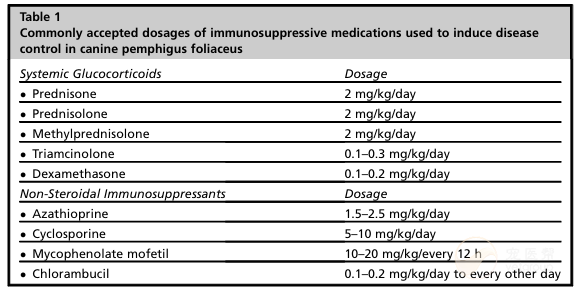
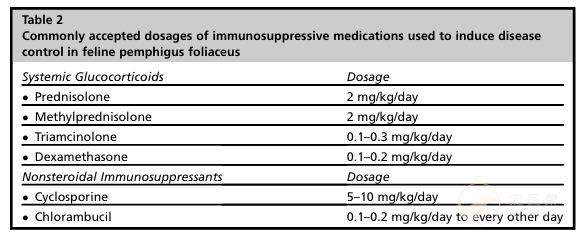
At the time of making a diagnosis of PF, managing clinicians are recommended to perform a complete physical examination as well as evaluate a complete blood count, serum biochemistry, and urinalysis to determine an animal’s systemic health status as well as aid in the selection of immunosuppressive medications. Depending on the species, physical examination findings, and intended drug prescriptions, managing clini cians may also consider evaluating an animal’s feline leukemia virus (FeLV)/feline immunodeficiency virus (FIV) status, fructosamine and NT-proBNP levels, and toxo plasma titers prior to initiating treatment. Both traditional and emerging therapies for canine and feline PF will be discussed later. Readers are referred to Tables 1 and 2 for commonly accepted drug dosages for each of the traditional immunosuppressive medications discussed herein. Less commonly used and experimental therapies for canine and feline PF, including doxycycline with niacinamide, dapsone, cyclophos phamide, human intravenous immunoglobulins, and Bruton’s tyrosine kinase inhibi tors, will not be discussed.
在诊断PF时,建议管理医师进行全面的体格检查,并评估全血细胞计数、血清生化和尿液分析,以确定动物的全身健康状况,并帮助选择免疫抑制药物。根据这些情况,体格检查结果和预期的药物处方,管理临床医生还可以考虑在开始治疗前评估动物的猫白血病病毒(FeLV)/猫免疫缺陷病毒(FIV)状态,果糖胺和NT-proBNP水平,以及弓形虫血浆滴度。犬和猫PF的传统和新兴疗法将在后面讨论。读者可参考表1和表2了解本文讨论的每种传统免疫抑制药物的常用药物剂量。不讨论犬和猫PF较不常用的实验性疗法,包括多西环素+烟酰胺、氨苯砜、环磷酰胺、人静脉注射免疫球蛋白和布鲁顿酪氨酸激酶抑制剂。
Table 1 Commonly accepted dosages of immunosuppressive medications used to induce disease control in canine pemphigus foliaceus
表1犬落叶型天疱疮诱导期控制疾病的常用免疫抑制剂剂量
|
全身性糖皮质激素 |
剂量 |
|
泼尼松 |
2 mg/kg/日 |
|
泼尼松龙 |
2 mg/kg/日 |
|
甲泼尼龙 |
2 mg/kg/日 |
|
曲安奈德 |
0.1–0.3 mg/kg/日 |
|
地塞米松 |
0.1–0.2 mg/kg/日 |
|
非甾体类免疫抑制剂 |
剂量 |
|
硫唑嘌呤 |
1.5–2.5 mg/kg/日 |
|
环孢素 |
5–10 mg/kg/日 |
|
吗替麦考酚酯 |
10–20 mg/kg/每12h一次 |
|
苯丁酸氮芥 |
0.1–0.2 mg/kg/日至隔日一次 |
Table 2 Commonly accepted dosages of immunosuppressive medications used to induce disease control in feline pemphigus foliaceus
表2猫落叶型天疱疮疾病诱导期控制疾病的常用免疫抑制剂剂量
|
全身性糖皮质激素 |
剂量 |
|
泼尼松龙 |
2 mg/kg/日 |
|
甲泼尼龙 |
2 mg/kg/日 |
|
曲安奈德 |
0.1–0.3 mg/kg/日 |
|
地塞米松 |
0.1–0.2 mg/kg/日 |
|
非甾体类免疫抑制剂 |
剂量 |
|
环孢素 |
5–10 mg/kg/日 |
|
苯丁酸氮芥 |
0.1–0.2 mg/kg/日至隔日一次 |
Glucocorticoids
糖皮质激素
Systemic glucocorticoids are the most common class of drugs prescribed to manage PF in both dogs and cats, particularly during the initial induction phase, and are considered a first-line treatment in animals without contraindications to their administration. Several corticosteroids have been used successfully to achieve disease control in canine and feline PF including prednisone, prednisolone, methylpred nisolone, triamcinolone, and dexamethasone. Interestingly, affected animals may respond to one corticosteroid better than another. In 2 recent retrospective studies, some PF-affected cats that were prescribed glucocorticoid monotherapy required a change in corticosteroid type prior to achieving disease control. Of note, prednisone is no longer recommended for feline patients due to its relatively poor bioavailability in this species. When systemic glucocorticoids are prescribed, oral formulations are far preferred over repository injectables as the latter offers less consistent disease control and have been associated with a higher prevalence of adverse effects. Topical glucocorticoids have also been reported to be beneficial in canine and feline PF and have been used to induce and maintain clinical remission as a monotherapy or part of multimodal treatment plans.
全身性糖皮质激素是治疗犬猫PF最常见的一类药物,特别是在初始诱导阶段,并被认为是无用药禁忌的动物的一线治疗。泼尼松、泼尼松龙、甲泼尼龙、曲安奈德和地塞米松等几种皮质类固醇已成功用于控制犬和猫PF的疾病。有趣的是,患病动物对一种皮质类固醇的反应可能比另一种更好。在最近的2项回顾性研究中,一些PF患猫在接受糖皮质激素单药治疗后,需要改变皮质类固醇的类型才能控制疾病。值得注意的是,由于泼尼松在猫中的生物利用度相对较差,因此不再推荐用于患猫。当使用全身性糖皮质激素时,口服制剂远优于注射型储存制剂,因为后者对疾病的控制效果不太一致,并且不良反应的发生率较高。据报道,外用糖皮质激素对犬和猫的PF有益,并已被用于诱导和维持临床缓解,作为单药治疗或多模式治疗计划的一部分。
Standard immunosuppressive dosages of systemic glucocorticoids are commonly prescribed when initiating therapy for canine and feline PF. For severe cases of canine PF, high-dose glucocorticoid pulse therapy may also be considered. This approach involves administering either 10 mg/kg of intravenous methylprednisolone sodium succinate, or 10 mg/kg of oral prednisolone, for 3 days followed by standard immunosuppressive dosages until disease control is achieved. This strategy may expedite the time to disease control in canine PF and has been shown to result in similar adverse events to traditional immunosuppressive dosing regimens. Of note, high-dose glucocorticoid pulse therapy was not found to offer any additional benefit to cats with PF over the already rapid response to standard immunosuppressive drug dos ages in a recently published small pilot study.
在开始治疗犬和猫PF时,通常会开出标准免疫抑制剂量的全身性糖皮质激素。对于犬PF的严重病例,也可以考虑大剂量糖皮质激素冲击治疗。该方法包括静脉给予10 mg/kg甲泼尼龙琥珀酸钠或口服10 mg/kg泼尼松龙,用药3日,随后给予标准免疫抑制剂量,直至疾病得到控制。这一策略可能加快犬PF的疾病控制时间,并已显示出与传统免疫抑制剂量方案相似的不良事件。值得注意的是,在最近发表的一项小型初步研究中,大剂量糖皮质激素冲击疗法未发现对PF患猫有任何额外的益处,而标准免疫抑制剂的剂量已经产生了快速反应。
While oftentimes effective at achieving disease control, long-term glucocorticoid administration in dogs and cats is associated with numerous treatment-limiting adverse events including iatrogenic hyperadrenocorticism, gastrointestinal ulceration, diabetes mellitus, muscle wasting, cutaneous atrophy, delayed wound healing, and opportunistic infections. In dogs, long-term glucocorticoid administration may also lead to calcinosis cutis. While cats are generally considered to be more tolerant of systemic glucocorticoids, their long-term administration may also lead to curling of the pinnae, feline skin fragility syndrome, and congestive heart failure. For these reasons, systemic glucocorticoids are often prescribed in combination with an adjunctive immunosuppressive medication in dogs with the goal of tapering and ultimately discontinuing glucocorticoids once disease control has been achieved. In cats, glucocorticoid monotherapy is well tolerated and often sufficient to induce and maintain adequate disease control. Nonetheless, some clinicians prefer to prescribe glucocorticoids in combination with adjunctive immunosuppressive medica tions in feline patients with the goal of tapering and discontinuing glucocorticoids once disease control has been achieved.
虽然糖皮质激素长期给药通常可有效控制疾病,但会导致许多限制治疗的不良事件,包括医源性肾上腺皮质功能亢进、胃肠道溃疡、糖尿病、肌肉消耗、皮肤萎缩、伤口愈合延迟和条件致病性感染。长期使用糖皮质激素也可能导致犬皮肤钙质沉着症。虽然猫通常被认为对全身性糖皮质激素有更强的耐受性,但长期使用糖皮质激素也可能导致耳廓卷曲、猫皮肤虚弱综合征和充血性心力衰竭。由于这些原因,全身性糖皮质激素通常与辅助免疫抑制剂联合使用治疗患犬,目的是在疾病控制后逐渐减量并最终停用糖皮质激素。在猫中,糖皮质激素单药治疗的耐受性良好,通常足以诱导和维持对疾病的充分控制。尽管如此,一些临床医师更倾向于将糖皮质激素与辅助免疫抑制剂联用治疗患猫,目标是一旦疾病得到控制,将糖皮质激素逐渐减量并停药。
Azathioprine
硫唑嘌呤
Azathioprine is a prodrug of 6-mercaptourine andexerts an immunosuppressive effect through interfering with DNA and RNA synthesis leading to cell cycle arrest, particularly in T-lymphocytes and B-lymphocytes. Gastrointestinal upset, myelosuppression, and hepatoxicity are possible side effects of azathioprine administration. Managing clinicians are recommended to evaluate blood work prior to starting azathi oprine and every 2 weeks during the initial induction period to monitor for signs of myelosuppression and hepatotoxicity. Azathioprine has been used to manage canine PF for decades, most commonly in combination with glucocorticoids. Once disease control has been achieved, many dogs are able to be maintained on lower dosages of azathioprine with or without the need for concurrent glucocorticoids.Induction of disease remission has also been described with azathioprine monother apy in isolated cases of canine PF.While azathioprine has been proposed as a drug of choice for the management of canine PF, the frequency of blood monitoring needed during the initial treatment period may be a financial barrier for some owners and may lead clinicians to select other non-steroidal immunosuppressants (ie, cyclosporine or mycophenolate mofetil). Of note, azathioprine is no longer recommended in feline patients due to the higher risk of moderate to severe myelosuppression.
硫唑嘌呤是6-巯基嘌呤的前体药物,通过干扰DNA和RNA合成导致细胞周期停滞发挥免疫抑制作用,特别是在T淋巴细胞和B淋巴细胞中。胃肠道不适、骨髓抑制和肝毒性是硫唑嘌呤可能的副作用。建议管理医师在开始使用硫唑嘌呤之前评估血液学检查,并在初始诱导期间每2周评估1次,以监测骨髓抑制和肝毒性的症状。硫唑嘌呤用于治疗犬PF已有数十年,最常与糖皮质激素联合使用。一旦疾病得到控制,许多犬可以使用较低剂量的硫唑嘌呤维持病情,联用或不联用糖皮质激素。使用硫唑嘌呤单药治疗的犬PF孤立病例,也有报道可诱导疾病缓解。虽然硫唑嘌呤已被提议作为管理犬PF的一种选择药物,但在初始治疗期间所需的血液监测频率可能是一些宠主的经济负担,并可能导致临床医生选择其他非甾体免疫抑制剂(如环孢素或吗替麦考酚酯)。值得注意的是,不再推荐患猫使用硫唑嘌呤,因为发生中度至重度骨髓抑制的风险较高。
Cyclosporine
环孢素
Cyclosporine is an immunosuppressive medication belonging to the calcineurin inhib itor drug class that exerts a therapeutic effect through inhibiting T-lymphocyte func tion. While cyclosporine is only labeled for use in canine atopic dermatitis and feline atopic skin syndrome in the United States, it has also been used off-label to manage a variety of autoimmune skin diseases in companion animals for years. Cyclosporine administration in dogs and cats may result in gastrointestinal upset and, less commonly, cutaneous papillomatosis, gingival overgrowth, and/or opportunistic infections. Cats receiving cyclosporine may rarely experience recrudescent upper respiratory tract infections, and may also be at risk for contracting toxoplas mosis depending on an animal’s lifestyle and environmental exposures.
环孢素是钙调磷酸酶抑制剂类的免疫抑制药物,通过抑制T淋巴细胞功能发挥治疗作用。虽然环孢素在美国仅被标注用于治疗犬特应性皮炎和猫特应性皮肤综合征,但多年来它也被超说明书用于治疗伴侣动物的多种自体免疫性皮肤病。给犬和猫使用环孢素可能导致胃肠道不适,以及较少见的皮肤乳头状瘤病、牙龈增生和/或条件致病性感染。接受环孢素治疗的猫可能罕见出现反复的上呼吸道感染,而且根据动物的生活方式和环境暴露,也可能有感染弓形虫的风险。
Despite the frequency with which cyclosporine is prescribed in clinical practice, relatively few studies have been published describing its utility in canine PF. In a small pilot study published in 2004, cyclosporine monotherapy was not found to be effective in achieving disease control in 5 dogs with PF. Since then, cyclosporine monother apy has been reported to be effective in achieving disease control in isolated case re ports of canine PF. Rather than used as a monotherapy, cyclosporine is much more commonly prescribed to dogs alongside glucocorticoids as an adjunctive steroid-sparing immunosuppressant. In a recent retrospective study, the admin istration of cyclosporine alongside glucocorticoids allowed for glucocorticoids to be tapered and discontinued in ~50% of affected dogs once disease control was achieved. Once remission was achieved, dogs could also be maintained on lower dosages of cyclosporine than were used to induce disease remission.
尽管环孢素在临床实践中使用的频率很高,但描述其在犬PF中的效用的研究相对较少。在2004年发表的一项小型试点研究中,未发现环孢素单药治疗对5只患PF的犬有效实现疾病控制。此后,据报道,在犬PF的孤立病例报告中,环孢素单药治疗可有效实现疾病控制。环孢素更常与糖皮质激素一起用于犬,作为一种减少类固醇用量的辅助免疫抑制剂。在最近的一项回顾性研究中,环孢素联合糖皮质激素治疗使约50%的患犬在疾病控制后可逐渐减量并停用糖皮质激素。一旦达到缓解,犬也可以维持低剂量的环孢素比诱导疾病缓解。
Similarly, variable success has been reported with inducing remission in feline PF with cyclosporine monotherapy. Some clinicians have advocated that cyclosporine monotherapy be reserved for cats with mild disease, or cats with contraindications to glucocorticoid administration (ie, diabetes mellitus, cardiovascular disease), due to a potentially protracted length of time needed to obtain disease remission with this approach. Cyclosporine is commonly prescribed to cats alongside glucocorticoids when initiating therapy for feline PF. Once disease control has been achieved, cyclosporine has been shown to allow for glucocorticoid dosages to be tapered, as well as discontinued, in most cats for which it is prescribed.
同样,有报道称,使用环孢素单药治疗诱导猫PF缓解的成功率各不相同。一些临床医师主张环孢素单药治疗只用于疾病轻微的猫,或有糖皮质激素给药禁忌证(如糖尿病、心血管疾病)的猫,因为使用这种方法获得疾病缓解可能需要较长的时间。猫PF开始治疗时,通常会将环孢素与糖皮质激素一起使用。一旦疾病得到控制,已证明大多数使用环孢素治疗的患猫,可以令糖皮质激素减量和停药。
Chlorambucil
苯丁酸氮芥
Chlorambucil is a nitrogen mustard alkylating agent traditionally viewed as a chemotherapeutic drug. Chlorambucil exerts an immunosuppressive effect through cross linking DNA leading to apoptosis of a variety of cell-types including T-lymphocytes and B-lymphocytes. Side effects of chlorambucil include vomiting, diarrhea, as well as myelosuppression.For this reason, monitoring complete blood counts prior to prescribing chlorambucil as well as every 2 weeks during the initial induction period is recommended. While chlorambucil is rarely prescribed in canine PF, it is frequently prescribed in combination with glucocorticoids for feline PF.Once disease control has been achieved, chlorambucil has been shown to allow for glucocorticoid dosages to be tapered, as well as discontinued, in some PF-affected cats. Similar to azathio prine, the frequency of blood monitoring needed after first prescribing chlorambucil maybeafinancial barrier for some owners and may lead clinicians to prescribe cyclosporine instead. Induction of clinical remission with chlorambucil monotherapy in feline PF has not been described.
苯丁酸氮芥是一种氮芥烷化剂,传统上被认为是一种化疗药物。苯丁酸氮芥通过交联DNA导致多种细胞类型的凋亡发挥免疫抑制作用,包括T淋巴细胞和B淋巴细胞。苯丁酸氮芥的副作用包括呕吐、腹泻以及骨髓抑制。因此,建议在使用苯丁酸氮芥之前以及在初始诱导期每2周监测一次全血细胞计数。虽然苯丁酸氮芥很少用于犬PF,但常与糖皮质激素联用治疗猫PF。一旦疾病得到控制,苯丁酸氮芥已被证明可以在一些PF患猫中减少或停止糖皮质激素的剂量。与硫唑嘌呤类似,首次开出苯丁酸氮芥后所需的血液监测频率可能成为一些宠主的经济负担,并可能导致临床医师使用环孢素代替。尚未报道使用苯丁酸氮芥单药治疗能诱导猫PF的临床缓解。
Mycophenolate Mofetil
吗替麦考酚酯
Mycophenolate mofetil (MMF) is a prodrug of mycophenolic acid and exerts an immunosuppressive effect through inhibiting inosine monophosphate dehydrogenase, resulting in impaired guanine nucleotide synthesis and impaired function of T-lymphocytes and B-lymphocytes. Gastrointestinal upset, particularly diarrhea, is the most common side effect encountered with MMF administration in small animals. There has been recent interest in exploring the potential of MMF for the management of canine PF as it has been viewed as a “safer” steroid-sparing adjunct immunosuppres sant that does not require frequent blood monitoring. Thus far, the efficacy of MMF in canine PF has been described in 2 retrospective studies. In all cases, MMF was prescribed with glucocorticoids as part of a multimodal treatment plan. Between 18% and 67% of PF-affected dogs attained complete remission of clinical signs with this approach. However, none ofthe dogswerereportedtodiscontinueglucocor ticoids altogether after disease control was achieved. Induction of disease remis sion with MMF monotherapy has not been described in canine PF. Similarly, use of MMFin feline PF has not been reported either.
吗替麦考酚酯(MMF)是霉酚酸的前体药物,通过抑制单磷酸肌苷脱氢酶,导致鸟嘌呤核苷酸合成受损和T、B淋巴细胞功能受损,而发挥免疫抑制作用。胃肠道不适,尤其是腹泻,是MMF在小动物中最常见的副作用。最近,人们对探索MMF治疗犬PF的潜力很感兴趣,因为它被认为是一种“更安全”的、减少激素用量的免疫抑制剂,不需要频繁的血液监测。到目前为止,有两项回顾性研究描述了MMF对犬PF的疗效。在所有病例中,作为多模式治疗计划的一部分,MMF与糖皮质激素联合使用。18% ~ 67%的PF患病动物的临床症状得到完全缓解。然而,在疾病得到控制后,没有一只犬报告完全停用糖皮质激素。在犬PF中未见MMF单药治疗诱导疾病缓解的报道。同样,尚未报道在猫PF中使用MMF治疗。
EMERGING THERAPIES
治疗新方法
Oclacitinib Maleate
马来酸奥拉替尼
Oclacitinib maleate (ie, Apoquel) is a Janus kinase inhibitor that was approved for use in the United States in 2013 for the control of pruritus associated with allergic dermatitis, and control of canine atopic dermatitis, in dogs at least 12-months of age. At labeled drug dosages, oclacitinib maleate exerts a therapeutic effect through blocking intracellular signaling of several proinflammatory and pruritogenic cytokines including interleukin (IL)-2, IL-4, IL-6, IL-13, and IL-31.
奥拉替尼(即:爱波克)是一种Janus激酶抑制剂,于2013年在美国被批准用于控制与过敏性皮肤病相关的瘙痒,以及控制12月龄以上犬的特应性皮炎。在说明书药物剂量下,马来酸奥拉替尼通过阻断几种促炎和致痒细胞因子的细胞内信号而发挥治疗作用,包括白细胞介素(IL)-2、IL-4、IL-6、IL-13和IL-31。
Oclacitinib maleate has also been reported to successfully manage dogs with a va riety of autoimmune skin diseases in isolated case reports and limited case series.In a small prospective clinical trial published as an abstract, oclacitinib maleate mono therapy (1 mg/kg twice daily) was reported to decrease clinical severity scores by 65% and 84.8% at 1-month and 2-months, respectively, in small group of dogs with PF. In a more recent retrospective study, oclacitinib maleate was compared to azathioprine as an adjunctive steroid-sparing immunosuppressant for the treatment of canine PF. In this study, oclacitinib maleate was found to have comparable steroid-sparing effects to azathioprine, and allowed for some dogs to discontinue glucocorticoids altogether.
在孤立的病例报告和有限的病例系列中,马来酸奥拉替尼也成功地治疗了患有多种自体免疫性皮肤病的犬。在一项以摘要形式发表的小型前瞻性临床试验中,马来酸奥拉替尼单药治疗(每日2次,每次1 mg/kg)被报道在1个月和2个月时分别使患PF的犬的临床严重程度评分降低了65%和84.8%。在一项更近期的回顾性研究中,马来酸奥拉替尼与硫唑嘌呤作为一种节省类固醇用量的辅助免疫抑制剂治疗犬PF进行了比较。研究发现马来酸奥拉替尼对类固醇的节省作用与硫唑嘌呤相当,并且允许一些犬完全停用糖皮质激素。
Successful management of feline PF has also been reported with off-label use of oclacitinib maleate in 2 cats. In both cases, oclacitinib maleate monotherapy (1 mg/kg twice daily) rapidly induced disease remission within 1-month, and main tained disease remission at lower dosages, without reported adverse effects. While oclacitinib maleate offers an attractive alternative to systemic glucocorticoids in cats with cardiovascular disease and diabetes mellitus, it’s important to recognize that there are limited long-term safety data available for this drug in this species. To this point, off-label use of oclacitinib maleate (0.72–1 mg/kg twice daily) was associated with the development of fatal disseminated toxoplasmosis in a FIV-positive domestic shorthair cat receiving treatment for feline atopic skin syndrome. For this reason, managing clinicians are recommended to closely monitor cats that are pre scribed off-label oclacitinib maleate including evaluating a patient’s FeLV/FIV status at baseline.
据报道,有2只猫PF标签外使用马来酸奥拉替尼得到成功治疗。在这两例患病动物中,马来酸奥拉替尼单药治疗(每日2次,每次1 mg/kg)在1个月内迅速诱导疾病缓解,并在较低剂量下维持疾病缓解,未报告不良反应。对于患心血管疾病和糖尿病的猫,马来酸奥拉替尼是一种有吸引力的替代全身性糖皮质激素的药物,但重要的是要知道,该药物用于该物种的长期安全性数据有限。在这一点上,报道一只FIV阳性的家养短毛猫在接受猫特应性皮肤综合征治疗时,标签外使用马来酸奥拉替尼(0.72-1 mg/kg,每日两次),发生了致命性弥散性弓形虫病。因此,建议临床医师密切监测猫标签外使用奥拉替尼,包括评估用药前患病动物的FeLV/FIV状态。
Polysulfated Glycosaminoglycan
多硫酸化糖胺聚糖
A small case series recently described the use of polysulfated glycosaminoglycan (PSGAG; Adequan) as a steroid-sparing adjunct for 3 dogs with PF. Polysulfated glycosaminoglycan is a semisynthetic glycosaminoglycan structurally related to hep arin that is labeled for use in dogs for the control of clinical signs associated with arthritis. In this case series, administration of PSGAG (~4.4 mg/kg every 4 days) was shown to contribute to induction of disease remission in 3 dogs with PF that were inadequately controlled with oral glucocorticoids combined with azathioprine, cyclosporine, and/or MMF. Furthermore, PSGAG administration allowed for glucocorticoid dose reduction in each case. The specific mechanisms of action of PSGAG in the management of canine PF are unknown, but were speculated to include inhibi tion of complement activation as well as impairment of neutrophil and mononuclear cell migration.
一个小型病例系列最近描述了三只PF患犬使用多硫酸化糖胺聚糖(PSGAG)作为类固醇节省剂治疗。多硫酸化糖胺聚糖是一种在结构上与肝素相关的半合成糖胺聚糖,用于控制与关节炎相关的临床症状。在这个病例系列中,PSGAG(每4天剂量约4.4 mg/kg)的给药有助于诱导3只PF患犬的疾病缓解,这些犬的PF是口服糖皮质激素联合硫唑嘌呤、环孢素和/或MMF不能充分控制的病例。此外,PSGAG给药可使每例患病动物的糖皮质激素剂量降低。PSGAG在犬PF治疗中的具体作用机制尚不清楚,但推测包括抑制补体激活以及损害中性粒细胞和单个核细胞迁移。
Therapeutic Plasma Exchange
治疗性血浆置换
A case report was recently published describing the successful use of therapeutic plasma exchange (TPE, also known as plasmapheresis) in a dog with severe treatment-refractory PF. The goal of TPE with treating PF is to remove pathogenic autoantibodies from the blood stream of affected animals, an approach that has been shown to be beneficial in human pemphigus patients as well. In this case report, a 4-year-old castrated male English Bulldog with PF underwent 4 sessions of TPE over a 6-day period. Significant improvements were noted in the extent and severity of the dog’s clinical signs over the course of treatment, ultimately achieving partial disease remission. Due to financial constraints, the dog was discharged from hospital after its fourth session of TPE.Shortly thereafter, the dog’s clinical signs began to worsen warranting several modifications to his prescribed med ications to maintain partial disease resmission. A recent review of extracorporeal therapies in small animal emergency and critical care suggests that TPE for canine PF is used more commonly in clinical practice than is suggested by the published literature. The availability of TPE for managing canine PF is currently restricted to ter tiary referral hospitals with hemodialysis capabilities. Further research is needed to determine the most effective treatment schedule for TPE, as well as define which pa tient populations benefit from TPE the most.
最近发表了一份病例报告,描述了治疗性血浆置换(TPE,也称为血浆置换)在一只患重度难治性PF的犬中的成功应用。TPE治疗PF的目的是清除感染动物血流中的致病性自体抗体,这一方法已被证明对人类天疱疮患者也有益。在这一病例报告中,一只患PF的4岁已去势雄性英国斗牛犬,6天为一周期,接受了4次TPE。在治疗过程中,犬的临床症状的范围和严重程度显著改善,最终达到部分疾病缓解。由于经济困难,这只犬在第四次手术后出院。此后不久,犬的临床症状开始恶化,需要对该患犬处方药物进行几次修改,以维持部分疾病缓解。最近一项关于小动物急诊和危重症护理中体外治疗的回顾提示,在临床实践中,犬PF的TPE比已发表的文献建议的更常用。TPE治疗犬PF目前仅限于具有血液透析能力的三级转诊医院。需要进一步的研究来确定TPE最有效的治疗方案,以及确定哪些患病动物从TPE中获益最大。
PROGNOSIS
预后
The majority of dogs and cats with PF require long-term to lifelong medical management, albeit using lower dosages of medications than were required to induce disease remission. Side effects of treatment are variable and dependent on the affected species as well as the specific drug combinations and dosages prescribed. Dogs and cats with PF are rarely able to discontinue treatment without experiencing a disease relapse. Indeed, disease relapses are common and to be expected in affected animals while immunosuppressive drugs are being tapered, or discontin ued altogether. Unfortunately, between 7% and 42% of dogs with PF have been re ported to be humanely euthanized due to complications directly related to the disease including either an inability to induce or maintain disease remission, poor quality of life, owner financial constraints, and/or adverse effects of prescribed med ications. In contrast, cats with PF appear to have a more favorable prognosis than dogs.Indeed,less than 10% of affected cats have been reported to be humanely euthanized due to complications directly related to PF including either an unwillingness to treat the disease, an inability to adequately control the disease, owner financial constraints, the development of comorbidities, and/or adverse effects of prescribed medications.
大多数PF患犬和患猫需要长期至终身的药物治疗,但使用的药物剂量低于诱导疾病缓解所需的剂量。治疗的副作用是多变的,并取决于患病物种以及特定的药物组合和处方剂量。PF患犬和患猫很少能够在不经历疾病复发的情况下停止治疗。事实上,在免疫抑制药物逐渐减量或完全停药期间,疾病复发很常见,这在患病动物中是意料之中的。不幸的是,据报道7%到42%的PF患犬由于与疾病直接相关的并发症被人道安乐死,包括不能诱导或维持疾病缓解,生活质量差,主人经济负担重,和/或处方药物的不良影响。相比之下,PF患猫似乎比犬有更好的预后。事实上,据报道,不到10%的患猫由于与PF直接相关的并发症被人道安乐死,这些并发症包括不愿意治疗PF,无法充分控制疾病,主人经济负担重,发展为合并症,和/或处方药物的不良影响。
SUMMARY
总结
Canine and feline PF have been found to be associated with tissue-bound and circu lating anti-keratinocyte IgG autoantibodies, neutrophilic and eosinophilic inflammation, and dysregulation of the immune system. However, the roles and relative contributions of each to mediating acantholysis and clinical disease remain unclear. At present, treatment of canine and feline PF relies on the long-term to lifelong admin istration of immunosuppressive medications. There are currently limited published data to guide managing clinicians on what therapies to prescribe to each individual patient. In canine PF, systemic glucocorticoids are commonly prescribed in combination with azathioprine, cyclosporine, or MMF. In feline PF, systemic glucocorticoids are commonly prescribed as a monotherapy, or in combination with either cyclosporine or chlorambucil. Importantly, affected dogs and cats are rarely able to discontinue all forms of immunosuppressive treatment without experiencing relapsing clinical signs. At the time of diagnosis, managing clinicians are recommended to educate pet owners on the time, effort, and financial commitments of managing canine and feline PF, the goals and expectations of treatment, as well each disease’s long-term prognosis.
研究发现,犬和猫的PF与组织结合和循环的抗角质形成细胞IgG自体抗体、中性粒细胞和嗜酸性粒细胞炎症以及免疫系统失调有关。然而,每种在介导棘层松解和临床疾病中的作用和相对贡献尚不清楚。目前,犬和猫PF的治疗依赖于长期至终身的免疫抑制药物治疗。目前,指导临床医师为每例患病动物使用何种疗法的已发表数据有限。在犬PF中,全身性糖皮质激素通常与硫唑嘌呤、环孢素或吗替麦考酚酯联用。在猫PF中,全身性糖皮质激素通常作为单药治疗,或者与环孢素或苯丁酸氮芥联合使用。重要的是,患犬和患猫很少能够停止所有形式的免疫抑制治疗而不出现临床症状复发。在诊断时,建议管理医师针对管理犬猫PF的时间、精力和经济情况,治疗目标和期望,以及每种疾病的长期预后进行宠主教育。
|
CLINICS CARE POINTS
临床护理重点
·Immunosuppressive drug regimens need to be tailored to each individual patient and pet owner and consider an animal’s systemic health status as well as an owner’s ability to administer medication(s) and adequately monitor for treatment-associated side effects.
·Managing clinicians should inform pet owners that there may be a period of trial and error after initiating immunosuppressive treatment while working to identify the right drug dosages and combinations that provide adequate disease control for each individual animal.
·Clear and transparent communication with shared decision-making between managing clinicians and pet owners will improve owner compliance and satisfaction as well as patient care, animal welfare, and treatment outcomes.
·免疫抑制药物方案需要为每个患病动物和宠物主人量身定制,并考虑动物的全身健康状况以及主人给药的能力,并充分监测治疗相关的副作用。
·管理医师应告知宠物主人,在开始免疫抑制治疗后可能会有一段试错期,同时努力确定正确的药物剂量和组合,以充分控制每只宠物的疾病。
·临床医师和宠物主人之间进行清晰透明的沟通,共同决策,将提高主人的依从性和满意度,以及患病动物护理、动物福利和治疗结果。 |
| 


 |Archiver|手机版|小黑屋|宠医帮
( 京ICP备2022012070号-2 )
|Archiver|手机版|小黑屋|宠医帮
( 京ICP备2022012070号-2 ) 




 发表于 2025-2-4 00:17:17

 收藏
收藏 转播
转播 分享
分享 淘帖
淘帖