|
Dermatological Adverse Events Associated With Lapatinib Treatment in Dogs With Urothelial Carcinoma: A Retrospective Study
拉帕替尼治疗犬尿路上皮癌相关的皮肤不良反应:一项回顾性研究
作者:Kosuke Horit| Tomohiro Yonezawa Yasuyuki Momoi | Shingo Maeda
翻译:王帆
Keywords: canine | dermatological adverse events | epidermal growth factor receptor inhibition | on- target toxicity | prognostic biomarker
关键词:犬 | 皮肤不良反应 | 表皮生长因子受体抑制 | 靶向毒性 | 预后生物标志物
ABSTRACT
摘要
Background: Lapatinib is widely used in human oncology; however, dermatological adverse events (DAEs) are common and have been correlated with treatment efficacy. In veterinary medicine, lapatinib use in combination with piroxicam has been shown to be effective in treating canine urothelial carcinoma (UC); however, the incidence and prognostic significance of DAEs in dogs remain unknown.
Objective: To evaluate the DAEs in dogs with UC treated with lapatinib and piroxicam. Animals: Eighty- five dogs with UC were treated with lapatinib/piroxicam and 42 were treated with piroxicam alone.
Materials and Methods: This retrospective cohort study evaluated dogs diagnosed with UC and treated with lapatinib and piroxicam, and those treated with piroxicam alone. Relevant data were extracted from the medical records. The DAEs were assessed using the Veterinary Cooperative Oncology Group Common Terminology Criteria for Adverse Events and Naranjo al gorithm. The log- rank test and Cox proportional hazards model were used to assess progression- free survival (PFS).
Results: DAEs occurred in 31.8% of the dogs in the lapatinib/piroxicam group, with alopecia and hyperpigmentation being the most common. In the piroxicam group, DAEs were observed in 7.1% of dogs. The relative risk of developing DAEs in the lapa tinib/piroxicam group was 4.4 (p < 0.01). In the lapatinib/piroxicam group, DAEs were associated with a longer PFS (p < 0.03). The Cox proportional hazards model identified DAEs as independent prognostic factors for improved PFS (hazard ratio, 0.52, p < 0.05). Conclusions and Clinical Relevance: Lapatinib treatment in dogs induces DAEs, which serve as biomarkers of lapatinib efficacy in canine UC.
背景:拉帕替尼在人类肿瘤学中广泛应用;然而,皮肤不良反应(DAEs)很常见,并且与治疗效果相关。在兽医学中,拉帕替尼联合吡罗昔康已被证明可有效治疗犬尿路上皮癌(UC);然而,犬DAEs的发生率及其预后意义尚不清楚。
目的:评估接受拉帕替尼和吡罗昔康治疗的UC犬的DAEs。
动物:85只患有UC的犬接受了拉帕替尼/吡罗昔康治疗,42只犬仅接受吡罗昔康治疗。
材料与方法:这项回顾性队列研究评估了诊断为UC并接受拉帕替尼和吡罗昔康治疗以及仅接受吡罗昔康治疗的犬。相关数据从医疗记录中提取。使用兽医合作肿瘤学组不良事件通用术语标准和Naranjo算法评估DAEs。使用对数秩检验和Cox比例风险模型评估无进展生存期(PFS)。
结果:拉帕替尼/吡罗昔康组中31.8%的犬发生了DAEs,脱毛和色素沉着过度是最常见的。在吡罗昔康组中,7.1%的犬观察到DAEs。拉帕替尼/吡罗昔康组发生DAEs的相对风险为4.4(p<0.01)。在拉帕替尼/吡罗昔康组中,DAEs与更长的PFS相关(p<0.03)。Cox比例风险模型将DAEs确定为改善PFS的独立预后因素(风险比,0.52,p<0.05)。
结论与临床相关性:拉帕替尼治疗犬会诱发DAEs,这可以作为拉帕替尼在犬UC中疗效的生物标志物。
1 | Introduction
1 | 介绍
Lapatinib is a tyrosine kinase inhibitor that targets the epi dermal growth factor receptor (EGFR) and human epidermal growth factor receptor 2 (HER2) . In human medicine, lapatinib is widely used as a molecular targeted therapy for malignancies, particularly HER2- positive breast cancer. Its use also has been studied in HER2- positive gastric cancer and advanced bladder cancer; preliminary studies have suggested its potential therapeutic efficacy despite limited clinical responses.
拉帕替尼是一种靶向表皮生长因子受体(EGFR)和人表皮生长因子受体2(HER2)的酪氨酸激酶抑制剂。在人类医学中,拉帕替尼被广泛用作恶性肿瘤的分子靶向治疗,特别是HER2阳性乳腺癌。其在HER2阳性胃癌和晚期膀胱癌中的应用也有研究;初步研究表明,尽管临床反应有限,但其具有潜在的治疗效果。
Dermatological adverse events (DAEs), such as rashes and alopecia, have been identified as some of the most common adverse events of lapatinib in humans. More than half of the lapatinib- treated patients develop DAEs that significantly impact their quality- of- life (QoL) . For instance, erythematous maculopapular rashes are commonly observed, reflecting the disruption of keratinocyte proliferation and epidermal homeostasis caused by EGFR inhibition. Additionally, DAEs in human oncology have attracted attention for their potential role as surrogate markers of treatment efficacy, correlating with prolonged progression- free survival (PFS) and overall survival (OS) .
皮肤不良反应(DAE),如皮疹和脱毛,已被确定为人类使用拉帕替尼最常见的不良反应之一。超过一半的拉帕替尼治疗患者会出现DAE,显著影响其生活质量。例如,常观察到红斑性斑丘疹,这反映了EGFR抑制引起的角质形成细胞增殖和表皮稳态的破坏。此外,人类肿瘤学中的DAE因其作为治疗效果的替代标志物的潜在作用而受到关注,与延长的无进展生存期(PFS)和总生存期(OS)相关。
In veterinary medicine, lapatinib is a potential treatment for urothelial carcinoma (UC). Representing approximately 2% of all reported canine malignancies, UC predominantly affects the urinary bladder and is characterised by invasive behaviour and poor prognosis. Current treatment strategies often involve multimodal approaches, including the use of nonsteroidal anti- inflammatory drugs (NSAIDs), such as piroxicam. The combination of lapatinib and piroxicam has shown potential benefits in prolonging PFS and OS in dogs with UC [13]. However, little is known about the incidence and clinical impact of DAEs in lapatinib- treated dogs with UC.
在兽医学中,拉帕替尼是尿路上皮癌(UC)的潜在治疗方法。UC约占所有报告的犬恶性肿瘤的2%,主要影响膀胱,其特征是侵袭性行为和预后不良。目前的治疗策略通常涉及多模式方法,包括使用非甾体抗炎药(NSAIDs),如吡罗昔康。拉帕替尼和吡罗昔康的联合使用已显示出延长犬UC的PFS和OS的潜在益处。然而,关于拉帕替尼治疗的UC犬中DAE的发生率和临床影响知之甚少。
Research directly linking DAEs to tumour prognosis in veterinary medicine is limited, yet treatment- related adverse events, such as chemotherapy- induced neutropenia, have been associated with improved outcomes in canine oncology. One notable study found that chemotherapy- induced neutropenia was correlated with improved survival in dogs with multi centric lymphoma, highlighting the potential prognostic value of adverse events. This raises the question of whether DAEs during lapatinib treatment are correlated with improved out comes in dogs with UC.
直接将DAEs与兽医肿瘤学中的肿瘤预后联系起来的研究有限,然而,治疗相关的不良事件,如化疗引起的中性粒细胞减少症,与犬肿瘤学中改善的结局相关。一项值得注意的研究发现,化疗引起的中性粒细胞减少症与多中心淋巴瘤犬的生存改善相关,突出了不良事件的潜在预后价值。这引发了一个问题:拉帕替尼治疗期间的DAE是否与犬UC的改善结局相关。
This retrospective study evaluated the incidence, characteris tics, and clinical significance of DAEs in dogs treated with lapatinib and piroxicam for UC. The DAEs were assessed using the Naranjo algorithm and Veterinary Cooperative Oncology Group (VCOG) criteria. We hypothesised that DAEs may be associated with longer PFS and OS, similar to the findings in human oncology.
这项回顾性研究评估了接受拉帕替尼和吡罗昔康治疗UC的犬中DAEs的发生率、特征和临床意义。使用Naranjo算法和兽医合作肿瘤学组(VCOG)标准评估DAE。我们假设DAE可能与更长的PFS和OS相关,类似于人类肿瘤学中的发现。
2 | Materials and Methods
2 | 材料与方法
2.1 | Study Design and Case Selection
2.1 | 研究设计与病例选择
This retrospective cohort study examined client- owned dogs diagnosed with UC that were treated with either lapatinib/ piroxicam or piroxicam alone at the Veterinary Medical Center of the University of Tokyo (VMC- UT). The medical records of dogs with UC treated with lapatinib/piroxicam were retrospectively collected from those managed at the VMC- UT between April 2016 and December 2023. Data for UC cases treated with piroxicam alone were obtained from a previous study and were used as the control group. Written informed consent was obtained from all dog owners for the treatment and use of their medical records for research purposes. Dogs were included in the study if they had cytologically or histologically diagnosed UC, were treated with lapatinib/piroxicam or piroxicam alone, and had complete medical records. To ensure consistency in treatment protocols, dogs treated with NSAIDs other than piroxicam were excluded.
这项回顾性队列研究检查了在东京大学动物医疗中心(VMC-UT)诊断为UC并接受拉帕替尼/吡罗昔康或仅接受吡罗昔康治疗的家养犬。回顾性收集了2016年4月至2023年12月期间在VMC-UT管理的接受拉帕替尼/吡罗昔康治疗的UC犬的医疗记录。仅接受吡罗昔康治疗的UC病例数据来自先前的一项研究,并用作对照组。所有犬主都签署了治疗和使用其医疗记录用于研究目的的书面知情同意书。如果犬经细胞学或组织学诊断为UC,接受拉帕替尼/吡罗昔康或仅吡罗昔康治疗,并且有完整的医疗记录,则纳入研究。为确保治疗方案的一致性,接受除吡罗昔康以外的NSAIDs治疗的犬被排除在外。
Dogs in the lapatinib/piroxicam group received lapatinib (20–30 mg/kg; Tykerb, Novartis) in combination with piroxicam (0.3 mg/kg; Pfizer) administered per os once every 24 h. Dogs in the piroxicam group were treated with piroxicam alone at a dose of 0.3 mg/kg p.o. once every 24 h. The dosages of lapatinib and piroxicam were determined based on studies published previously.
拉帕替尼/吡罗昔康组的犬接受拉帕替尼(20-30 mg/kg;Tykerb,诺华)联合吡罗昔康(0.3 mg/kg;辉瑞)口服给药,每24小时一次。吡罗昔康组的犬仅接受吡罗昔康治疗,剂量为0.3 mg/kg,口服,每24小时一次。拉帕替尼和吡罗昔康的剂量基于先前发表的研究确定。
2.2 | Medical Record Review
2.2 | 医疗记录审查
Medical records were retrospectively reviewed to collect comprehensive clinical and diagnostic information on dogs treated with lapatinib/piroxicam or piroxicam alone. We analysed clinical data, including signalment (breed, sex and age), clinical signs observed at presentation, method of diagnosis, tumour location, metastatic status, BRAF mutation, surgical history, treatment protocols (administration of piroxicam with or without lapatinib), and the development and timing of dermatological events (DEs). Additional data were collected, including complete blood counts, serum biochemistry profiles, and findings from thoracic radiography and abdominal ultrasonography.
回顾性审查医疗记录,以收集接受拉帕替尼/吡罗昔康或仅吡罗昔康治疗的犬的全面临床和诊断信息。我们分析了临床数据,包括基本信息(品种、性别和年龄)、就诊时观察到的临床症状、诊断方法、肿瘤位置、转移状态、BRAF突变、手术史、治疗方案(使用或不使用拉帕替尼的吡罗昔康给药)以及皮肤事件(DE)的发生和时机。还收集了其他数据,包括全血细胞计数、血清生化谱以及胸部X线摄影和腹部超声检查的结果。
Information regarding the classification of DEs according to the VCOG criteria [19] and response to treatment interventions, such as lapatinib withdrawal, was recorded. For each case, the DEs were systematically assessed for their likelihood of asso ciation with lapatinib/piroxicam treatment using the Naranjo algorithm [18]. DEs were categorised as ‘Definite’, ‘Probable’, ‘Possible’ or ‘Doubtful’, and only those classified as ‘Definite’, ‘Probable’ or ‘Possible’ were defined as DAEs.
记录了根据VCOG标准对DE的分类以及对治疗干预(如停用拉帕替尼)的反应信息。对于每个病例,使用Naranjo算法系统评估DE与拉帕替尼/吡罗昔康治疗相关的可能性。DE被分类为“明确”、“很可能”、“可能”或“可疑”,只有那些被分类为“明确”、“很可能”或“可能”的才被定义为DAE。
2.3 | Statistical Analysis
2.3 | 统计分析
All statistical analyses were performed using EZR (v2.7- 1) [20] and Python (v3.12.8), with libraries including pandas (v2.2.3), numpy (v2.1.3), scipy (v1.14.1) and lifelines (v0.30.0). All statistical tests were two- tailed, and statistical significance was set at p < 0.05.
所有统计分析均使用EZR(v2.7-1)和PYTHON(v3.12.8)进行,使用的库包括PANDAS(v2.2.3)、NUMPY(v2.1.3)、SCIPY(v1.14.1)和LIFELINES(v0.30.0)。所有统计检验均为双尾,统计显著性设定为p<0.05。
Variables were assessed for normality by visual inspection of his tograms and the Shapiro–Wilk test. Continuous variables were compared using Student's t- test if normally distributed or the Wilcoxon–Mann–Whitney U- test if not. Categorical variables were compared using Fisher's exact test based on the distribution of cases per cell. Relative risks and odds ratios with 95% confidence intervals (CI) were calculated from 2 × 2 contingency tables. For tumour location, dogs with multiple tumour sites were counted once in each site. PFS was defined as the time from lapatinib treatment initiation to disease progression, while OS was defined as the time from lapatinib treatment initiation to death from any cause. Disease progression was defined retrospectively from the attending clinician's records. Progression was considered to have occurred when radiography or ultrasonography showed an increase in the size of the primary urothelial carcinoma or new metastatic lesions. Cases wherein chemotherapeutic agents or molecular- targeted drugs other than lapatinib were administered concurrently with lapatinib were excluded from the survival analysis. Additionally, cases in which surgical intervention was performed were excluded because this could influence survival outcomes. Survival curves were constructed using the Kaplan–Meier method, and PFS and OS were compared using the log- rank test. A multivariate Cox proportional hazards model was used to examine the prognostic value of age, primary tumour location, metastasis and DAEs. For the survival analysis, dogs with multiple tumour sites were classified by the site considered to be the primary tumour. As BRAF is not a target of lapatinib and a history of rescue therapy may obscure the relationship between survival and lapatinib treatment, these two variables were excluded from the multivariate analysis.
通过直方图目视检查和Shapiro-Wilk检验评估变量的正态性。如果呈正态分布,则使用Student's t检验比较连续变量;否则使用Wilcoxon-Mann-Whitney U检验。根据每个单元格的病例分布,使用Fisher精确检验比较分类变量。从2x2列联表计算相对风险和比值比及其95%置信区间(CI)。对于肿瘤位置,具有多个肿瘤部位的犬在每个部位计数一次。PFS定义为从拉帕替尼治疗开始到疾病进展的时间,而OS定义为从拉帕替尼治疗开始到任何原因死亡的时间。疾病进展是根据主治医生的记录回顾性定义的。当X线摄影或超声检查显示原发性尿路上皮癌大小增加或出现新的转移性病变时,即认为发生进展。在拉帕替尼治疗期间同时给予除拉帕替尼外的化疗药物或分子靶向药物的病例被排除在生存分析之外。此外,进行了手术干预的病例也被排除,因为这可能影响生存结果。使用Kaplan-Meier方法构建生存曲线,并使用对数秩检验比较PFS和OS。使用多变量Cox比例风险模型检查年龄、原发肿瘤位置、转移和DAEs的预后价值。对于生存分析,具有多个肿瘤部位的犬按被认为是原发肿瘤的部位进行分类。由于BRAF不是拉帕替尼的靶点,并且挽救治疗史可能掩盖生存与拉帕替尼治疗之间的关系,因此这两个变量被排除在多变量分析之外。
3 | Results
3 | 结果
3.1 | Case Population
3.1 | 病例群体
Between April 2016 and December 2023, 85 dogs with UC that were treated with lapatinib and piroxicam were enrolled in this study. The case population comprised 53 females (eight intact, 45 spayed) and 32 males (four intact, 28 castrated). Compared to the control group (42 dogs with UC treated with piroxicam alone), the age was significantly higher in the lapatinib/piroxicam group (median age 13 years vs. 12 years; p = 0.02). No significant differences were observed in other clinical variables, including body weight, sex, breed, and tumour location, between the two groups (see Table S1).
2016年4月至2023年12月期间,85只接受拉帕替尼和吡罗昔康治疗的UC犬被纳入本研究。病例群体包括53只雌性犬(8只未绝育,45只已绝育)和32只雄性犬(4只未绝育,28只已去势)。与对照组(42只仅接受吡罗昔康治疗的UC犬)相比,拉帕替尼/吡罗昔康组的年龄显著更高(中位年龄13岁 vs. 12岁;p=0.02)。两组之间在其他临床变量(包括体重、性别、品种和肿瘤位置)方面未观察到显著差异(见表S1)。
3.2 | DEs and DAEs
3.2 | DEs和DAEs
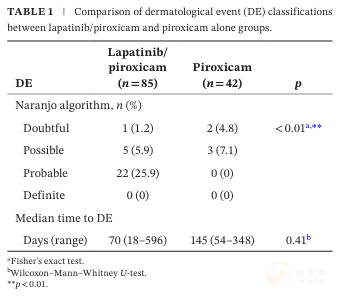
There were DEs observed in 28 of 85 (32.9%) dogs in the lapatinib/ piroxicam group and in 11.9% (five of 42) dogs in the piroxicam group. DEs in the lapatinib/piroxicam group were most fre quently observed in toy poodles (n = 4), miniature Dachshunds (n = 4) and Shetland sheepdogs (n = 4). In the piroxicam group, DEs were observed in the miniature Dachshund, Shetland sheep dog, Pembroke Welsh corgi, Cavalier King Charles spaniel and Scottish terrier (n = 1 each). Using the Naranjo algorithm, DEs in the lapatinib/piroxicam group were classified as ‘Probable’ (22 of 85, 25.9%), ‘Possible’ (five of 85, 5.9%) and ‘Doubtful’ (one of 85, 1.1%). No case was classified as ‘Definite’. In the piroxicam group, DEs were classified as ‘Possible’ (three of 42, 7.1%) and ‘Doubtful’ (two of 42, 4.8%). No case in the piroxicam group was classified as ‘Probable’ or ‘Definite’. Fisher's exact test showed a significant difference in the Naranjo classification between the lapatinib/piroxicam and piroxicam groups (p < 0.001; Table 1).
在拉帕替尼/吡罗昔康组的85只犬中,有28只(32.9%)观察到DE,在吡罗昔康组的42只犬中,有11.9%(5只)观察到DE。拉帕替尼/吡罗昔康组的DE最常见于玩具贵宾犬(n=4)、迷你腊肠犬(n=4)和喜乐蒂牧羊犬(n=4)。在吡罗昔康组中,在迷你腊肠犬、喜乐蒂牧羊犬、彭布罗克威尔士柯基犬、骑士查理王猎犬和苏格兰梗犬中各观察到1例DE。使用Naranjo算法,拉帕替尼/吡罗昔康组的DE被分类为“很可能”(22/85,25.9%)、“可能”(5/85,5.9%)和“可疑”(1/85,1.1%)。没有病例被分类为“明确”。在吡罗昔康组中,DE被分类为“可能”(3/42,7.1%)和“可疑”(2/42,4.8%)。吡罗昔康组中没有病例被分类为“很可能”或“明确”。Fisher精确检验显示,拉帕替尼/吡罗昔康组和吡罗昔康组之间的Naranjo分类存在显著差异(p<0.001;表1)。
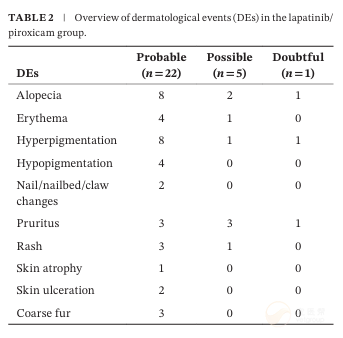
An overview of the DEs in the lapatinib/piroxicam group is presented in Table 2. In this study, only DEs classified as ‘Definite’, ‘Probable’ or ‘Possible’ were defined as DAEs, indi cating a probable causal relationship with lapatinib treatment. DAEs were identified in 27 of 85 (31.8%) dogs in the lapatinib/ piroxicam group and in three of 42 (7.1%) dogs in the piroxi cam group. The relative risk of developing DAEs in the lapa tinib/piroxicam group compared with that in the piroxicam group was 4.4 (95% CI 1.4–14.3, p = 0.009), and the odds ratio (OR) was 6.1 (95% CI 1.7–22.1, p = 0.008). These results sug gested that lapatinib administration significantly increased the risk of developing DAEs.
拉帕替尼/吡罗昔康组DEs的概述见表2。在本研究中,只有被分类为“明确”、“很可能”或“可能”的DEs才被定义为DAE,表明与拉帕替尼治疗存在可能的因果关系。在拉帕替尼/吡罗昔康组的85只犬中,有27只(31.8%)被识别出DAE,在吡罗昔康组的42只犬中,有3只(7.1%)被识别出DAE。与吡罗昔康组相比,拉帕替尼/吡罗昔康组发生DAEs的相对风险为4.4(95% CI 1.4-14.3,p=0.009),比值比(OR)为6.1(95% CI 1.7-22.1,p=0.008)。这些结果表明,拉帕替尼给药显著增加了发生DAEs的风险。
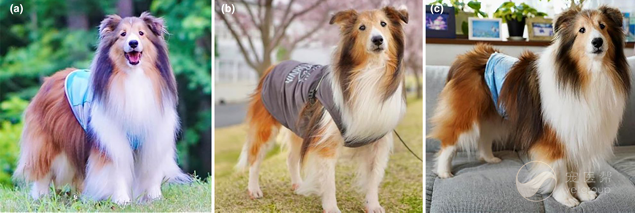
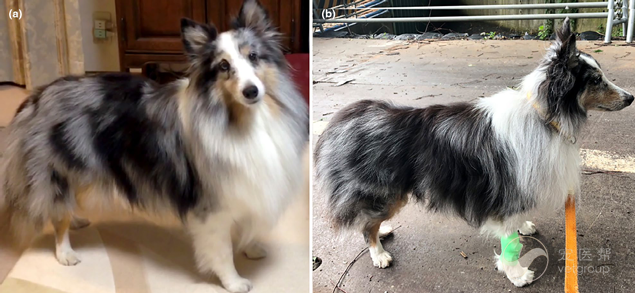
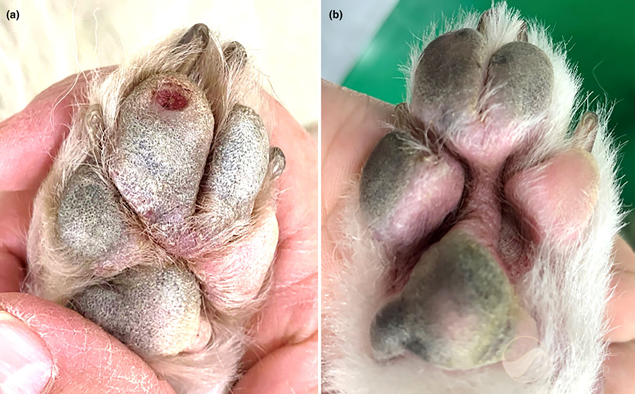
The most common DAEs in the lapatinib/piroxicam group were alopecia (n = 10; Figures 1 and 2), hyperpigmentation (n = 9), and pruritus (n = 6). The severity of the DAEs was predominantly mild- to- moderate, with lesions primarily localised to the trunk, face, and limbs. Rare DAEs, such as paw pad ulceration (n = 2; Figure 3) and nail/nailbed/claw changes (n = 1), were observed. In one dog with paw pad ulceration and in the dog with nail/ nailbed/claw changes, the severity of DAEs required discon tinuation of lapatinib to improve the condition of the dogs. In the remaining dog with paw pad ulceration, the lesions were successfully managed with protective dog boots and topical moisturisers without interruption of lapatinib treatment. No other DAEs required specific therapeutic intervention to main tain QoL.
拉帕替尼/吡罗昔康组最常见的DAE是脱毛(n=10;图1和图2)、色素沉着过度(n=9)和瘙痒(n=6)。DAE的严重程度主要为轻度至中度,病变主要局限于躯干、面部和四肢。观察到罕见的DAE,如爪垫溃疡(n=2;图3)和指甲/甲床/爪部变化(n=1)。在一只患有爪垫溃疡的犬和一只患有指甲/甲床/爪部变化的犬中,DAE的严重程度需要停用拉帕替尼以改善犬的状况。在另一只患有爪垫溃疡的犬中,病变通过使用保护性犬靴和局部保湿剂成功管理,未中断拉帕替尼治疗。没有其他DAE需要特定的治疗干预来维持生活质量。
表1 | 拉帕替尼/吡罗昔康组与单独吡罗昔康组皮肤事件(DE)分类的比较。
表2 | 拉帕替尼/吡罗昔康组皮肤事件(DEs)概述。
3.3 | Association Between DAEs and Survival in UC Dogs Treated With Lapatinib/Piroxicam
3.3 | 接受拉帕替尼/吡罗昔康治疗的UC犬中DAEs与生存期的关联
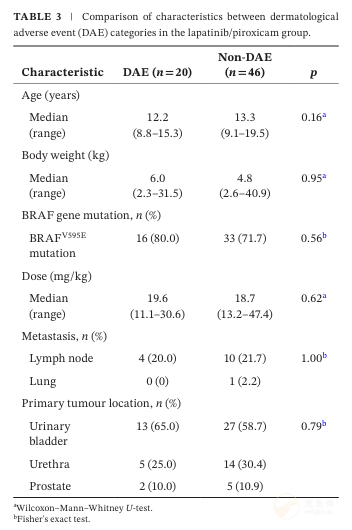
Among the 85 dogs with UC treated with lapatinib/piroxicam, 18 that received other molecular- targeted therapies or underwent surgical intervention were excluded from the survival analysis. Furthermore, lapatinib was discontinued in one dog owing to DAEs and was excluded from the survival analysis. The association between DAEs and survival was evaluated in the remaining 66 dogs. During the study period, 51 of the 66 dogs died, of which 38 died as a consequence of disease progression. Two dogs were euthanised, four were lost to follow- up, and 15 remained alive at the end of the study period. Kaplan–Meier analysis showed that the median PFS and OS of the 66 dogs treated with lapatinib/piroxicam were 188 days (95% CI 157–293; range 7–1330 days) and 394 days (95% CI 288–456; range 7–1330 days), respectively (Figure S1). The dogs treated with lapatinib/piroxicam were divided into two groups: those with DAEs (DAE group, n = 20) and those without DAEs (non- DAE group, n = 46). No significant differences in the clinical characteristics were observed between the groups (Table 3).
在接受拉帕替尼/吡罗昔康治疗的85只UC犬中,18只接受了其他分子靶向治疗或进行了手术干预的犬被排除在生存分析之外。此外,一只犬因DAE停用了拉帕替尼,也被排除在生存分析之外。在剩余的66只犬中评估了DAE与生存期的关联。在研究期间,66只犬中有51只死亡,其中38只死于疾病进展。2只犬被安乐死,4只失访,15只在研究期结束时仍然存活。Kaplan-Meier分析显示,接受拉帕替尼/吡罗昔康治疗的66只犬的中位PFS和OS分别为188天(95% CI 157-293;范围7-1330天)和394天(95% CI 288-456;范围7-1330天)(图S1)。将接受拉帕替尼/吡罗昔康治疗的犬分为两组:有DA组(DAE组,n=20)和无DAE组(非DAE组,n=46)。两组之间的临床特征未观察到显著差异(表3)。
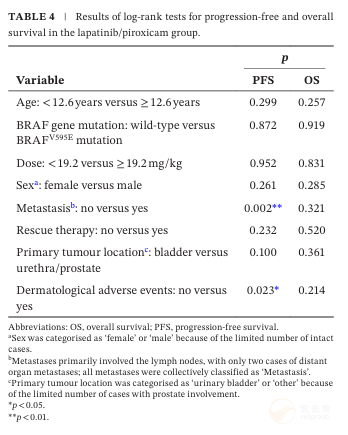
The log- rank test was used to assess the association between the survival outcomes and several clinical variables (Table 4). The presence of DAEs was significantly associated with a longer PFS (median 398 days [95% CI 163–456] vs. 162 days [95% CI 119–197]; p = 0.023) in lapatinib/piroxicam- treated dogs (Figure S2). Additionally, UC cases with metastasis had a significantly shorter PFS (median, 222 days [95% CI 163–428] vs. 119 days [95% CI 61–211]; p = 0.002) than those without metastasis. No other variables evaluated in the log- rank analysis showed significant associations with PFS or OS (Table 4).
使用对数秩检验评估生存结果与几个临床变量之间的关联(表4)。在拉帕替尼/吡罗昔康治疗的犬中,DAEs的存在与更长的PFS显著相关(中位数398天[95% CI 163-456] vs. 162天[95% CI 119-197];p=0.023)(图S2)。此外,有转移的UC病例的PFS显著短于无转移的病例(中位数,222天[95% CI 163-428] vs. 119天[95% CI 61-211];p=0.002)。对数秩分析中评估的其他变量均未显示与PFS或OS有显著关联(表4)。
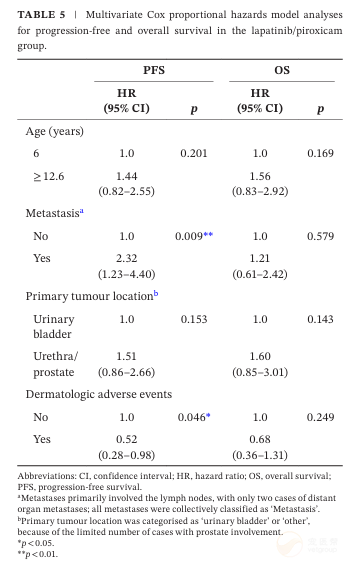
The Cox proportional hazards model was used to screen variables with prognostic value. Among the candidate covariates, age, primary tumour location, metastasis, and DAEs were in cluded in the Cox regression model. The results are summarised in Table 5. The variables that were individually associated with a shortened survival included metastasis (hazard ratio for PFS 2.32; 95% CI 1.23–4.40, p = 0.009). The presence of DAEs was individually associated with a prolonged PFS (hazard ratio 0.52; 95% CI 0.28–0.98, p = 0.046).
使用Cox比例风险模型筛选具有预后价值的变量。在候选协变量中,年龄、原发肿瘤位置、转移和DAE被纳入Cox回归模型。结果总结在表5中。与生存期缩短单独相关的变量包括转移(PFS的风险比为2.32;95% CI 1.23-4.40,p=0.009)。DAEs的存在与延长的PFS单独相关(风险比0.52;95% CI 0.28-0.98,p=0.046)。
FIGURE 1 | Representative dermatological adverse events (alopecia) in dogs treated with lapatinib/piroxicam. (a) Before lapatinib administration. (b) 397 days after lapatinib administration, showing moderate alopecia on the trunk and limbs. (c) 272 days after lapatinib withdrawal, showing significant hair regrowth.
图1 |拉帕替尼/吡罗昔康治疗犬的典型皮肤不良事件(脱毛)。(a)在使用拉帕替尼之前。(b)拉帕替尼给药后397天,躯干和四肢出现中度脱毛。(c)拉帕替尼停药后272天,显示出明显的毛发再生。
FIGURE 2 | Representative dermatological adverse events (alopecia) in dogs treated with lapatinib/piroxicam. (a) Before lapatinib administra tion. (b) 308 days after lapatinib administration, showing moderate hair loss on the face, neck, and trunk.
图2 |拉帕替尼/吡罗昔康治疗犬的典型皮肤不良事件(脱毛)。(a)在使用拉帕替尼之前。(b)拉帕替尼给药后308天,面部、颈部和躯干出现中度脱毛。
FIGURE 3 | Representative dermatological adverse events (ulceration of the paw pad) in dogs treated with lapatinib/piroxicam. (a) Ulceration on the paw pad 304 days after lapatinib administration. (b) Complete resolution of the paw pad 78 days after lapatinib withdrawal.
图 3 | 使用拉帕替尼/吡罗昔康治疗的犬出现的典型皮肤不良反应(爪垫溃疡)。(a)在服用拉帕替尼 304 天后爪垫出现溃疡。(b)在停用拉帕替尼 78 天后,爪垫完全恢复正常。
TABLE 3 | Comparison of characteristics between dermatological adverse event (DAE) categories in the lapatinib/piroxicam group.
表3 | 拉帕替尼/吡罗昔康组皮肤不良反应(DAE)类别之间特征的比较。
TABLE 4 | Results of log- rank tests for progression- free and overall survival in the lapatinib/piroxicam group.
表4 | 拉帕替尼/吡罗昔康组无进展生存期和总生存期的对数秩检验结果。
Abbreviations: OS, overall survival; PFS, progression- free survival.
aSex was categorised as ‘female’ or ‘male’ because of the limited number of intact cases.
bMetastases primarily involved the lymph nodes, with only two cases of distant organ metastases; all metastases were collectively classified as ‘Metastasis’.
cPrimary tumour location was categorised as ‘urinary bladder’ or ‘other’ because of the limited number of cases with prostate involvement. p < 0.05. *p < 0.01.
缩写:OS,总体生存率;PFS,无进展生存率。
a 性别被归类为“女性”或“男性”,因为完整病例数量有限。
b 转移主要发生在淋巴结上,仅有两例为远处器官转移;所有转移病例均统一归类为“转移”。
c 原发肿瘤位置被归类为“膀胱”或“其他”,因为涉及前列腺的病例数量有限。 p < 0.05。*p < 0.01。
4 | Discussion
4 | 讨论
This retrospective study evaluated the incidence, characteristics, and prognostic significance of DAEs in dogs with UC that were treated with lapatinib and piroxicam. DAEs occur in ap proximately one- third of lapatinib- treated dogs, with alopecia and hyperpigmentation being the most common. Notably, dogs that developed DAEs had significantly longer PFS than those without DAEs, suggesting a potential association between DAEs and the therapeutic efficacy of lapatinib in dogs with UC.
这项回顾性研究评估了接受拉帕替尼和吡罗昔康治疗的UC犬中DAE的发生率、特征和预后意义。大约三分之一的拉帕替尼治疗犬发生DAE,其中脱毛和色素沉着最为常见。值得注意的是,发生DAE的犬比未发生DAE的犬具有显著更长的PFS,这表明DAE与拉帕替尼在犬UC中的治疗效果之间存在潜在关联。
In humans, DAEs are among the most commonly observed ad verse events of lapatinib, along with diarrhoea. However, the mechanisms underlying lapatinib- induced DAEs remain unclear. Lapatinib is a tyrosine kinase inhibitor targeting EGFR and HER2, and its association with EGFR inhibition, similar to other EGFR inhibitors, has been studied extensively. EGFR is a 170 kDa transmembrane protein with extracellular ligand- binding and intracellular tyrosine kinase do mains that regulate cell proliferation, differentiation, migration and apoptosis. EGFR is expressed in various cell types, including epithelial, stromal, glial, and smooth muscle cells. In humans, DAEs caused by EGFR inhibitors are associated with EGFR inhibition in keratinocytes. EGFR inhibition disrupts keratinocyte proliferation and differentiation, impairs epidermal homeostasis, and leads to cutaneous symptoms such as follicular papulopustular eruptions and acneiform dermatitis. A recent in vitro and in vivo study investigated the mechanisms of lapatinib- induced keratinocyte dysfunction and showed that decreased high mobility group box 1 expression caused by lapatinib is associated with cutaneous toxicity. Although mechanistic data in dogs are limited, an in vitro study using canine epidermal keratinocyte cell lines demonstrated that the specific EGFR inhibitor modulates ERK1/2 phosphorylation and CCL17 transcription. This finding supports the important role of EGFR signalling in canine keratinocytes. However, to the best of our knowledge, no in vivo studies have evaluated EGFR inhibitor- associated DAEs in dogs. Therefore, the mechanisms underlying such events in this species must be inferred largely from human data.
在人类中,DAE是拉帕替尼最常见的不良事件之一,与腹泻并列。然而,拉帕替尼诱导DAE的机制仍不清楚。拉帕替尼是一种靶向EGFR和HER2的酪氨酸激酶抑制剂,其与EGFR抑制的关联,类似于其他EGFR抑制剂,已被广泛研究。EGFR是一种170 kDa的跨膜蛋白,具有细胞外配体结合和细胞内酪氨酸激酶结构域,可调节细胞增殖、分化、迁移和凋亡。EGFR在各种细胞类型中表达,包括上皮细胞、基质细胞、神经胶质细胞和平滑肌细胞。在人类中,由EGFR抑制剂引起的DAEs与角质形成细胞中的EGFR抑制有关。EGFR抑制会破坏角质形成细胞的增殖和分化,损害表皮稳态,并导致皮肤症状,如毛囊性丘疹脓疱性皮疹和痤疮样皮炎。最近的一项体外和体内研究调查了拉帕替尼诱导的角质形成细胞功能障碍的机制,并表明由拉帕替尼引起的高迁移率族蛋白B1表达降低与皮肤毒性相关。尽管犬的机制数据有限,但一项使用犬表皮角质形成细胞系的体外研究表明,特异性EGFR抑制剂调节ERK1/2磷酸化和CCL17转录。这一发现支持了EGFR信号在犬角质形成细胞中的重要作用。然而,据我们所知,尚无体内研究评估犬中EGFR抑制剂相关的DAE。因此,该物种中此类事件的潜在机制在很大程度上必须从人类数据中推断。
The lapatinib- induced DAEs observed in dogs differ from those typically reported in humans. In this study, lapatinib- associated DAEs in dogs were primarily noninflammatory lesions, such as alopecia and hyperpigmentation. By contrast, lapatinib- induced cutaneous toxicities in humans predominantly manifest as inflammatory lesions, including follicular papulopustular eruptions, acneiform dermatitis, pruritus, and generalised xerosis. Among the adverse events associated with EGFR inhibitors in human medicine, noninflammatory alopecia is less common than folliculitis; however, there have been reports of noninflammatory alopecia characterised by a predominance of telogen and quiescent hair follicles in scalp histopathological results, changes in hair texture to brittle, curly hair, and androgenic- like frontal alopecia. EGFR influences hair growth cycles in mice. Whether a similar mechanism contributes to lapatinib- associated noninflammatory alopecia in dogs remains to be clarified and represents an important subject for future investigation. Considering that canine breeds have different hair growth patterns and follicular structures, we considered the potential involvement of breed- specific factors, such as non- shedding breeds in the development of lapatinib- induced DAEs. However, no breed- specific trends were observed in dogs with DAEs. The mechanisms underlying hair abnormalities associated with EGFR inhibitors remain poorly understood in dogs and humans. A previous study suggested that the response of epidermal keratinocytes to EGF ligands in dogs may differ from that in humans.
本研究中观察到的犬拉帕替尼诱导的DAE与人类中通常报道的不同。在本研究中,犬拉帕替尼相关的DAE主要是非炎性病变,如脱毛和色素沉着。相比之下,人类拉帕替尼诱导的皮肤毒性主要表现为炎性病变,包括毛囊性丘疹脓疱性皮疹、痤疮样皮炎、瘙痒和全身性皮肤干燥。在人类医学中与EGFR抑制剂相关的不良事件中,非炎症性脱毛比毛囊炎少见;然而,已有报道称非炎性脱毛的特征是头皮组织病理学结果中以休止期和静止期(quiescent)毛囊为主,毛发质地变为脆弱、卷曲,以及雄激素样额部脱发。EGFR影响小鼠的毛发生长周期。类似的机制是否导致犬拉帕替尼相关的非炎性脱毛仍有待阐明,是未来研究的重要课题。考虑到犬品种具有不同的毛发生长模式和毛囊结构,我们考虑了品种特异性因素(如非脱毛品种)在拉帕替尼诱导的DAE发展中的潜在参与。然而,在患有DAE的犬中未观察到品种特异性趋势。犬和人类中与EGFR抑制剂相关的毛发异常的机制仍然知之甚少。先前的一项研究表明,犬表皮角质形成细胞对EGF配体的反应可能与人类不同。
In this study, lapatinib- induced DAEs in dogs were mild- to- moderate, and severe events requiring treatment discontinuation were rare. This is in contrast to the findings in human oncology, where severe DAEs with EGFR inhibitors, such as grade 3 or 4 toxicities, often require dose reduction or discontinuation of treatment. However, skin toxicities caused by TKIs have been reported to be significantly less severe than those caused by EGFR- targeting monoclonal antibodies. Lapatinib also is known to rarely cause grade ≥ 3 skin toxicity in humans, which is consistent with the findings of this study. Standard treatments for EGFR inhibitor- induced skin toxicity in humans include steroids and antibiotics; however, low- dose aspirin, a nonselective COX inhibitor, also has shown efficacy against rashes caused by gefitinib, another EGFR inhibitor. The concomitant use of piroxicam, a nonselective COX inhibitor, in this study may have influenced the type and severity of DAEs observed, and further investigation of the pharmacological interactions between lapatinib and piroxicam is warranted.
在本研究中,犬拉帕替尼诱导的DAE为轻度至中度,需要停止治疗的严重事件很罕见。这与人类肿瘤学中的发现形成对比,在人类肿瘤学中,EGFR抑制剂引起的严重DAE,如3级或4级毒性,通常需要减少剂量或停止治疗。然而,据报道,TKI引起的皮肤毒性明显轻于靶向EGFR的单克隆抗体。拉帕替尼在人类中也已知很少引起≥3级皮肤毒性,这与本研究的结果一致。人类EGFR抑制剂诱导的皮肤毒性的标准治疗包括类固醇和抗生素;然而,低剂量阿司匹林(一种非选择性COX抑制剂)也显示出对另一种EGFR抑制剂吉非替尼引起的皮疹有效。本研究中吡罗昔康(一种非选择性COX抑制剂)的联合使用可能影响了观察到的DAE的类型和严重程度,有必要进一步研究拉帕替尼和吡罗昔康之间的药理学相互作用。
In this study, lapatinib had to be discontinued in two cases (2.4%) because of severe DAEs, including paronychia and paw pad ulcers. Paronychia has been well- documented in humans with DAEs caused by EGFR inhibitors. However, there are no reports of epithelial ulcerations in humans. In the paw pad ulceration shown in Figure 3, vasculitis was clinically suspected based on the lesion morphology. However, no systemic symptoms consistent with vasculitis were present, and routine haematological and biochemical examinations at the time of ulcer development showed no significant abnormalities, including white blood cell and C- reactive protein concentrations. Because a skin biopsy was not taken, histopathological confirmation or exclusion of vasculitis was not possible in this case. Canine paw pads consist of thick keratinised stratum corneum. These structural features may potentiate the effects of the EGFR inhibitor- induced keratinocyte damage. In one of the two cases of skin ulceration following lapatinib administration, paw pad ulcers were observed, which required treatment discontinuation. In the other case, the ulcers were effectively managed by protecting the paw pads with socks and a hydrocolloid dressing, thereby preventing a significant decrease in QoL.
在本研究中,有两例(占 2.4%)因出现严重DAE(包括甲沟炎和爪垫溃疡)而不得不停用拉帕替尼。甲沟炎在因 EGFR 抑制剂导致DAE而患病的人类患者中已有明确记载。然而,尚无人类出现上皮溃疡的报道。图 3 中所示的爪垫溃疡,根据病变形态临床怀疑存在血管炎。但并未出现与血管炎相符的全身症状,且溃疡形成时的常规血液学和生化检查未显示任何显著异常,包括白细胞和 C 反应蛋白浓度。由于未进行皮肤活检,因此无法在此病例中对血管炎进行组织病理学确认或排除。犬的爪垫由厚的角质化角质层组成。这些结构特征可能增强了 EGFR 抑制剂诱导的角质形成细胞损伤的影响。在服用拉帕替尼后出现的两例皮肤溃疡中,有一例观察到了爪垫溃疡,这需要停止治疗。在另一种病例中,通过用袜子覆盖爪垫并使用水胶体敷料来保护爪子,溃疡得到了有效控制,从而避免了生活质量的显著下降。
In humans, DAEs have been suggested as biomarkers of EGFR inhibitor efficacy. Likewise, the occurrence of early onset rashes is associated with prolonged survival in human patients with breast cancer treated with lapatinib Specific chemotherapy- induced adverse events, such as neutropenia and amenorrhoea, also have been recognised for their potential to correlate with improved prognosis and survival. This concept also is relevant in veterinary medicine, where studies have shown that chemotherapy- induced neutropenia is associated with improved survival in dogs with multicentric lymphoma. In this study, dogs with UC that developed DAEs had significantly longer PFS, and Cox proportional hazards models identified lapatinib- induced DAEs as independent prognostic factors. These findings suggest that, similar to human medicine, DAEs may serve as clinical biomarkers of lapatinib efficacy in canine UC. However, no significant difference in OS was observed between UC dogs with and without DAEs. There are several possible explanations for the discrepancy between PFS and OS. First, OS is influenced by various post- progression factors, such as subsequent treatments or supportive care, which may differ among individuals and dilute the impact of DAEs. By contrast, PFS directly reflects response to study treatment. Second, OS is affected by many other variables, including comorbidities, tumour biology, and owner decisions regarding euthanasia, which may weaken the association between DAEs and long- term survival. Third, the relatively small sample size and limited number of events in the DAE group may have reduced the statistical power to detect significant differences in OS. In the survival analysis, 16 dogs were alive at the end of the study period, resulting in censored data.
在人类中,DAE被认为可以作为EGFR抑制剂疗效的生物标志物。同样,早期出现的皮疹在接受拉帕替尼特定化疗的乳腺癌人类患者中与较长的生存期有关。特定的化疗引起的不良事件,如中性粒细胞减少症和闭经,也因其可能与改善预后和生存率相关而被认识到。这一概念在兽医学中也同样适用,研究表明,化疗引起的中性粒细胞减少症与患有多中心淋巴瘤犬的生存率提高有关。在本研究中,患有溃疡性结肠炎且出现 DAE的犬的无进展生存期(PFS)显著更长,而 Cox 比例风险模型确定拉帕替尼引起的 DAE为独立的预后因素。这些发现表明,与人类医学类似,DAE可能作为拉帕替尼在犬溃疡性结肠炎中的疗效的临床生物标志物。然而,在患有溃疡性结肠炎的犬中,出现和未出现 DAE的病例在总生存期(OS)方面没有显著差异。PFS 和 OS 之间的差异可能有多种解释。首先,OS 受到多种后治疗因素的影响,例如后续治疗或支持性护理,这些因素可能因个体差异而有所不同,并削弱了 DAE 的影响。相比之下,PFS 直接反映了对研究治疗的效果。其次,OS 受到许多其他变量的影响,包括共病情况、肿瘤生物学特性以及主人关于安乐死的决定,这些都可能削弱 DAE 与长期生存之间的关联。第三,DAE 组的样本量相对较小且事件数量有限,这可能降低了检测 OS 中显著差异的统计能力。在生存分析中,研究期结束时有 16 只犬存活,因此产生了删失数据。
This study has some limitations. First, because this was a retrospective study conducted at a single centre, the analysis relied on the accuracy and completeness of the medical records, which could have introduced bias. Some dogs may have received care at other clinics or hospitals when dermatological signs occurred. Consequently, the frequency of these signs in our data may have been underestimated. However, all owners were instructed to contact our hospital first if they noticed any changes in their dog's condition, and many did so when something unusual occurred. Furthermore, most cases were followed up on every 1–2 months, and any events that occurred during that time were recorded in the medical record. Second, the sample size was relatively small, particularly in the DAE group. Third, although the Naranjo algorithm pro vides a structured approach for assessing causality, it may not fully capture the multifactorial nature of DAE development, including individual differences in drug metabolism and immune responses. The subjective nature of the DAE assessment, even with indices, such as the Naranjo algorithm and VCOG criteria, may have introduced variability. The incorporation of objective and quantitative methods, such as digital image analysis and biomarker measurements, may improve assessment accuracy. Finally, the lack of histopathological data limits our understanding of the pathophysiological mechanisms underlying DAEs, especially noninflammatory alopecia. Skin biopsies and histopathological analyses could provide valuable insights into the biological basis of lapatinib- induced DAEs, and elucidate the potential differences between dogs and humans. To validate these findings and explore the underlying mechanisms, prospective studies with larger cohorts, standardised protocols for evaluating DAEs, and integration of objective measures and histopathological assessments are needed.
本研究存在一些局限性。首先,由于这是一项在单一中心进行的回顾性研究,因此分析依赖于医疗记录的准确性和完整性,这可能会引入偏差。有些犬在出现皮肤症状时可能在其他诊所或医院接受治疗。因此,我们数据中这些症状出现的频率可能被低估了。然而,所有主人都被告知,如果他们注意到犬的状况有任何变化,应首先联系我们医院,而且很多主人在出现异常情况时确实这样做了。此外,大多数病例每 1 - 2 个月进行一次随访,这段时间内发生的任何事件都记录在医疗记录中。其次,样本量相对较小,特别是在 DAE 组中。第三,尽管纳兰约算法为评估因果关系提供了一种结构化的方法,但它可能无法完全捕捉 DAE 发展的多因素性质,包括个体在药物代谢和免疫反应方面的差异。即使是使用诸如纳兰约算法和 VCOG 标准等指标进行的 DAE 评估的主观性,也可能引入了变异性。采用客观和定量的方法,如数字图像分析和生物标志物检测,可能会提高评估的准确性。最后,由于缺乏组织病理学数据,我们对DAE的病理生理机制的理解受到限制,尤其是对于非炎性脱毛。皮肤活检和组织病理学分析能够为拉帕替尼诱导的 DAE的生物学基础提供有价值的见解,并阐明犬和人类之间的潜在差异。为了验证这些发现并探索其背后的机制,需要进行具有更大样本量的前瞻性研究、标准化评估 DAE的方案以及将客观测量和组织病理学评估相结合。
In conclusion, this study showed that DAEs are common in dogs with UC treated with lapatinib/piroxicam and may serve as prognostic indicators of improved survival. These findings are consistent with observations in human oncology and high light the translational potential of monitoring adverse events in veterinary medicine.
总之,本研究表明,DAE在接受拉帕替尼/吡罗昔康治疗的UC犬中很常见,可能是改善生存的预后指标。这些发现与人类肿瘤学的观察结果一致,并突出了监测兽药不良事件的转化潜力。
TABLE 5 | Multivariate Cox proportional hazards model analyses for progression- free and overall survival in the lapatinib/piroxicam group.
表5 | 拉帕替尼/吡罗昔康组无进展生存期和总生存期的Cox比例风险模型分析结果。
Abbreviations: CI, confidence interval; HR, hazard ratio; OS, overall survival; PFS, progression- free survival.
aMetastases primarily involved the lymph nodes, with only two cases of distant organ metastases; all metastases were collectively classified as ‘Metastasis’.
bPrimary tumour location was categorised as ‘urinary bladder’ or ‘other’, because of the limited number of cases with prostate involvement.
*p < 0.05.
**p < 0.01.
缩写:CI,置信区间;HR,风险比;OS,总生存期;PFS,无进展生存期。
a. 转移灶主要累及淋巴结,仅有两例发生远处器官转移;所有转移灶均统一归类为“转移”。
b. 原发肿瘤位置被归类为“膀胱”或“其他”,因为涉及前列腺的病例数量有限。
| 


 |Archiver|手机版|小黑屋|宠医帮
( 京ICP备2022012070号-2 )
|Archiver|手机版|小黑屋|宠医帮
( 京ICP备2022012070号-2 ) 




 发表于 2026-3-23 13:25:50

 收藏
收藏 转播
转播 分享
分享 淘帖
淘帖