|
Incidence Rate of Otitis Externa Episodes in Atopic Dogs Is Reduced by a Therapeutic Diet in a 6- Month Randomised, Blinded, Controlled, Clinical Trial
在一项为期 6 个月的随机、盲法、对照临床试验中,采用治疗性饮食可降低特应性皮炎犬外耳炎的发作率
作者:Adrian Watson | Jeremy Laxalde | Franco Martini | Nina Fischer | Elisa Maina | Claude Favrot
翻译:王帆
Keywords: atopic | dermatitis | diet | dogs | otitis externa | recurrence
关键词:特应性皮炎 | 皮肤病 | 饮食 | 犬 | 外耳炎 | 复发
ABSTRACT
摘要
Background: Recurrent otitis externa (OE) episodes commonly affect dogs with canine atopic dermatitis (cAD) despite ongoing cAD treatment.
Objective: To determine if a therapeutic diet with active ingredients targeting the skin barrier and allergy pathways reduces the incidence rate of OE.
Animals, Materials and Methods: Thirty- four client- owned dogs with active erythroceruminous OE + cAD (not necessarily active) were randomised to test (n = 16) or control diet (n = 18), fed for up to 6 months. Dogs had to be in remission by Month (M)1 after initial OE treatment. Outcomes included incidence rate (percentage of dogs with ≥ 1 OE episode), 0–3 Otitis Index Score (OTIS- 3), cAD Extent and Severity Index, 4th iteration (CADESI- 04), and medication score (medication required to control OE and/or cAD) at M3 and the end- point, defined as each dog's last on- study data.
Results: The incidence rate was significantly lower in the test versus control group (25% vs. 61%, p < 0.01). OTIS- 3 and CADESI- 04 improved significantly between baseline and M3 in both groups (control: p = 0.003 and p < 0.001; test: each p = 0.001). Between M3 and the end- point, OTIS- 3 and CADESI- 04 rebounded significantly in the control (p = 0.025 and p = 0.026) and not in the test group (p = 0.139 and p = 0.909). CADESI improvement from baseline was maintained at the end- point in the test (p < 0.001) and not in the control group (p = 0.227). Medication score improved significantly throughout the diet duration in the test group (baseline to M3, M3 to end- point, and baseline to end- point) versus no improvements in the control group.
Conclusion and Clinical Relevance: A therapeutic diet for cAD helped to sustain improvements in aural manifestations.
背景:尽管持续性地对犬特应性皮炎(cAD)进行治疗,但复发性外耳炎(OE)仍是患有该疾病的犬的常见问题。
目的:确定含有针对皮肤屏障和过敏通路活性成分的治疗性饮食是否能降低外耳炎的发生率。
动物、材料与方法:34 只患有活跃性红斑性耵聍性外耳炎合并犬特应性皮炎(犬特应性皮炎不一定处于活跃期)的家养犬被随机分为试验组(n=16)和对照组(n=18),喂养长达 6 个月。在初始外耳炎治疗后 1 个月(M1),所有犬需达到病情缓解状态。观察指标包括发生率(发生≥1 次外耳炎发作的犬的百分比)、0-3 级耳炎指数评分(OTIS-3)、犬特应性皮炎严重程度指数(CADESI-04),以及在 3 个月(M3)和终点(定义为每只犬最后的研究数据)时控制外耳炎和 / 或犬特应性皮炎所需的药物评分。
结果:试验组的发生率显著低于对照组(25% vs. 61%,p<0.01)。在两组中,从基线到 3 个月时,耳炎指数评分和犬特应性皮炎严重程度指数均有显著改善(对照组:p=0.003 和 p<0.001;试验组:均 p=0.001)。从 3 个月到终点,对照组的耳炎指数评分和犬特应性皮炎严重程度指数显著反弹(p=0.025 和 p=0.026),而试验组无显著反弹(p=0.139 和 p=0.909)。试验组从基线到终点对犬特应性皮炎严重程度指数的改善得以维持(p<0.001),而对照组则未维持(p=0.227)。在整个饮食干预期间,试验组的药物评分显著改善(从基线到 3 个月、从 3 个月到终点以及从基线到终点),而对照组则无改善。
结论与临床意义:针对犬特应性皮炎的治疗性饮食有助于维持耳部症状的改善。
1 | Introduction
1 | 概述
Otitis externa (OE) is a common reason for veterinary consultation; in an analysis of the UK VetCompass database for 2016, the 1 year prevalence in primary practice was 7.3%, and in an earlier study, otitis was present in 22% of dogs presenting with dermatological problems. Recurrent ear infections in dogs are always secondary, and canine atopic dermatitis (cAD) is one of the primary initiating causes. Dogs with cAD have a three- fold greater risk of OE than those without any skin problems and approximately 50% of dogs with cAD present with episodes of OE. Otitis associated with cAD is typically chronic or recurrent despite treat ment for underlying cAD. The condition is frustrating for veterinarians and owners, and chronic tissue changes caused by repeated episodes perpetuate the pathological findings. In one study in which dogs with allergic OE were treated with topical hydrocortisone aceponate or placebo for 16 weeks, 50% of placebo- treated dogs relapsed compared with 12% of proactively treated dogs.
外耳炎是兽医诊疗中的常见原因;在对 2016 年英国 VetCompass 数据库的分析中,基层诊所的 1 年患病率为 7.3%,而在较早的一项研究中,因皮肤问题就诊的犬22%存在耳炎。犬的复发性耳部感染通常是继发性,而犬特应性皮炎是原发病因之一。患有犬特应性皮炎的犬患外耳炎的风险是无任何皮肤问题犬的 3 倍,约 50% 的犬特应性皮炎患犬会出现外耳炎发作。尽管对潜在的犬特应性皮炎进行了治疗,但与犬特应性皮炎相关的耳炎通常是慢性的或复发性的。这种情况让兽医和主人都感到困扰,反复发作引起的慢性组织变化会使病理表现持续存在。在一项对患有过敏性OE的犬使用外用氢化可的松醋丙酯或安慰剂治疗 16 周的研究中,50% 接受安慰剂治疗的犬复发,而接受主动治疗的犬复发率为 12%。
The treatment strategy for recurrent OE is multimodal reactive therapy to induce remission and long- term maintenance therapy to prevent relapse or prolong the duration of remission. Atopic dermatitis (AD) is a life- long condition, so additional strategies to reduce the medication burden could have cumulative benefits over time, and reducing antibiotic use is part of responsible antimicrobial stewardship.
复发性外耳炎的治疗策略是多模式的反应性治疗以促使病情缓解,以及长期维持治疗以预防复发或延长缓解期。特应性皮炎(AD)是一种终身疾病,因此减轻药物负担的额外策略可能会随着时间的推移产生累积效益,减少抗生素使用也是负责任的抗菌药物管理的一部分。
There is a need for different preventative strategies for recurrent OE that can reduce the frequency of flares, potentially improving the qualityoflife of affected dogs, and reducing the caregiver burden, use of pharmacotherapeutics, and cost of veterinary care. Dietary modulation is attractive because it might provide a simple and non- stressful intervention that is feasible for the owner to sustain in the long term for what is a life- long disorder. Therapeutic diets incorporating active supplements to support skin hydration, the integrity of the epidermal barrier, and to modulate inflammatory activity in the skin have shown benefit in dogs with cAD. Vitamin E and lutein have antioxidant and skin protective value. Linoleic acid (an omega- 6 fatty acid) and taurine are involved in skin hydration and the structural integrity of the stratum corneum, promoting epidermal lipid synthesis and stimulating skin barrier proteins such as filaggrin. Other bioactive supplements have immunomodulatory properties. The omega- 3 fatty acids EPA and DHA favour the production of anti- inflammatory eicosanoids and downregulate exaggerated mast cell degranulation. Curcumin is an active polyphenol compound with immunomodulatory properties believed to include suppressive effects on T- helper cell (Th)2 responses. Bioactive triterpene glycyrrhizic acid from liquorice rebalances the Th1/Th2 response to allergens and modulates B- cell production of allergen- specific immunoglobulin (Ig)E and IgG1. In canine lymphocytes in vitro, liquorice root extract preferentially suppressed the Th2 cytokine interleukin (IL)- 4 over IL- 17 and interferon (IFN)γ.
目前需要不同的复发性外耳炎预防策略,以减少发作频率,潜在地提高患犬的生活质量,减轻照顾者的负担,减少药物治疗的使用和兽医护理的成本。饮食调节具有吸引力,因为对于终身性疾病,它可能提供一种简单且无压力的干预措施,主人可以长期维持。含有活性补充剂以支持皮肤水合作用、表皮屏障完整性和调节皮肤炎症活动的治疗性饮食已在患有犬特应性皮炎的犬中显示出益处。维生素 E 和叶黄素具有抗氧化和皮肤保护作用。亚油酸(一种 ω-6 脂肪酸)和牛磺酸参与皮肤水合作用和角质层的结构完整性,促进表皮脂质合成,并刺激丝聚合蛋白等皮肤屏障蛋白的生成。其他生物活性补充剂具有免疫调节特性。ω-3 脂肪酸 EPA 和 DHA 有利于抗炎的类二十烷酸的产生,并下调过度的肥大细胞脱颗粒。姜黄素是一种活性多酚化合物,具有免疫调节特性,据信其作用包括对抑制T 辅助细胞(Th)2 反应。来自甘草的生物活性三萜皂苷甘草酸可重新平衡对过敏原的 Th1/Th2 反应,并调节 B 细胞产生过敏原特异性免疫球蛋白(Ig)E 和 IgG1。在体外培养的犬淋巴细胞中,甘草根提取物优先抑制 Th2 细胞因子白细胞介素(IL)-4,对IL-17 和干扰素(IFN)γ的抑制作用弱。
The efficacy of dietary modulation for OE in dogs with AD has not yet been reported in a randomised controlled trial. The primary objective of this study was to assess whether a diet with proven efficacy in alleviating the signs of cAD could reduce the rate of relapse of erythroceruminous OE in atopic dogs. Other objectives were to determine the effects of the diet on the severity of inflammation in the ear canal, the overall skin signs of AD, and the burden of medications required to control skin clinical signs.
饮食调节对患有特应性皮炎的犬外耳炎的疗效尚未在随机对照试验中报道。本研究的主要目的是评估一种已被证明能缓解犬特应性皮炎症状的饮食是否能降低特应性皮炎患犬的红斑性耵聍性外耳炎的复发率。其他目的是确定该饮食对外耳炎症严重程度、特应性皮炎的整体皮肤症状以及控制皮肤临床症状所需药物负担的影响。
2 | Methods and Materials
2 | 材料与方法
2.1 | Ethical Approval, Owner Consent and Data Protection
2.1 | 伦理批准、主人同意和数据保护
The study protocol was approved by Royal Canin Ethical Research Committee and was compliant with the EU Directive 2010/63/EU on the protection of animals used for scientific purposes. All owners provided written informed consent in writing. In compliance with General Data Protection Regulation, minimal records of personal data were kept only for the duration required for study execution. No owner- identifying information was used in this analysis.
该研究方案已获得皇家宠物食品公司伦理研究委员会的批准,并符合欧盟关于用于科学目的的动物保护指令 2010/63/EU。所有主人均提供了书面知情同意。根据通用数据保护条例,仅在研究执行所需的期限内保留最少的个人数据记录。本分析中未使用任何可识别主人身份的信息。
2.2 | Study Diets
2.2 | 试验饮食
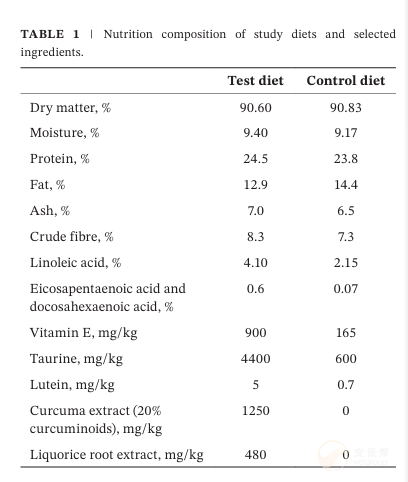
This parallel- design study randomised dogs to a test or control diet in a 1:1 ratio using a computer- generated randomisation list. Owners and their veterinarians were blinded to treatment as signment. Both diets were chicken- based dry kibbles, complete and balanced for dogs with a maintenance energy requirement of 95 kcal/kg0.75. Diets were of similar physical appearance and packaged in identical neutral bags identified only by code names. The compositions (Table 1) were based on those in a previous study with minor modifications; eicosapentaenoic acid (EPA) and docosahexaenoic acid (DHA) were sourced from algal not fish oil, and the liquorice extract was less refined, containing 5% glycyrrhizin. Owners were instructed to feed only the provided diets during the study. They were advised to perform a 6- day diet transition, feeding a mixture of the existing diet and the study diet in the ratio of 3:1 for 2 days, 1:1 for 2 days, and 1:3 for 2 days.
这项平行设计研究使用计算机生成的随机列表将犬按 1:1 的比例随机分配到试验饮食组或对照饮食组。主人及其兽医对治疗分配不知情。两种饮食均为基于鸡肉的干粮,满足犬的维持能量需求(95 kcal/kg0.75)。饮食的物理外观相似,包装在相同的中性袋子中,仅用代码名称标识。其成分(表 1)基于先前研究并略有修改;二十碳五烯酸(EPA)和二十二碳六烯酸(DHA)来自藻类而非鱼油,甘草提取物精制程度较低,含有 5% 的甘草酸。主人被指示在研究期间只喂养提供的饮食。建议他们进行 6 天的饮食过渡,前 2 天以 3:1 的比例混合现有饮食和试验饮食,接下来 2 天以 1:1 的比例,最后 2 天以 1:3 的比例。
2.3 | Study Population
2.3 | 研究对象
Client- owned dogs presenting with an active ceruminous OE with or without secondary yeast and/or bacterial infection were assessed for study eligibility by the investigators, all of whom were board- certified by the European College of Veterinary Dermatology and were working in referral clinics. Initial assessment incorporated a history, a thorough clinical and otoscopic examination, ear canal cytological investigation, and dis ease scoring.
由均获得欧洲兽医皮肤病学会认证且在转诊诊所工作的研究人员对出现活跃性耵聍性外耳炎(伴或不伴继发酵母菌和 / 或细菌感染)的家养犬进行研究资格评估。初步评估包括病史采集、全面的临床和耳镜检查、耳道细胞学检查以及疾病评分。
Eligibility criteria included a diagnosis of cAD with at least five of eight of Favrot's Criteria Set One, although cAD did not have to be active, and active unilateral or bilateral erythroceruminous OE with a 0–3 Otitis Index Score (OTIS- 3) > 4 for each affected ear. Ear canal cytological investigation was required before inclusion and scored according to Nuttall and Bensignor. Smears of exudate from the junction of the vertical and horizontal ear canals were air dried, stained with a modified Wright–Giemsa stain, and evaluated under ×400 magnification. The number of micro- organisms and cells in 10 random fields was counted from 0 to a maximum of 100, and the mean count was the cytological score. Dogs were required to have a pruritus score > 3 on an owner- assessed pruritus Visual Analog Scale (PVAS) ranging from 0 to 10. Canine Allergic Dermatitis Extent and Severity Index, 4th iteration (CADESI- 04) was scored yet was not an eligibility criterion. Food- induced atopic dermatitis (FIAD) must have been excluded diagnostically with an elimination diet and rechallenge; specifically, this was a 6- week elimination diet, followed by a rechallenge in those cases where any improvement was observed during the 6- week period. During the diet trial, as well as during the entire study, dogs were maintained under strict ectoparasite control. Owners agreed to comply with the study's protocol for 6 months.
纳入标准包括:根据 Favrot 的第一套标准,确诊为犬特应性皮炎且至少符合 8 项中的 5 项,尽管犬特应性皮炎不一定处于活跃期;活跃性单侧或双侧红斑性耵聍性外耳炎,每只患耳的 0-3 级耳炎指数评分(OTIS-3)>4。纳入前需进行耳道细胞学检查,并根据 Nuttall 和 Bensignor 的标准评分。从垂直和水平耳道交界处取分泌物涂片,风干后用改良的瑞氏 - 吉姆萨染色,在 400 倍放大下评估。在 10 个随机视野中计数微生物和细胞的数量(0 到最多 100 个),平均值为细胞学评分。犬的瘙痒评分需在主人评估的瘙痒视觉模拟量表(PVAS,范围 0-10)上 > 3。对犬过敏性皮炎严重程度指数(CADESI-04)进行评分,但这不是纳入标准。必须通过食物排除试验和再激发试验诊断排除食物诱发的特应性皮炎(FIAD);具体而言,这是一个 6 周的食物排除,随后在 6 周期间观察到任何改善的情况下进行再激发。在食物试验期间以及整个研究期间,犬均接受严格的体外寄生虫控制。主人同意遵守研究方案 6 个月。
Exclusion criteria included otitis media, ruptured tympanic membrane, FIAD or any other form of food allergy, and intercurrent disease. Dogs with evidence of bacterial rods in the initial cytological assessment or otitis infection associated with Pseudomonas were excluded; ear canal microbial culture was mandatory when there was any suspicion of a Pseudomonas infection. As otitis involving Pseudomonas may be associated with tympanic membrane rupture, only cases with cocci infection were enrolled. Allergen- specific immunotherapy initiated < 6 months before the start of the study or ongoing and associated with a clinical improvement in the month before the study was not permitted. Dogs that did not adhere to the monadic diet requirements were excluded.
排除标准包括中耳炎、鼓膜破裂、食物诱发的特应性皮炎或任何其他形式的食物过敏以及并发疾病。初始细胞学评估中发现杆菌或与假单胞菌相关的耳炎感染的犬被排除;当怀疑有假单胞菌感染时,必须进行耳道微生物培养。由于涉及假单胞菌的耳炎可能与鼓膜破裂相关,因此仅纳入球菌感染病例。在研究开始前 < 6 个月启动或正在进行且在研究前一个月内与临床改善相关的过敏原特异性免疫疗法是不允许的。不遵守单一饮食要求的犬被排除。
Presence of bacterial rods in any cytological examination during the study required the dog's withdrawal. Dogs could be with drawn by owners for any reason at any time, or at the discretion of investigators if a concomitant disorder developed, if the study protocol could not be followed, or if there were safety concerns.
研究期间任何细胞学检查中发现杆菌均需让犬退出研究。主人可随时因任何原因让犬退出,或者如果出现并发疾病、无法遵循研究方案或存在安全问题,研究人员可自行决定让犬退出。
2.4 | Study Medications and Continuation Criteria
2.4 | 研究药物和继续标准
At the baseline visit all dogs started a 10- day course of a combination topical product of hydrocortisone aceponate (1.11 mg/ mL), miconazole nitrate (15.1 mg/mL) and gentamicin sulphate 1505 IU/mL (EasOtic; Virbac: 1 mL per external ear canal per day), preceded by ear cleaning. They were treated concurrently with 10 days of oral prednisolone (0.5 mg/kg once daily); during which time any other immunomodulatory treatments were suspended. The aim of these initial treatments was to bring OE into remission in all dogs wherever possible after enrolment.
在基线诊疗时,所有犬开始为期 10 天的联合外用药物治疗,包括氢化可的松醋丙酯(1.11 mg/mL)、硝酸咪康唑(15.1 mg/mL)和硫酸庆大霉素 1505 IU/mL(EasOtic;Virbac:每天每只外耳道 1 mL),用药前先清洁耳道。同时给予 10 天的口服泼尼松龙(0.5 mg/kg,每日一次);在此期间,任何其他免疫调节治疗均暂停。这些初始治疗的目的是在纳入后尽可能使所有犬的外耳炎达到缓解状态。
The assigned diets were fed from study Day (D)1, which was ≤ 10 days after the baseline visit. Dogs with a satisfactory response to the initial treatments (OTIS- 3 < 4 for each affected ear) on D14 were then treated with a single- pump dose twice weekly of cutaneous hydrocortisone aceponate 0.584 mg/mL spray (Cortavance; Virbac) or Burow's solution with 1% hydrocortisone (Covetrus; or a local equivalent) until the Month (M)1 visit (D30) in order to prevent early relapse. Dogs with an OTIS- 3 < 4 for each ear at the M1 visit could continue in the study with twice- weekly ear cleanser treatment (none had an anti- inflammatory component). Dogs with persisting ear canal inflammation (OTIS- 3 > 4 for either or both ears) on D14 could be treated with EasOtic for an additional 10 days, or another topical treatment indicated by bacterial culture and antibiotic sensitivity tests. After this additional treatment, a dog could continue in the study if OTIS- 3 for each ear was < 4 and remained so after 10 days' follow- on treatment with Cortavance. After the M1 visit, a relapse in any dog could be treated with a 10- day treatment course of EasOtic and prednisolone (0.5 mg/kg once daily).
指定的饮食从研究第 1 天(D1)开始喂养,该时间不晚于基线访视后 10 天。在第 14 天(D14)对初始治疗有满意反应(每只患耳的 OTIS-3 <4)的犬,在 1 个月访视(D30)前,每周两次使用单次喷雾剂量的 0.584 mg/mL 外用氢化可的松醋丙酯喷雾或含 1% 氢化可的松的稀醋酸溶液,以防止早期复发。在 1 个月访视时,每只耳的 OTIS-3 <4 的犬可继续研究,每周两次使用洗耳液(不含抗炎成分)。在第 14 天耳道炎症持续存在(任一耳或双耳的 OTIS-3>4)的犬,可额外使用 EasOtic 治疗 10 天,或根据细菌培养和抗生素敏感性试验使用其他外用治疗。额外治疗后,如果每只耳的 OTIS-3 <4,且在后续 10 天使用 Cortavance 治疗后仍保持这一状态,则犬可继续参与研究。在 1 个月访视后,任何犬复发均可接受 10 天的 EasOtic 和泼尼松龙(0.5 mg/kg,每日一次)治疗。
The following immunomodulatory drugs were permitted during the study if needed to control AD: topical or systemic glucocorticoids, ciclosporin, or topical analogues such as tacrolimus, oclacitinib (Apoquel; Zoetis) and lokivetmab (Cytopoint; Zoetis). Dosage was determined monthly by the investigator, with the goal of reducing the use of these drugs as much as clinically ap propriate. Whenever possible, adjustments in immunomodula tory therapy were restricted to changes in dosages rather than changes in drug. Pyoderma occurring in the study was treated with a single 3- week treatment course of cefalexin per episode with or without use of antibacterial shampoo.
研究期间,如需控制特应性皮炎,允许使用以下免疫调节药物:外用或全身性糖皮质激素、环孢素、或外用类似物如他克莫司、奥拉替尼和洛基维特单抗。剂量由研究人员每月确定,目标是在临床适当的情况下尽可能减少这些药物的使用。只要可能,免疫调节治疗的调整仅限于剂量变化,而非药物种类变化。研究中出现脓皮病时,每次发作给予 3 周的头孢氨苄治疗,可联合或不联合使用抗菌香波。
Owners were required to maintain effective and ongoing flea control with isoxazolide prophylaxis (e.g., fluralaner [Bravecto], sarolaner [Simparica], afoxolaner [Nexgard]). Shampoo therapy, including antimicrobial shampoo, was permitted, provided that the regimen was kept consistent throughout the study.
主人需使用异恶唑林类药物(如氟雷拉纳、沙罗拉纳、阿福拉纳)进行有效的持续跳蚤控制。允许使用香波治疗,包括抗菌香波,前提是在整个研究期间保持治疗方案一致。
2.5 | Study Visits and Outcomes
2.5 | 研究访视和结果
After the baseline enrolment visit and subsequent commencement of the assigned study diet on D1, study visits were required on D14 and at M1 to evaluate response to the initial protocol- defined treatments, and at M3 and M6 for study outcome measures and routine clinical management of OE and cAD (if present). Additional intermediary consultations were discretionary. Adverse events were recorded at study or other clinical consultations. Owners were asked for observations on diet acceptance based on food consumption (not a study outcome measurement).
在基线纳入访视和随后在第 1 天开始指定的研究饮食后,需在第 14 天和 1 个月访视时评估对初始方案治疗的反应,并在 3 个月和 6 个月访视时评估外耳炎和犬特应性皮炎(如存在)的研究结果指标和常规临床管理。额外的中期咨询为非强制性。在研究访视或其他临床咨询时记录不良事件。询问主人对饮食接受度的观察(这不是研究结果指标)。
The primary outcome was the percentage of dogs with one or more episodes of OE during the study after remission had been achieved in the first month. This outcome is referred to as the incidence rate. An episode was defined as a worsening in the OTIS- 3 score that, in the investigator's clinical judgement, re quired a change in treatment. Other efficacy outcomes were the time to first relapse, the number of relapses during the 6- month study period, and OTIS- 3 (the sum of both ears), cytological score (the sum of both ears), cytological score (the sum of both ears), CADESI- 04 score, owner- assessed PVAS score and medication score at baseline, M3, and M6 (study end- point). Medication scoring accounted for the frequency and dose of medications taken to control OE and/or cAD. The scoring system was as described previously, with a higher score corresponding to a higher medication burden (see Table S1) . Owners were instructed to keep a daily diary of treatments from the commencement of the study diet, and the medication score at each time point was a daily average of scores since the last visit.
主要结果是在第一个月病情缓解后,研究期间发生一次或多次外耳炎发作的犬的百分比。这一结果称为发生率。发作定义为耳炎指数评分恶化,根据研究人员的临床判断,需要改变治疗方案。其他疗效结果包括首次复发时间、6 个月研究期间的复发次数,以及基线、3 个月和 6 个月(研究终点)时的耳炎指数评分(双耳总和)、细胞学评分(双耳总和)、犬特应性皮炎严重程度指数(CADESI-04)评分、主人评估的瘙痒视觉模拟量表评分和药物评分。药物评分考虑了控制外耳炎和 / 或犬特应性皮炎所用药物的频率和剂量。评分系统如前所述,评分越高表明药物负担越重(见表 S1)。指示主人从研究饮食开始记录每日治疗日记,每个时间点的药物评分是自上次访视以来的每日平均评分。
The global response of individuals at their last study visit was classified as good if two of three outcomes (CADESI score, PVAS or medication score) improved by > 50% and the third outcome had not worsened, and excellent if all three outcomes improved by > 50%.
在最后一次研究访视时,若三项结果(犬特应性皮炎严重程度指数评分、瘙痒视觉模拟量表评分或药物评分)中的两项改善 > 50% 且第三项未恶化,则个体的总体反应被归类为良好;若三项结果均改善 > 50%,则归类为优秀。
2.6 | Statistical Methods
2.6 | 统计方法
A power and sample size analysis calculated that 22 dogs per diet were needed to give 90% power to detect a significant difference between diets, assuming that 55% of dogs in the control group would have an episode of OE compared with 20% in the test group, and that a p < 0.05 was statistically significant. These assumptions were informed by a 50% relapse rate in the placebo- treated arm of a 16- week study of OE and 11% recurrence of OE at D56 in a clinical trial of topical medication.
功率和样本量分析计算得出,每组需要 22 只犬才能有 90% 的功率检测饮食之间的显著差异,假设对照组 55% 的犬会发生外耳炎发作,而试验组为 20%,且 p<0.05 为统计学显著。这些假设基于一项 16 周外耳炎研究的安慰剂治疗组 50% 的复发率和一项外用药物临床试验中第 56 天 11% 的外耳炎复发率。
The experimental unit was the individual dog. The analyses included all dogs that received study diet per protocol for any duration, except those lost to follow- up before M2. Adverse events are reported for enrolled dogs receiving study diet for any duration.
实验单位是个体犬。分析包括所有按方案接受研究饮食任何时间的犬,除了在 2 个月前失访的犬。不良事件针对接受研究饮食任何时间的纳入犬进行报告。
In all analyses, the end- point refers to the last available measurements during the study for each dog—thus, M6–7 for study completers and the time of discontinuation for other dogs. Descriptive statistics are presented for baseline characteristics and adverse events. Relapse incidence was compared between diet groups using the chi- squared test. The time to an episode was the month in which the first episode occurred; if no episode occurred during the study, M7 was imputed as the time (Wilcoxon–Mann–Whitney U- test for difference between groups). Global response was evaluated as a dichotomous variable of good or excellent versus no response, and Fisher's exact test was used to analyse the difference between groups. For other outcomes, linear mixed models (LMM) were applied with diet, time point, and their respective interaction as fixed effects and animal as a random term. Data were log- or rank- transformed as appropriate in order to meet the statistical assumptions for LMM of normally distributed residuals and homoscedasticity. Estimated marginal means (emmeans) and 95% confidence in tervals (CI) are presented. Pairwise contrasts were calculated within- time- point between diets and within- diet betweentime points. Tukey's honestly significant difference (HSD) was used for correcting for the false discovery rate (FDR). The level of significance was set to 5% after this correction. Effect sizes with 95% CIs were calculated for pairwise comparisons between time points for each diet.
在所有分析中,终点指每只犬在研究期间的最后可用测量值,因此,研究完成者为 6-7 个月,其他犬为停药时间。对基线特征和不良事件进行描述性统计。使用卡方检验比较饮食组之间的复发发生率。发作时间为首次发作发生的月份;如果研究期间未发生发作,则将 7 个月归为发作时间(使用 Wilcoxon-Mann-Whitney U 检验比较组间差异)。将总体反应评估为良好或优秀与无反应的二分类变量,并使用 Fisher 精确检验分析组间差异。对于其他结果,应用线性混合模型(LMM),其中饮食、时间点及其各自的交互作用为固定效应,动物为随机项。为满足线性混合模型关于残差正态分布和同方差性的统计假设,对数据进行适当的对数或秩转换。呈现估计边际均值和 95% 置信区间(CI)。计算组内时间点之间和饮食内时间点之间的 pairwise 对比。使用 Tukey 的诚实显著差异(HSD)校正错误发现率(FDR)。校正后的显著性水平设为 5%。计算每组时间点之间 pairwise 比较的效应量及 95% 置信区间。
Statistical analyses were done in R Core Team (2021) . The dplyr package was used for data manipulation and GGPLOT for data visualisation. The LLMs were calculated using the ‘lme’ function from the lme4 packag and the emmeans package was used to calculate marginal means, pairwise contrasts, and effect sizes.
统计分析在 R Core Team(2021)中进行。使用 dplyr 包进行数据处理,GGPLOT进行数据可视化。使用 lme4 包中的 “lme” 函数计算线性混合模型,使用 emmeans 包计算边际均值、pairwise 对比和效应量。
3 | Results
3 | 结果
3.1 | Subject Disposition
3.1 | 受试者分布
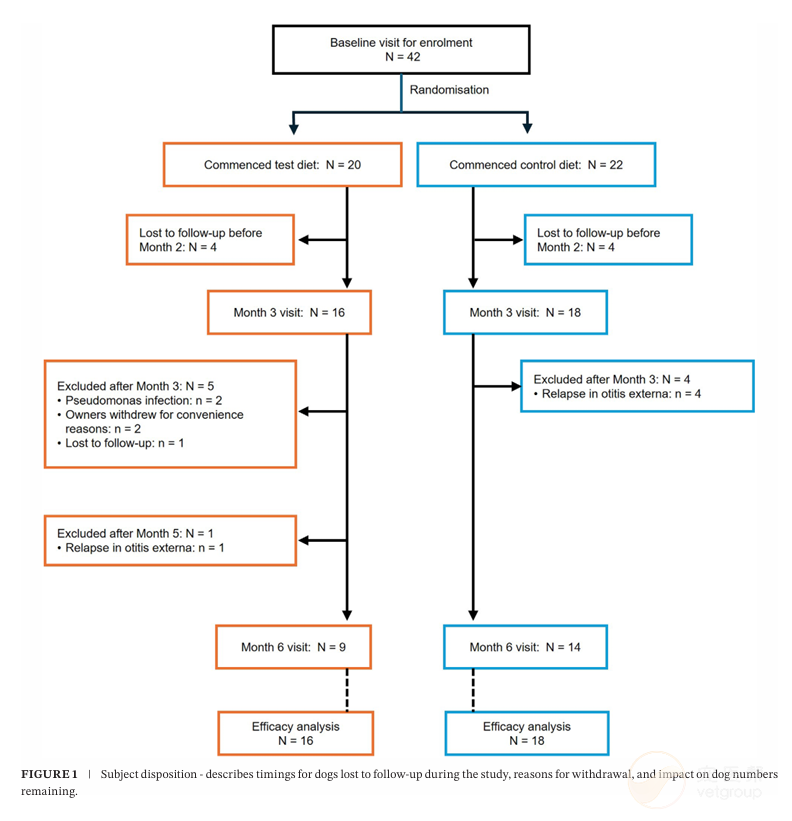
Investigators from France (n = 1), Switzerland (n = 2), Romania (n = 2), Slovakia (n = 1), Italy (n = 2) and Hungary (n = 1) enrolled 42 dogs between March 2021 and August 2023, of which 20 were randomised to the test diet and 22 to the control diet. All ran domised dogs received their assigned diet. There were eight dogs lost to follow- up before M2, leaving 16 dogs in the test group and 18 in the control group eligible for efficacy analyses; of these, 9 and 14 completed the study, respectively (see Figure 1 for de tails of subject disposition). The M6 visit for four dogs in the test group and two in the control group was delayed until M7.
来自法国(n=1)、瑞士(n=2)、罗马尼亚(n=2)、斯洛伐克(n=1)、意大利(n=2)和匈牙利(n=1)的研究人员在 2021 年 3 月至 2023 年 8 月期间纳入了 42 只犬,其中 20 只被随机分配到试验饮食组,22 只被分配到对照饮食组。所有随机分配的犬都接受了指定的饮食。有 8 只犬在 2 个月前失访,剩下 16 只试验组犬和 18 只对照组犬符合疗效分析条件;其中,分别有 9 只和 14 只完成了研究(详见图 1 受试者分布图)。试验组 4 只犬和对照组 2 只犬的 6 个月访视推迟到 7 个月。
3.2 | Demographics and Baseline Characteristics
3.2 | 病例统计学和基线特征
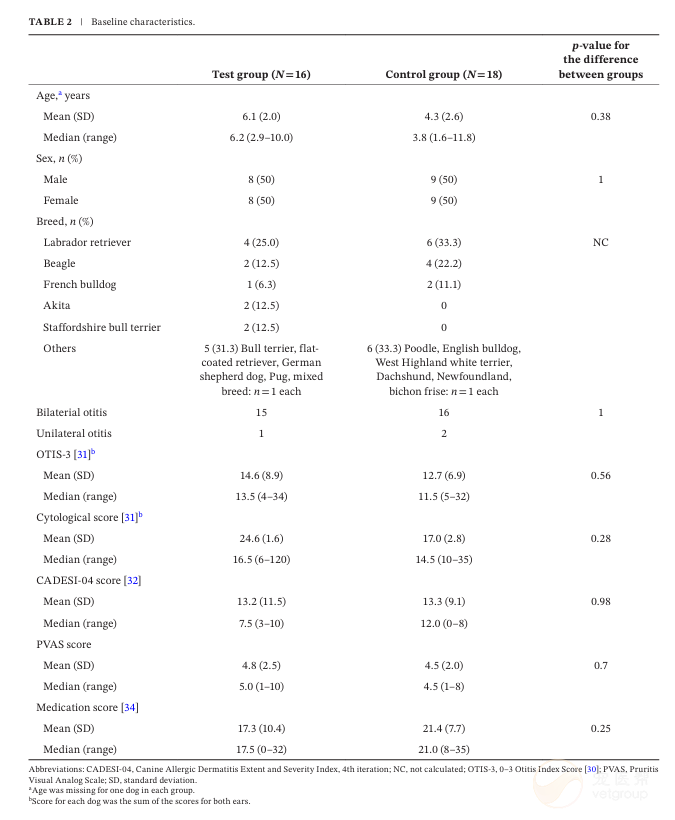
Overall, the most represented breeds were Labrador retrievers (n = 10), Beagles (n = 6) and French bulldogs (n = 3) (Table 2). Sexes were equally distributed between groups. There was a significant age difference between the two diet groups at base line, with the test group having a higher average age than the control group (Table 2). There were no significant differences in baseline clinical characteristics (Table 2). CADESI- 04 scores indicated mild cAD in six of 16 dogs in the test group and 10 of 18 dogs in the control group; one dog in each group had moder ate cAD. There were nine dogs in the test group and seven in the control group with a CADESI- 04 score < 10. All cases of cAD were nonseasonal. Mean (SD) OTIS- 3 at baseline was 14.6 (8.9) in the test group and 12.7 (6.9) in the control group (p = 0.56). Mean (SD) PVAS score at baseline was 4.8 (2.5) in the test group and 4.5 (2.0) in the control group (p = 0.70).
总体而言,最具代表性的品种是拉布拉多寻回犬(n=10)、比格犬(n=6)和法国斗牛犬(n=3)(表 2)。两组的性别分布均匀。两组在基线时的年龄存在显著差异,试验组的平均年龄高于对照组(表 2)。基线临床特征无显著差异(表 2)。犬特应性皮炎严重程度指数评分显示,试验组 16 只犬中有 6 只、对照组 18 只犬中有 10 只为轻度犬特应性皮炎;每组各有 1 只犬为中度犬特应性皮炎。试验组有 9 只犬,对照组有 7 只犬的犬特应性皮炎严重程度指数评分 < 10。所有犬特应性皮炎病例均为非季节性。试验组基线时的平均耳炎指数评分(标准差)为 14.6(8.9),对照组为 12.7(6.9)(p=0.56)。试验组基线时的平均瘙痒视觉模拟量表评分(标准差)为 4.8(2.5),对照组为 4.5(2.0)(p=0.70)。
3.3 | Incidence Rate of OE
3.3 | 外耳炎发生率
The incidence rate of OE was significantly lower (p < 0.001) in the test group than in the control group: 25.0% (four of 16 dogs) versus 61.1% (11 of 18 dogs, which included one dog that had two episodes). In the test group, the episodes were reported after 3 months in two dogs and at or after 5 months in two dogs. Episodes in the control group were reported after 2 months in one dog, 2.5 months in one, at 3 months in 4, at 4 months in two, and at 5 months in three. The median time to the first episode (imputed as 7 months in dogs without an episode) was 5 months (mean 4.8) in the control group and 7 months (mean 6.3) in the test group; the difference was significantly different (Wilcoxon Mann–Whitney U- test; p = 0.031).
试验组外耳炎的发生率显著低于对照组(p<0.001):25.0%(16 只犬中的 4 只)对 61.1%(18 只犬中的 11 只,其中 1 只犬发作两次)。试验组中,2 只犬在 3 个月后报告发作,2 只犬在 5 个月或之后报告发作。对照组中,1 只犬在 2 个月后报告发作,1 只在 2.5 个月后,4 只在 3 个月后,2 只在 4 个月后,3 只在 5 个月后。首次发作的中位时间(未发作犬归为 7 个月)在对照组为 5 个月(平均 4.8),试验组为 7 个月(平均 6.3);差异具有统计学意义(Wilcoxon-Mann-Whitney U 检验;p=0.031)。
3.4 | OTIS- 3 and Cytological Findings
3.4 | 耳炎指数评分和细胞学结果
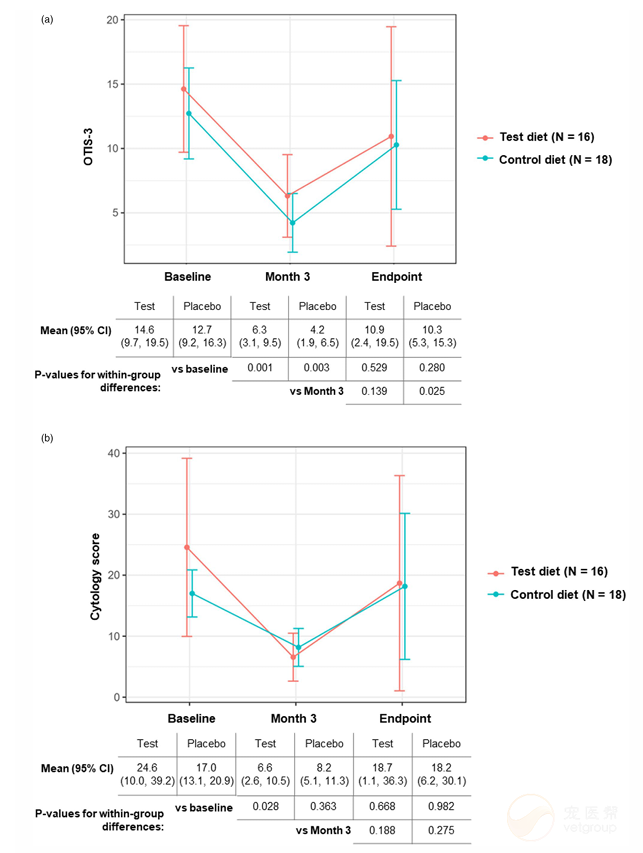
There was a significant effect of time point on OTIS- 3 (p = 0.002) and cytological findings (p = 0.027) yet within- time- point between- diet comparisons were not significant, and diet overall did not have a significant effect.
时间点对耳炎指数评分(p=0.002)和细胞学结果(p=0.027)有显著影响,但时间点内的组间比较不显著,饮食总体也无显著影响。
Mean OTIS- 3 decreased significantly between baseline and M3 in both groups (p = 0.003 for the test group and 0.001 for the control group) and the effect sizes were similar (95% CI 1.25 [0.56, 1.94]) for the control group and 1.22 [95% CI 0.50, 21.96] for the test group; Figure 2a; Table S2. Between M3 and the end- point, OTIS- 3 increased significantly only in the control group (p = 0.025; effect size 0.89 [95% CI 1.57, 0.22]). At the end- point, the OTIS- 3 score was not significantly different from baseline in either group.
两组从基线到 3 个月的平均耳炎指数评分均显著下降(试验组 p=0.003,对照组 p=0.001),且效应量相似(对照组 95% CI 1.25 [0.56,1.94],试验组 95% CI 1.22 [0.50,1.96];图 2a;表 S2)。从 3 个月到终点,仅对照组的耳炎指数评分显著增加(p=0.025;效应量 0.89 [95% CI 0.22,1.57])。在终点时,两组的耳炎指数评分与基线相比均无显著差异。
The mean cytological score decreased significantly between base line and M3 in the test group (p = 0.028; effect size 0.93 [95% CI 0.21, 1.65]) yet was not significantly lower than baseline at end- point (Figure 2b; Table S2). There were no significant differences in cytological score between any time points in the control group.
试验组从基线到 3 个月的平均细胞学评分显著下降(p=0.028;效应量 0.93 [95% CI 0.21,1.65]),但在终点时与基线相比无显著降低(图 2b;表 S2)。对照组在任何时间点之间的细胞学评分均无显著差异。
3.5 | CADESI- 04 and PVAS Scores
3.5 | CADESI- 04和PVAS评分
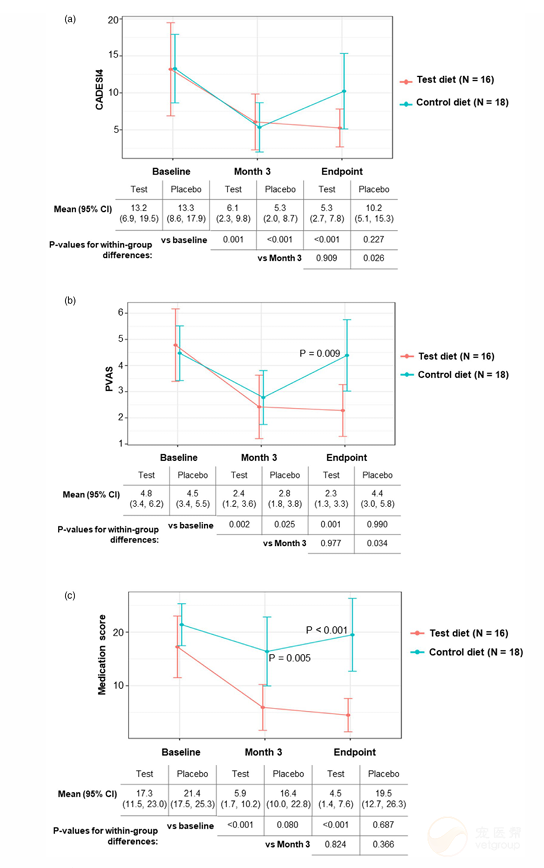
Time point had a significant effect on both CADESI- 04 (p < 0.0001) and PVAS (p < 0.001) scores. Diet overall did not affect these out comes, yet there was a significant interaction between diet and time point for PVAS (p = 0.025). The PVAS score was significantly lower in the test group versus the control group at the end point (p = 0.009, effect size −1.11 [95% CI –1.96, −0.27]); differences at other time points were not statistically significant.
时间点对犬特应性皮炎严重程度指数(p<0.0001)和瘙痒视觉模拟量表(p<0.001)评分均有显著影响。饮食总体对这些结果无影响,但饮食和时间点对瘙痒视觉模拟量表评分有显著交互作用(p=0.025)。在终点时,试验组的瘙痒视觉模拟量表评分显著低于对照组(p=0.009,效应量 - 1.11 [95% CI-1.96,-0.27]);其他时间点的差异无统计学意义。
The mean CADESI- 04 score decreased significantly from base line to M3 in the test group (p = 0.001; effect size 1.29 [95% CI 0.56, 2.02]) and remained significantly lower at the end- point compared with baseline (p < 0.001; effect size 1.44 [95% CI 0.70, 2.18]) (Figure 3a; Table S2). The mean CADESI- 04 score also fell from baseline to M3 (p < 0.001 effect size 1.44 [95% CI 0.74, 2.14]) in the control group, and this was followed by a significant rebound (p = 0.026; effect size 0.89 [95% CI –1.56, −0.21]); the mean score at the end- point was not significantly different from baseline.
试验组从基线到 3 个月的平均犬特应性皮炎严重程度指数评分显著下降(p=0.001:效应量 1.29 [95% CI 0.56,2.02]),且在终点时与基线相比仍显著降低(p<0.001;效应量 1.44 [95% CI 0.70,2.18])(图 3a;表 S2)。对照组从基线到 3 个月的平均犬特应性皮炎严重程度指数评分也下降(p<0.001,效应量 1.44 [95% CI 0.74,2.14]),随后显著反弹(p=0.026;效应量 0.89 [95% CI 0.21,1.56]);终点时的平均评分与基线相比无显著差异。
There was a similar evolution of mean PVAS scores; they fell significantly in both groups from baseline to M3 (test group, p = 0.002, effect size 1.25 [95% CI 0.52, 1.98]; control group, p = 0.025, effect size 0.90 [95% CI 0.22, 1.57]), after which the score remained significantly lower than baseline in the test group (p = 0.001; effect size 1.32 [95% CI 0.59, 2.05]) yet in creased significantly in the control group (p = 0.034; effect size −0.85 [95% CI –1.53, −0.17]) to a value not significantly different from baseline (Figure 3b; Table S2).
平均瘙痒视觉模拟量表评分的变化趋势相似;两组从基线到 3 个月均显著下降(试验组,p=0.002,效应量 1.25 [95% CI 0.52,1.98];对照组,p=0.025,效应量 0.90 [95% CI 0.22,1.57]),之后试验组的评分保持显著低于基线(p=0.001;效应量 1.32 [95% CI 0.59,2.05]),而对照组的评分显著增加(p=0.034;效应量 - 0.85 [95% CI-1.53,-0.17]),达到与基线无显著差异的值(图 3b;表 S2)。
3.6 | Medication Scores
3.6 | 药物评分
Medication scores were significantly affected by time point (p < 0.0001) and there was an interaction between diet and time point (p < 0.0001); yet there was no overall effect of diet. At both M3 and the end- point, medication score was significantly lower for the test group than the control group: M3, p = 0.005, effect size −1.53 (95% CI –2.59, −0.46); end- point, p < 0.0001, effect size −2.19 (95% CI –3.28, −1.10).
时间点对药物评分有显著影响(p<0.0001),饮食和时间点之间存在交互作用(p<0.0001):但饮食总体无影响。在 3 个月和终点时,试验组的药物评分均显著低于对照组:3 个月,p=0.005,效应量 - 1.53(95% CI-2.59,-0.46);终点,p<0.0001,效应量 - 2.19(95% CI-3.28,-1.10)。
In the test group, the mean medication score declined significantly between baseline and M3 (p < 0.0001; effect size 1.65 [95% CI 0.91, 2.40]) and remained lower until the end- point (p < 0.001; 1.86 [95% CI 1.11, 2.62]) (Figure 3c; Table S2). The medication score did not change significantly between any time points in the control group.
试验组的平均药物评分从基线到 3 个月显著下降(p<0.0001;效应量 1.65 [95% CI 0.91,2.40]),并保持较低水平直至终点(p<0.001:1.86 [95% CI 1.11,2.62])(图 3c;表 S2)。对照组在任何时间点之间的药物评分均无显著变化。
Significantly more dogs in the test group achieved either a good or excellent response (p = 0.02). In the test group, six of 16 dogs were excellent responders and an additional two had a good response. In the control group, one of 18 dogs had an excellent response and an additional dog had a good response.
试验组达到良好或优秀反应的犬显著更多(p=0.02)。试验组中,16 只犬中有 6 只为优秀反应者,另外 2 只有良好反应。对照组中,18 只犬中有 1 只为优秀反应者,另外 1 只有良好反应。
3.7 | Safety Outcomes
3.7 | 安全性结果
Diets were well accepted by all dogs except one in the control group. No diet- related adverse events were observed during the study.
除对照组中的 1 只犬外,所有犬均对饮食有良好的接受度。研究期间未观察到与饮食相关的不良事件。
Other within- time- point between- diet comparisons were not statistically significant.
其他时间点内的组间比较均无统计学意义。
4 | Discussion
4 | 讨论
This randomised, controlled, and blinded study demonstrated that a therapeutic diet designed to control clinical signs of cAD also was beneficial for the management of erythroceruminous OE. Over 6 months, the diet, combined with discretionary medications, reduced both the incidence and time to onset of OE episodes. More than 60% of dogs in the control group versus 25% of test dogs had an episode during the study at median 5 and 7 months (respectively) for the first episode. This difference is likely to be clinically meaningful for longer- term management because repeated flares of inflammation and infection in the ear canal lead to chronic epidermal and dermal thickening, glandular hyperplasia, and other tissue remodelling.
这项随机、对照、盲法研究表明,旨在控制犬特应性皮炎临床症状的治疗性饮食对红斑性耵聍性外耳炎的管理也有益处。在 6 个月内,该饮食联合酌情使用的药物减少了外耳炎发作的发生率和发作时间。研究期间,对照组超过 60% 的犬发生复发,而试验组为 25%,首次发作的中位时间分别为 5 个月和 7 个月。这种差异对于长期管理可能具有临床意义,因为耳道反复的炎症和感染发作会导致慢性表皮和真皮增厚、腺体增生以及其他组织重塑。
The therapeutic diet was associated with a significant and persistent reduction in the burden of medication not seen in the control group. The medication score encompassed treatments for both cAD and OE; some would probably impact both conditions. A diet- induced reduction in the medication burden of atopic dogs is meaningful regardless of the primary indication, especially when potential adverse effects of long- term immunosuppressive drugs and cost are considered. Other diets enriched with one or more of the same active substances as in this study have shown corticosteroid- sparing or oclacitinib- sparing effects in cAD, which are consistent with our findings on overall topical and systemic medication burden.
与对照组相比,治疗性饮食与显著且持续的药物负担减轻相关。药物评分包括针对犬特应性皮炎和外耳炎的治疗;有些可能对两种疾病都有影响。无论主要适应症如何,饮食诱发的AD犬药物负担减轻都是有意义的,特别是考虑到长期免疫抑制药物的潜在不良影响和成本。其他富含与本研究中相同的一种或多种活性物质的饮食在犬特应性皮炎中显示出皮质类固醇节省或奥拉替尼节省效应,这与我们关于总体外用和全身性药物负担的发现一致。
All dogs had to be in otitis remission by M1, and this was reflected in significant improvements in the clinical signs of otitis and cAD (OTIS- 3, CADESI- 04 and PVAS) in both diet groups at M3. Subsequently, in dogs fed the test diet, mean pruritus and other signs of cAD remained stable at this reduced severity, whilst there were significant rebounds in control- fed dogs. Clinical signs of otitis rebounded in both diet groups after M3, yet this was not statistically significant in the test group. Rebounds in outcomes are likely to have reflected a waning of residual benefit from the initial treatment regimen. We hypothesise that the lack of an overall effect of diet on these measures might be because rebounds in the control group were ameliorated by maintaining the medication burden, while the medication burden in the test group reduced, signifying that they had less pharmacotherapeutic support. The prescription of permit ted medications was at the discretion of the referral clinicians, who made clinical judgements based on the combination of all observations for each dog.
所有犬都必须在 1 个月时达到耳炎缓解,这反映在两组在 3 个月时耳炎和犬特应性皮炎的临床症状(耳炎指数评分、犬特应性皮炎严重程度指数和瘙痒视觉模拟量表)均有显著改善。随后,在喂食试验饮食的犬中,平均瘙痒和其他犬特应性皮炎症状保持在这种减轻的严重程度,而喂食对照饮食的犬则有显著反弹。两组在 3 个月后耳炎的临床症状均有反弹,但试验组无统计学意义。结果的反弹可能反映了初始治疗方案的残留效益逐渐减弱。我们假设,饮食对这些指标没有总体影响,可能是因为对照组的反弹通过维持药物负担得到缓解,而试验组的药物负担减轻,表明它们获得的药物治疗支持较少。允许使用的药物处方由转诊临床医生酌情决定,他们根据每只犬的所有观察结果做出临床判断。
The sustained improvements in pruritus and cAD confirm results from a previous study that showed beneficial effects of the same therapeutic diet on clinical signs of cAD in body regions other than the ear canal. The current study differed mainly because its focus was otitis and pre- treatment of cAD was per mitted; hence, there was no eligibility criterion for CADESI- 04 score, and approximately 53% of dogs did not have active cAD at the start of the study. In clinical practice, dogs with cAD may present initially with only persistent OE; conversely, dogs with clinically active cAD may have undiagnosed OE. The association between the two conditions can be missed if the veterinary surgeon focuses exclusively on the presenting clinical signs.
瘙痒和犬特应性皮炎的持续改善证实了先前研究的结果,该研究表明相同的治疗性饮食对耳道以外身体部位的犬特应性皮炎临床症状有有益影响。当前研究的主要不同之处在于其重点是耳炎,并且允许对犬特应性皮炎进行预处理;因此,犬特应性皮炎严重程度指数评分不是纳入标准,约 53% 的犬在研究开始时没有活跃性犬特应性皮炎。在临床实践中,患有犬特应性皮炎的犬可能最初仅表现为持续性外耳炎;相反,患有临床活跃性犬特应性皮炎的犬可能有未诊断的外耳炎。如果兽医仅关注呈现的临床症状,可能会忽略这两种疾病之间的关联。
A number of study limitations are acknowledged, including the practicalities of a multicentre field trial. Ideally, there would have been a transition period during which all dogs were fed the control diet, and a longer study duration would have been preferable; yet inevitably, this had to be balanced against subject drop- outs resulting from the difficulty of maintaining owner compliance. As part of the initial treatment, investigators were permitted to use either hydrocortisone aceponate or 1% hydro cortisone at their discretion (data not collected). Differences in the strength of these glucocorticoids might have impacted responses, although arguably the long duration of the study could be a mitigating factor. The COVID- 19 pandemic was an unfore seen factor that left us unable to fulfil all original enrolment goals and led to fewer study visits than ideal. The best available data to estimate the incidence of OE for this study's powering calculation were from a non- epidemiological study comparing treated with untreated dogs. Although our study was therefore potentially vulnerable to false discovery, its statistical methodology was rigorous and comprehensive, so we believe that the reported effects are real. Dogs in the test group were, on average, older than those in the control group, and this may have influenced their responses to study treatment. Of note, however, cAD severity scores were not different between groups at baseline (CADESI- 04, p = 0.98; PVAS, p = 0.7). Changes in CADESI- 04 scores would not have been clinically significant for all dogs given that many did not have active cAD at baseline (CADESI- 04 score < 10). The study did not aim to investigate the diet's mechanism- of- action, and the cytological scoring probably lacked sufficient discriminatory ability. Nevertheless, the primary outcome of the study was episodes of OE, for which the test diet demonstrated significant benefit.
公认的研究局限性包括多中心现场试验的实际情况。理想情况下,应该有一个过渡期,期间所有犬都喂食对照饮食,并且更长的研究持续研究持续时间会更可取;然而,这不可避免地必须与由于难以维持主人依从性而导致的受试者退出相平衡。作为初始治疗的一部分,研究人员被允许酌情使用氢化可的松醋丙酯或 1% 氢化可的松(未收集数据)。这些糖皮质激素强度的差异可能会影响反应,尽管可以说研究的长期持续时间可能是一个缓解因素。COVID-19 大流行是一个不可预见的因素,使我们无法实现所有最初的纳入目标,并导致研究访视次数少于理想情况。用于本研究功率计算的外耳炎发生率估计的最佳可用数据来自一项比较治疗犬与未治疗犬的非流行病学研究。尽管我们的研究因此可能容易出现假阳性发现,但其统计方法严谨且全面,因此我们认为报告的效应是真实的。试验组的犬平均年龄大于对照组,这可能影响了它们对研究治疗的反应。然而,值得注意的是,两组在基线时的犬特应性皮炎严重程度评分没有差异(犬特应性皮炎严重程度指数,p=0.98;瘙痒视觉模拟量表,p=0.7)。考虑到许多犬在基线时没有活跃性犬特应性皮炎(犬特应性皮炎严重程度指数评分 < 10),犬特应性皮炎严重程度指数评分的变化并非对所有犬都具有临床意义。该研究并非旨在研究饮食的作用机制,细胞学评分可能缺乏足够的区分能力。尽管如此,研究的主要结果是外耳炎发作,试验饮食在这方面显示出显著益处。
In conclusion, this therapeutic diet reduced the incidence rate of erythroceruminous OE in atopic dogs, and prolonged the impact of medication used to bring the otitis into remission. PVAS and the medication burden for cAD and OE were reduced and sustained to the end of the study. Although current medications do not prevent recurrence of OE, this therapeutic diet helped to sustain improvements in the aural manifestations of atopy.
总之,这种治疗性饮食降低了特应性皮炎犬红斑性耵聍性外耳炎的发生率,并延长了用于使耳炎缓解的药物的作用。瘙痒视觉模拟量表和犬特应性皮炎及外耳炎的药物负担在研究结束时均有所降低并保持稳定。尽管当前的药物无法预防外耳炎的复发,但这种治疗性饮食有助于维持特应性疾病耳部表现的改善。
TABLE 1 | Nutrition composition of study diets and selected ingredients.
表 1 | 试验饮食的营养成分和选定成分
|
|
试验饮食 |
对照饮食 |
|
干物质,% |
90.60 |
90.83 |
|
水分,% |
9.40 |
9.17 |
|
蛋白质,% |
24.5 |
23.8 |
|
脂肪,% |
12.9 |
14.4 |
|
灰分,% |
7.0 |
6.5 |
|
粗纤维,% |
8.3 |
7.3 |
|
亚油酸,% |
4.10 |
2.15 |
|
二十碳五烯酸和二十二碳六烯酸,% |
0.6 |
0.07 |
|
维生素 E,mg/kg |
900 |
165 |
|
牛磺酸,mg/kg |
4400 |
600 |
|
叶黄素,mg/kg |
5 |
0.7 |
|
姜黄提取物(20% 姜黄素),mg/kg |
1250 |
0 |
|
甘草根提取物,mg/kg |
480 |
0 |
FIGURE 1 | Subject disposition - describes timings for dogs lost to follow- up during the study, reasons for withdrawal, and impact on dog numbers remaining.
图 1 | 受试者分组情况 - 描述了在研究期间因各种原因未能继续参与跟踪调查的犬的失联时间、退出原因以及对剩余犬只数量的影响。
TABLE 2 | Baseline characteristics.
表2 |基线特征。
FIGURE 2 | Severity of otitis externa. Mean observed data with error bars for the 95% confidence interval (CI) of (a) 0–3 Otitis Index Score (OTIS- 3) and (b) cytological scores. The tables beneath the charts provide the mean (95% CI) point values for the chart and also the within- group between- diet comparisons for the changes from baseline to Month (M)3, from baseline to the end- point, and from M3 to the end- point. No compari sons between- diet within- time- point were statistically significant.
图 2 | 外耳炎的严重程度。以误差条表示的平均观察数据及其 95%置信区间(CI),分别对应于(a)0 - 3 分的耳炎指数评分(OTIS-3)和(b)细胞学评分。图表下方的表格提供了图表的平均值(95%置信区间)以及从基线到第 3 个月(M3)、从基线到终点以及从 M3 到终点的组内不同饮食变化的比较结果。不同饮食在不同时间点之间的比较均无统计学意义。
FIGURE 3 | Canine atopic dermatitis (cAD) lesion severity, pruritus intensity and medication burden. Mean observed data with error bars for the 95% confidence interval (CI) of (a) Canine Allergic Dermatitis Extent and Severity Index, 4th iteration (CADESI- 04) score; (b) pruritus Visual Analog Scale score (PVAS); and (c) medication score. p- values are given on the charts for between- diet within- time- point comparisons where these are sig nificant. The tables beneath the charts provide the mean (95% CI) point values for the chart and also the within- group between- diet comparisons for the changes from baseline to Month (M)3, from baseline to the end- point, and from M3 to the end- point.
图 3 | 犬特应性皮炎(cAD)的病变严重程度、瘙痒强度以及用药负担。(a)犬过敏性皮肤病范围与严重程度指数(CADESI-04)评分的平均观测数据及其误差范围(95%置信区间);(b)瘙痒视觉模拟量表评分(PVAS);以及(c)用药评分。图表中给出了 p 值,用于表示不同饮食在不同时间点之间的比较结果,其中这些比较结果具有显著性。图表下方的表格提供了图表的平均值(95%置信区间)以及从基线到第 3 个月(M3)、从基线到终点以及从 M3 到终点的组内不同饮食之间的变化的比较值。
| 


 |Archiver|手机版|小黑屋|宠医帮
( 京ICP备2022012070号-2 )
|Archiver|手机版|小黑屋|宠医帮
( 京ICP备2022012070号-2 ) 




 发表于 2026-3-25 20:32:17

 收藏
收藏 转播
转播 分享
分享 淘帖
淘帖 楼主
楼主