|
Updates on the Pathogenesis of Canine Atopic Dermatitis and Feline Atopic Skin Syndrome: Part 2, the Skin Barrier, the Microbiome, and Immune System Dysfunction
犬特应性皮炎和猫特应性皮肤综合征发病机制的最新进展:第2部分,皮肤屏障、微生物群和免疫系统功能障碍
作者:Christina M. Gentry, DVM
翻译:王帆
KEYWORDS
关键词
Canine atopic dermatitis
Feline atopic skin syndrome
Allergic skin and ear disease
Allergy
犬特应性皮炎
猫特应性皮肤综合征
过敏性皮肤病和耳病
过敏症
KEY POINTS
关键点
Changes to the skin barrier and alternations of intracellular lipids increase the risk of developing and severity of canine atopic dermatitis (cAD).
Allergic skin disease promotes changes in the cutaneous microbiome leading to cutaneous dysbiosis, which can increases the quantity of certain Staphylococcal species on the skin.
The innate immune system works to regulate the cutaneous microbiome and decrease opportunistic pathogens using host defense peptides, white blood cells and physical barriers.
Keratinocytes are immunologically active cells that can both produce and respond to cytokines (chemical messengers).
The adaptive immune response leading to allergic skin disease is multipronged, but T helper 2 response plays a central role.
皮肤屏障的改变和细胞内脂质的变化增加了犬特应性皮炎(cAD)的发生风险和严重程度。
过敏性皮肤病促进皮肤微生物群的变化,导致皮肤菌群失调,从而可能增加皮肤上某些葡萄球菌属的数量。
先天免疫系统通过宿主防御肽、白细胞和物理屏障来调节皮肤微生物群并减少条件致病性病原体。
角质形成细胞是具有免疫活性的细胞,既能产生也能对细胞因子(化学信使)作出反应。
导致过敏性皮肤病的获得性免疫反应是多方面的,但辅助性T细胞2(Th2)反应起着核心作用。
PATHOGENESIS PART 3: THE SKIN BARRIER AND THE CUTANEOUS MICROBIOME
发病机制第3部分:皮肤屏障和皮肤微生物群
The Skin Barrier
皮肤屏障
The skin barrier consists of corneocytes (terminally differentiated keratinocytes) and intracellular lipids. These lipids consist of ceramides (sphingosine and a fatty acid), cholesterol, and fatty acids.
皮肤屏障由角化细胞(终末分化的角质形成细胞)和细胞内脂质组成。这些脂质包括神经酰胺(鞘氨醇和脂肪酸)、胆固醇和脂肪酸。
|
Abbreviations 缩写
AD atopic dermatitis特应性皮炎
AIT allergen-specific immunotherapy 过敏原特异性免疫疗法
CCL17 C-C motif chemokine ligand 17 基序趋化因子配体
CCL5 C-C motif chemokine ligand 5 基序趋化因子配体
FASS feline atopic skin syndrome 猫特应性皮肤综合征
HDP hostdefense peptide 宿主防御肽
IFN-y interferon-gamma 干扰素- γ
JAK Janus Kinase Janus激酶
TEWL transepidermal water loss 经皮失水
TGF-B transforming growth factor-beta 转化生长因子- β
Th-2 T-helper 2辅助因子2
TNF-a tumor necrosis factor-alpha 肿瘤坏死因子- α
TSLP thymic stromal lymphopoietin胸腺基质淋巴生成素 |
In human atopic dermatitis (AD), there is a decrease in ceramides both in total amount and specific type ceramides that leads to dryness of the skin and a more permeable barrier. Humans may have alterations in an enzyme that decreases the rate at which new ceramides are formed after damage, perpetuating dryness and inflammation after a flare.
在人类特应性皮炎(AD)中,神经酰胺的总量和特定类型都有所减少,导致皮肤干燥和屏障通透性增加。人类可能有一种酶的改变,降低了损伤后新神经酰胺形成的速率,从而在发作后持续干燥和炎症。
Nearly all dogs with canine atopic dermatitis (cAD) suffer from skin barrier dysfunc tion. This dysfunction is more severe in inflamed lesional skin but persists to some degree in “normal” allergic skin and has been shown to be related to alterations in ceramides.Skin barrier dysfunction may be due to structural defects caused by genetic variants as described in the genetics subsection in part 1 but also occurs secondary to dysregulated cutaneous immune response, and pyoderma.
几乎所有患有犬特应性皮炎(cAD)的犬都存在皮肤屏障功能障碍。这种功能障碍在炎症病变皮肤中更为严重,但在"正常"的过敏性皮肤中也有一定程度的持续存在,并且已被证明与神经酰胺的改变有关。皮肤屏障功能障碍可能是由第1部分遗传学小节中描述的遗传变异引起的结构缺陷所致,但也可能继发于皮肤免疫反应失调和脓皮病。
In one recent canine study, nearly 400 distinct lipids were found on the skin normal andcADwesthighlandwhite terrier (WHWT).Although no significant difference could be found in identifiable lipids between normal and cAD WHWT, there was a difference in identifiable lipid abundance between lesional and non-lesional skin in cAD WHWT.
在最近的一项犬类研究中,在正常和患有cAD的西高地白梗(WHWT)皮肤上发现了近400种不同的脂质。虽然在正常和cAD WHWT之间可识别的脂质没有发现显著差异,但在cAD WHWT的病变皮肤和非病变皮肤之间,可识别脂质的丰度存在差异。
Structural proteins of the keratinocytes (filaggrin and filaggrin 2) and intracellular junctions may also play a role in skin barrier dysfunction.
角质形成细胞的结构蛋白(丝聚蛋白和丝聚蛋白2)和细胞间连接也可能在皮肤屏障功能障碍中发挥作用。
The degree towhichthese factors lead to the skin barrier dysfunction has historically been measured by transepidermal water loss (TEWL).The greater the TEWL, the greater the damage to the skin barrier. However, there has been concern that the tools used to measure TEWL lead to variable and non-interpretable results.pH of the skin has been shown to differ between cAD and normal dogs with cAD dogs having increased cutaneous pH.
历史上,这些因素导致皮肤屏障功能障碍的程度是通过经皮水分流失(TEWL)来测量的。TEWL越大,对皮肤屏障的损伤越大。然而,有人担心用于测量TEWL的工具会导致可变且无法解释的结果。已证明cAD犬和正常犬的皮肤pH值不同,cAD犬的皮肤pH值升高。
A small double-blinded-controlled study in dogs found improvement in both pruritus and lesional scores with the application of both a plant extract product and a product containing phytosphingosine, profilaggrin, stimutex-AS, and avenanthramides when applied as sprays to be worked into the skin surface.
一项小型双盲对照研究发现,使用含有植物提取物的产品和含有植物鞘氨醇、前丝聚蛋白、stimutex-AS和燕麦蒽酰胺的产品作为喷雾剂涂抹于皮肤表面,犬的瘙痒和病变评分均有改善。
Another recent trial comparing the efficacy of lokivetmab injection alone or in combination with a weekly shampoo containing plant extracts, fatty acids, and ceramides and a weekly spot on with the same ingredients. The dogs with the combination therapy did have improved lesional scores and pruritus scores at the end of the study (31 days). The patients with the barrier repair agents also took longer to flare compared to the lokivetmab only dogs suggesting that barrier repair can potentiate the effects of immunomodulators.
另一项最近的试验比较了单独使用洛基维特单抗注射,或联合使用含有植物提取物、脂肪酸和神经酰胺的香波,每周一次洗澡以及含有相同成分的每周滴剂的效果。在研究结束时(31天),接受联合治疗的犬确实改善了皮肤病变评分和瘙痒评分。与仅使用洛基维特单抗的犬相比,使用屏障修复剂的患复发所需时间更长,这表明屏障修复可以增强免疫调节剂的效果。
A recent, noncontrolled study evaluated a mousse and shampoo containing ophy trium in cats with feline atopic skin syndrome (FASS), a plant extract that can improve skin barrier function by increasing ceramide content in skin and decreasing TEWL.Over a 3 week period, most cats had improved in lesional and pruritus scores. The patients were allowed to stay on cyclosporine and immunotherapy if they had already been receiving these for the management of FASS. A placebo-controlled study would be needed for more definitive information; this work suggests that adding a bar rier repair agent to other therapy for FASS can improve patients’ quality of life.
最近一项非对照研究评估了含有奥菲的摩丝和香波在患有猫特应性皮肤综合征(FASS)的猫中的应用,这是一种可以通过增加皮肤中神经酰胺含量和减少TEWL来改善皮肤屏障功能的植物提取物。在3周的时间内,大多数猫的皮肤病变和瘙痒评分都有所改善。如果患猫已经在接受环孢素和免疫疗法治疗FASS,则允许他们继续使用。需要一项安慰剂对照研究来获得更明确的信息;这项工作表明,在其他FASS疗法中添加屏障修复剂可以提高患病动物的生活质量。
The goal for patients with skin barrier dysfunction and cAD is to limit alterations in ceramides, inflammation, and TEWL with topical therapy to reduce the negative ef fects of structural genetic defects.
对于有皮肤屏障功能障碍和cAD的患犬,目标是使用外部疗法限制神经酰胺的改变、炎症和TEWL,以减少结构性遗传缺陷的负面影响。
Cutaneous Microbiome
皮肤微生物群
The cutaneous microbiome refers to the vast number of bacteria, fungi, and protozoa and their metabolites that reside on the skin surface and within the skin. The most common bacterial phyla in dogs and cats are Proteobacteria, Firmicutes, Actinobac teria, Fusobacteria, and Bacteroidetes. Changes in the diversity of bacteria or num ber of bacteria outside of the normal range are termed cutaneous dysbiosis. The use of bacterial 16S ribosomal ribonucleic acid (rRNA) gene sequencing enables re searchers to identify more species of bacteria compared to previously used bacterial culture methods.
皮肤微生物群是指大量存在于皮肤表面和皮肤内的细菌、真菌、原虫及其代谢产物。犬和猫中最常见的细菌门是变形菌门、厚壁菌门、放线菌门、梭杆菌门和拟杆菌门。细菌多样性或细菌数量超出正常范围的变化称为皮肤菌群失调。与以前使用的细菌培养方法相比,使用细菌16S核糖体核糖核酸(rRNA)基因测序使研究人员能够识别更多的细菌种类。
The rich diversity of organisms of the canine and feline skin surface does not lead to inflammation in normal individuals and is kept stable by the local immune system and the skin barrier. It is not completely understood whether the cutaneous dysbiosis seen in allergic skin disease is, at least in part, causing skin barrier and immunologic dysfunction, or whether the dysbiosis is a reaction to skin barrier changes and immu nologic dysfunction.
犬和猫皮肤表面丰富的生物多样性不会在正常个体中引起炎症,并且由局部免疫系统和皮肤屏障保持稳定。目前尚不完全清楚过敏性皮肤病中观察到的皮肤菌群失调是否至少部分导致了皮肤屏障和免疫功能障碍,或者菌群失调是对皮肤屏障变化和免疫功能障碍的反应。
Canine
犬
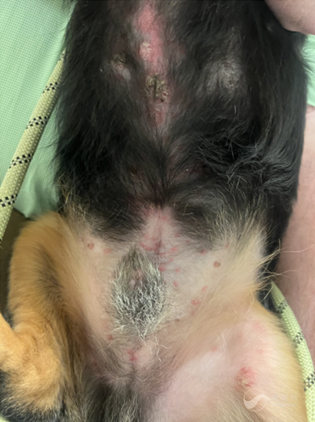
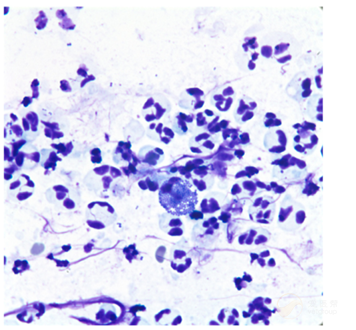
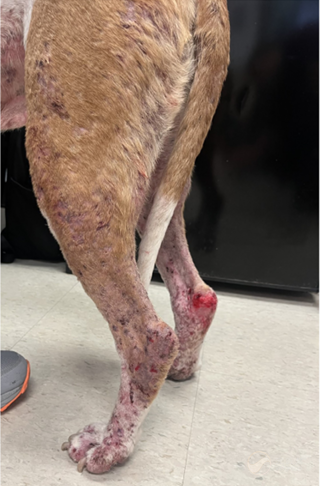
In cAD, cutaneous dysbiosis occurs. There are shifts in the bacterial populations that can include decreased diversity of bacteria and increased Staphylococcal spp. This can lead to subclinical shifts or clinical evidence of bacterial pyoderma including papules, pustules, crusts, and epidermal collarettes (Figs. 1 and 2). In deep pyoderma associated with cAD, furuncles (folliculitis so severe that the hair follicle rup tures) and draining tracts will be seen (Fig. 3). In one study, patients with cAD and pyoderma (most often caused by S pseudintermedius) had improved bacterial diver sity after treatment with antimicrobials. The diversity began to wane within weeks of antibiotic discontinuation.
在cAD中,会发生皮肤菌群失调。细菌种群会发生转变,包括细菌多样性减少和葡萄球菌属增加。这可能导致亚临床转变或细菌性脓皮病的临床证据,包括丘疹、脓疱、结痂和表皮环(图1和图2)。在与cAD相关的深部脓皮病中,会看到疖病(毛囊炎严重到毛囊破裂)和瘘道(图3)。在一项研究中,患有cAD和脓皮病(通常由假中间型葡萄球菌引起)的患犬在使用抗菌药物治疗后细菌多样性有所改善。但在停用抗生素后几周内,多样性开始减弱。
In a separate study, the weekly use of a 2% chlorhexidine and 2% miconazole shampoo increased microbial diversity in both normal patients and patients with cAD. However, daily bathing with dilute dish detergent for 14 decreased the amount of the most commonly found cutaneous bacterial taxa but did increase diversity over time. It is unclear if the increase in less common taxa is helpful or harmful to the cuta neous microbiome and skin barrier interface.
在另一项研究中,每周使用2%氯己定和2%咪康唑香波增加了正常患犬和cAD患犬的微生物多样性。然而,连续14天每天用稀释的洗洁精洗澡减少了最常见皮肤细菌类群的数量,但随着时间的推移确实增加了多样性。尚不清楚不常见类群的增加对皮肤微生物群和皮肤屏障界面是有益还是有害。
A cohort study on WHWT puppies revealed changes in bacterial diversity during different seasons, differing hygiene practices, and amount of outdoor access. How ever, the bacterial diversity levels did not predict which puppies would develop cAD.
一项关于WHWT幼犬的队列研究揭示了不同季节、不同卫生习惯和户外活动量期间细菌多样性的变化。然而,细菌多样性水平并不能预测哪些幼犬会发展为cAD。
A study of normal patients, treated cAD, and untreated cAD patient’s anal sac con tents were similarly diverse, but the bacterial taxa communities differed between un treated cAD and both the treated cAD and normal groups.The authors concluded that a dysbiosis was occurring in the anal sacs and this may contribute to the greater rates of anal sacculitis seen in patients with cAD.
一项关于正常患犬、接受治疗的cAD患犬和未接受治疗的cAD患犬肛囊内容物的研究发现,它们的细菌多样性相似,但未治疗的cAD组与接受治疗的cAD组和正常组之间的细菌类群群落不同。作者得出结论,肛囊中发生了菌群失调,这可能导致了cAD患犬中肛囊炎发生率更高。
The canine allergic ear had overall less diversity and less abundance of fungi compared to healthy dog ears. Allergic dogs had more variability in fungal diversity between body sites (eg, groin, axilla, ear), while nonallergic dogs had similar fungal di versity between body sites. The authors suggest that certain body sites in the allergic dog have a cutaneous fungal dysbiosis.
与健康犬耳相比,犬过敏症患耳的真菌总体多样性更少,丰度也更低。过敏症犬不同机体部位(如腹股沟、腋窝、耳部)之间的真菌多样性差异更大,而非过敏犬不同身体部位之间的真菌多样性相似。作者认为,过敏犬的某些身体部位存在皮肤真菌菌群失调。
Overall, treatment of cAD aimed at reducing skin inflammation and proactive man agement of cutaneous infections should decrease the severity of microbial dysbiosis and incidence of clinical cutaneous infections. This has become especially important in the last decade with the marked increase in methicillin-resistant and multidrug resistant cutaneous staphylococcal infections.
总体而言,旨在减轻皮肤炎症和主动管理皮肤感染的cAD治疗应能减轻微生物菌群失调的严重程度和临床皮肤感染的发生率。这在过去十年中变得尤为重要,因为耐甲氧西林和多重耐药的皮肤葡萄球菌感染显著增加。
Feline
猫
The feline bacterial and fungal microbiome differs between breeds and coat length with Bengal cats and Sphynx cats having the most diverse cutaneous microbiomes.
猫的细菌和真菌微生物群因品种和毛长而异,孟加拉猫和斯芬克斯猫的皮肤微生物群最多样。
Using culture-based methods, coagulase-positive Staphylococcus spp, namely S pseudintermedius (intermedius), was more abundant in lesional skin when compared to the skin of healthy cats.Allergic cat skin has increased abundance of Staphylo coccus spp compared to healthy cat skin. In a more recent study, the relative abundance of the genus Staphylococcus did not differ significantly between normal and allergic cats, but there were trends in differences between normal and allergic cats at the Staphylococcal species level. A fungal cutaneous dysbiosis has been described in allergic cats.
使用基于培养的方法,与健康猫的皮肤相比,凝固酶阳性葡萄球菌属,即假中间型葡萄球菌(中间型),在皮肤病变皮肤中更为丰富。与健康猫皮肤相比,过敏性猫皮肤的葡萄球菌属丰度增加。在最近的一项研究中,正常猫和过敏症猫之间葡萄球菌属的相对丰度没有显著差异,但在葡萄球菌种水平上,正常猫和过敏症猫之间存在差异趋势。在过敏症猫中已经描述了真菌性皮肤菌群失调。
A recent uncontrolled prospective study from Turkey demonstrated improvement in clinical signs of patients with FASS by using either autologous or healthy cat microbiome donation. In short, healthy skin was clipped and moistened Nivea Refining Clear-Up Strips were applied to healthy skin for 10 minutes. The strips were then removed and pasted onto lesional skin for 10 to 15 minutes.Both lesional scores and visual analog itch scores were decreased at day 10.
最近一项来自土耳其的非对照前瞻性研究表明,通过使用自体或健康猫微生物群捐赠,改善了FASS患猫的临床症状。简而言之,健康皮肤剃毛,将湿润的妮维雅净肤贴片贴在健康皮肤上10分钟。然后将贴片取下,贴在皮肤病变皮肤上10到15分钟。在第10天,皮肤病变评分和视觉模拟瘙痒评分均有所下降。
PATHOGENESIS PART 4: IMMUNE SYSTEM DYSREGULATION
发病机制第4部分:免疫系统失调
An Overview
概述
Innate immune system
先天免疫系统
The innate immune system of the skin consists of the skin as a barrier (described previously in this article), host defense peptides (HDPs), metabolically active keratino cytes, and non-pathogen-specific white blood cells including neutrophils, macrophages, mast cells, and eosinophils. The innate immune system is what pathogens and allergens first encounter. The dermal dendritic cells (a type of tissue macrophage) act as a go-between for the innate and adaptive immune system with their role of collecting antigens and allergens and presenting them to T-helper lymphocytes.
皮肤的先天免疫系统包括作为屏障的皮肤(本文前面已描述)、宿主防御肽(HDPs)、代谢活跃的角质形成细胞以及非病原体特异性的白细胞,包括中性粒细胞、巨噬细胞、肥大细胞和嗜酸性粒细胞。先天免疫系统是病原体和过敏原首先遇到的。真皮树突状细胞(一种组织巨噬细胞)充当先天免疫系统和获得性免疫系统之间的中介,其作用是收集抗原和过敏原并将其呈递给辅助性T淋巴细胞。
Adaptive immune system
获得性免疫系统
The adaptive immune system response in canine and feline allergic skin disease is complex and not completely understood. In the past 10 to 15 years, there has been exponential growth in the field of AD and cAD that has challenged previously held be liefs on the immunologic changes associated with these conditions.
犬和猫过敏性皮肤病中的获得性免疫系统反应是复杂的,尚未完全了解。在过去10到15年中,AD和cAD领域呈指数级增长,挑战了先前关于与这些疾病相关的免疫学变化的观念。
In general, the goal of the adaptive immune system is to identify and eliminate path ogens and can use memory functions for a faster response when the pathogen is encountered again.Unfortunately, allergens may be seen as pathogens leading to an inappropriate immune response that involves the antigen-presenting cells acti vating T-helper cells and B cells that produce increased levels of immunoglobulin E (IgE).
一般来说,获得性免疫系统的目标是识别和消除病原体,并可以利用记忆功能在再次遇到病原体时做出更快的反应。不幸的是,过敏原可能被视为病原体,导致不适当的免疫反应,涉及抗原呈递细胞激活辅助性T细胞和B细胞,从而产生更高水平的免疫球蛋白E(IgE)。
Immunologic changes in allergic skin disease were historically seen as histamine mediated disease mast cells and eosinophils played a central role, then as a more linear disorder where excessive Th2-lymphocyte and their products could overtime lead to dysregulated Th1-lymphocytes and their products. Now it is known that there is a complex interplay between multiple populations of T-helper lymphocytes where Th-2 lymphocytes still play a pivotal role.
历史上,过敏性皮肤病的免疫学变化被视为组胺介导的疾病,肥大细胞和嗜酸性粒细胞起着核心作用,然后被视为一种更线性的疾病,过度的Th2淋巴细胞及其产物可能随着时间的推移导致Th1淋巴细胞及其产物失调。现在已知,多种辅助性T淋巴细胞群体之间存在复杂的相互作用,其中Th2淋巴细胞仍然起着关键作用。
Theproductsarecytokines-small proteins that bind to receptors of white bloodcells and keratinocytes to control an inflammatory response. There is a specific subset of cytokines called chemokines-small proteins that lead to recruitment of white blood cells. Cytokines and chemokines can be secreted by keratinocytes or white blood cells (T lymphocytes, B lymphocytes, histiocytes, neutrophils, eosinophils, mast cells, andbasophils) andcanactivate oneormorecelltypes.Cytokinescanbethoughtofas messengers or an e-mailing system, allowing cells to rapidly communicate with each other.
这些产物是细胞因子——与白细胞和角质形成细胞的受体结合以控制炎症反应的小蛋白质。有一个特定的细胞因子亚群称为趋化因子——导致白细胞募集的小蛋白质。细胞因子和趋化因子可以由角质形成细胞或白细胞(T淋巴细胞、B淋巴细胞、组织细胞、中性粒细胞、嗜酸性粒细胞、肥大细胞和嗜碱性粒细胞)分泌,并可以激活一种或多种细胞类型。细胞因子可以被视为信使或电子邮件系统,允许细胞之间快速通信。
Research continues to confirm that a Th-2 lymphocyte-driven response plays a sig nificant role in cAD, but there are interactions between keratinocyte-derived cytokines, Th1 lymphocytes and their cytokines, T regulatory lymphocytes and their cytokines, Th-17 lymphocytes and their cytokines, and possibly Th-22 lymphocytes in patients with cAD. Th-17 lymphocytes increase neutrophil recruitment, activate antigen-presenting cells in the skin, and promote a Th-2 lymphocyte response.
研究继续证实,Th2淋巴细胞驱动的反应在cAD中起着重要作用,但在cAD患犬中,角质形成细胞衍生的细胞因子、Th1淋巴细胞及其细胞因子、调节性T淋巴细胞及其细胞因子、Th17淋巴细胞及其细胞因子,以及可能的Th22淋巴细胞之间存在相互作用。Th17淋巴细胞增加中性粒细胞募集,激活皮肤中的抗原呈递细胞,并促进Th2淋巴细胞反应。
The literature on the immune system response for FASS is significantly behind AD and cAD and often has conflicting results but shows a role for IgE in FASS. The difficulty in finding common immune response patterns may be in part due to the markedly different cutaneous reaction patterns seen in the cat with FASS. A recent study in patients with FASS revealed a mixed Th-1 and Th-2 response compared to healthy controls with increases in interferon-gamma (IFN-y) interleukin (IL)-2, IL-13, and IL-18.
关于FASS免疫系统反应的文献明显落后于AD和cAD,并且经常有相互矛盾的结果,但显示了IgE在FASS中的作用。难以找到共同的免疫反应模式可能部分是由于在患有FASS的猫中观察到的皮肤反应模式存在显著差异。最近一项针对FASS患犬的研究显示,与健康对照组相比,存在混合的Th1和Th2反应,干扰素-γ(IFN-γ)、白细胞介素(IL)-2、IL-13和IL-18增加。
Innate immune system responses in allergic skin disease
过敏性皮肤病中的先天免疫系统反应
Host defense peptides. HDPs, also called antimicrobial peptides, are small protein molecules that have both an anti-inflammatory and antimicrobial role on the skin sur face. These proteins, including b-defensins, cathelicidin, and the S100A, are made by keratinocytes and released onto the skin surface of the dog. Patients with cAD may produce an increased number of HDPs; however, they may have a dysregu lated release (stuck within keratinocytes); the HDPs may remain bound to the surface of the keratinocytes or they may have less bactericidal effect. This leads to a less effective response from the HDPs and this may play a role in an increased risk of bac terial pyoderma in patients with cAD.
宿主防御肽。HDPs,也称为抗菌肽,是在皮肤表面具有抗炎和抗菌作用的小蛋白质分子。这些蛋白质,包括β-防御素、抗菌肽和S100A,由角质形成细胞产生并释放到犬的皮肤表面。cAD患犬可能产生更多的HDPs;然而,它们可能具有失调的释放(滞留在角质形成细胞内);HDPs可能仍然结合在角质形成细胞表面,或者它们的杀菌效果可能较差。这导致HDPs的反应效果较差,这可能与cAD患犬细菌性脓皮病风险增加有关。
Feline skin has been shown to contain a single cathelicidin that was shown to have antimicrobial properties against S pseudintermedius in vitro.
已证明猫皮肤含有一种抗菌肽,在体外对假中间型葡萄球菌具有抗菌特性。
Keratinocytes and dermal dendritic cells in canine atopic dermatitis. The epidermis comprises mostly of keratinocytes. Although these cells form the “bricks” of the skin barrier and gothrough a processcalledcornification where they lose their nucleus and are shed as scale, they are not bystanders in immunologic responses. Keratino cytes can secrete multiple cytokines that then activate and recruit other immune sys tem cells during a flare of allergic skin disease. These keratinocyte-produced cytokines include IL-33, thymic stromal lymphopoietin (TSLP), C-C motif chemokine ligand 17 (CCL17) also called thymus and activation-regulated chemokine (TARC), periostin, C-C motif chemokine ligand 5 (CCL5), previously called regulated on activa tion, normal T-cell expressed and secreted, and C-C motif chemokine ligand 22/ macrophage-derived chemokine.
犬特应性皮炎中的角质形成细胞和真皮树突状细胞。表皮主要由角质形成细胞组成。虽然这些细胞构成了皮肤屏障的"砖块",并经历一个称为角质化的过程,在此过程中它们失去细胞核并作为皮屑脱落,但它们并非免疫反应中的旁观者。在过敏性皮肤病发作期间,角质形成细胞可以分泌多种细胞因子,从而激活和募集其他免疫系统细胞。这些角质形成细胞产生的细胞因子包括IL-33、胸腺基质淋巴细胞生成素(TSLP)、C-C基序趋化因子配体17(CCL17,也称为胸腺和活化调节趋化因子/TARC)、骨膜蛋白、C-C基序趋化因子配体5(CCL5,以前称为活化调节、正常T细胞表达和分泌的趋化因子)以及C-C基序趋化因子配体22/巨噬细胞衍生趋化因子。
The dendritic cells (antigen-presenting cells derived from macrophages) also reside in the epidermis and their receptors can receive cytokines from keratinocytes along with their role of antigen presentation to T-helper lymphocytes. These distress signals produced by keratinocytes will most often lead to a Th-2 skewed inflammatory response.
树突状细胞(源自巨噬细胞的抗原呈递细胞)也存在于表皮中,它们的受体可以接收来自角质形成细胞的细胞因子,同时它们还负责向辅助性T淋巴细胞呈递抗原。角质形成细胞产生的这些"求救信号"通常会导致偏向Th2的炎症反应。
Currently, there are no canine or feline therapeutics that directly target keratinocyte derived cytokines or dermal dendritic cells.
目前,没有直接针对角质形成细胞衍生细胞因子或真皮树突状细胞的犬或猫治疗方法。
Selected keratinocyte-derived cytokines in canine atopic dermatitis. IL-33 can be described as an “alarmin” since it is released by canine and human keratinocytes when they are damaged or dievia apoptosis.IL-33 is always expressed in keratino cytes but can be upregulated in chronic cAD skin, especially when lichenification is present and was shown to be increased in keratinocyte cell cultures that were exposed to house dust mite extracts. IL-33 polarizes toward a Th-2 response and will increase the production of IL-5 and IL-13 from Th-2 lymphocytes.
犬特应性皮炎中选定的角质形成细胞衍生细胞因子。IL-33可以被描述为一种"警报素",因为当犬和人类角质形成细胞受损或通过凋亡死亡时,它会被释放。IL-33总是在角质形成细胞中表达,但在慢性cAD皮肤中可以上调,尤其是在存在苔藓化时,并且已证明在暴露于屋尘螨提取物的角质形成细胞培养物中增加。IL-33使免疫反应偏向Th2,并将增加Th2淋巴细胞产生IL-5和IL-13。
TARC/CCL17, a chemokine, attracts Th-2 lymphocytes to the skin because the re ceptor C-C chemokine receptor type 4 (CCR4) is only found on Th-2 lymphocytes. House dust mite (HDM) can increase the release of TARC/CCL17 and the amount of TARC/CCL17 in the skin and serum of does has positive correlation to the severity of their clinical signs. In the cat, TARC was expressed in feline eosinophilic plaques.
TARC/CCL17是一种趋化因子,能吸引Th2淋巴细胞到皮肤,因为C-C趋化因子受体4型(CCR4)只存在于Th2淋巴细胞上。屋尘螨(HDM)可以增加TARC/CCL17的释放,并且犬皮肤和血清中TARC/CCL17的量与其临床症状的严重程度呈正相关。在猫中,TARC在猫嗜酸性粒细胞性斑块中表达。
TSLP, another “alarmin,” can in human keratinocytes propagate a Th-2 response with the production of IL-4, IL-5, and IL-13.48 In humans, memory Th2 cells may have a high number of receptors for IL-33 and TSLP that may quickly promote an allergic flare.49 In canine skin, altered staining patterns for TSLP were seen in basal cell keratinocytes in allergic dogs compared to healthy dogs, but an increase in TSLPexpressionviatheintensity of the staining pattern could not be shown.50 Asepa rate study on stimulated cultured canine keratinocytes did not find a significant in crease in TSLP compared to baseline.51
TSLP是另一种"警报素",在人类角质形成细胞中可以传播Th2反应,产生IL-4、IL-5和IL-13。在人类中,记忆Th2细胞可能具有大量IL-33和TSLP的受体,这可能迅速促进过敏发作。在犬皮肤中,与健康犬相比,过敏犬的基底细胞角质形成细胞中TSLP的染色模式发生了改变,但无法通过染色模式的强度显示TSLP表达的增加。另一项关于受刺激培养的犬角质形成细胞的研究未发现与基线相比TSLP有显著增加。
Periostin is produced by canine keratinocytes and dermal fibroblasts.Itfunctions to coordinate remodeling and proliferation of skin tissue. Th-2 lymphocytes that pro duceIL-13,IL-4,and transforming growth factor-beta(TGF-B)stimulate the production of periostin. Increased periostin canlead keratinocytesto produce IL-25 that contributes to acanthosis (thickening of the epidermis) which is seen in chronic AD.
骨膜蛋白由犬角质形成细胞和真皮成纤维细胞产生。它的功能是协调皮肤组织的重塑和增殖。产生IL-13、IL-4和转化生长因子-β(TGF-β)的Th2淋巴细胞刺激骨膜蛋白的产生。骨膜蛋白增加可以导致角质形成细胞产生IL-25,从而促进棘层增厚(表皮增厚),这在慢性AD中可见。
Adaptive immune system responses in allergic skin disease
过敏性皮肤病中的获得性免疫系统反应
T-helper 2 lymphocyte response in canine atopic dermatitis. The overarching result of a Th-2-driven response is the activation of B lymphocytes that produce IgE and perpetuation of Th-2 population that secrete pro-inflammatory cytokines including Il-4, IL-5 IL-13, and IL-31.
犬特应性皮炎中的辅助性T细胞2(Th2)淋巴细胞反应。Th2驱动反应的总体现是激活产生IgE的B淋巴细胞,并使分泌促炎细胞因子(包括IL-4、IL-5、IL-13和IL-31)的Th2群体持续存在。
Immunomodulators for the T-helper 2 response. Lokivetmab, an anti-Il-31 caninized monoclonal antibody, decreases the circulating IL-31 in the body after subcutaneous injection is labeled for use in the dog. A recent study revealed no significant changes in other Th-2 cytokines with the administration of lokivetmab. Therefore, this drug has mainly anti-itch effects in cAD. Lokivetmab should not be administered to cats because it is a caninized antibody and allergic or anaphylactic reactions could occur.
针对Th2反应的免疫调节剂。洛基维特单抗是一种抗IL-31的犬源化单克隆抗体,皮下注射后可减少体内循环的IL-31,已获准用于犬。最近一项研究显示,使用洛基维特单抗后,其他Th2细胞因子没有显著变化。因此,该药物在cAD中主要具有抗瘙痒作用。洛基维特单抗不应给猫使用,因为它是犬源化抗体,可能发生过敏性休克或过敏性反应。
Oclacitinib is a nonselective, Janus Kinase (JAK)-1 predominant JAK inhibitor. This inhibition leads to decreased signaling of cytokines IL-2, IL-4, IL-6, IL-13, and IL-31 from the cell surface to the nucleus. Oclacitinib is labeled for use in dogs aged over 12 months. This product is not labeled for use in the cat; however, off-label use clinical trials have shown efficacy in some feline patients affected with FASS.
奥拉替尼是一种非选择性、以Janus激酶(JAK)-1为主的JAK抑制剂。这种抑制导致细胞因子IL-2、IL-4、IL-6、IL-13和IL-31从细胞表面到细胞核的信号传导减少。奥拉替尼获准用于12月龄以上的犬。该产品未获准用于猫;然而,标签外使用的临床试验已显示对某些患有FASS的猫有效。
Ilunocitinib was released in 2024 in the United States and is the secondJAK inhibitor labeled for use in dogs aged over 12 months.This product is labeled a nonselective JAK inhibitor with effects on JAK 1, JAK2, and tyrosine kinase 2.
依鲁替尼于2024年在美国上市,是第二个获准用于12月龄以上犬的JAK抑制剂。该产品被标记为非选择性JAK抑制剂,对JAK1、JAK2和酪氨酸激酶2有作用。
Selected T-helper 2 cytokines in canine atopic dermatitis. IL-4 is produced by Th2lym phocytes, eosinophils, basophils, and mast cells. It encourages B lymphocytes to un dergo class switching and produce IgE. IL-4 has historically been considered very central to the Th-2 driven allergy response. However, recent literature has become muddier in that somestudies arenot showinganincrease in IL-4incAD, andtheeffect may be due to upregulation of IL-4 receptors on effector cells.
犬特应性皮炎中选定的Th2细胞因子。IL-4由Th2淋巴细胞、嗜酸性粒细胞、嗜碱性粒细胞和肥大细胞产生。它促使B淋巴细胞发生类别转换并产生IgE。历史上,IL-4一直被认为是Th2驱动的过敏反应的核心。然而,最近的文献变得模糊,因为一些研究未显示cAD中IL-4增加,其效应可能是由于效应细胞上IL-4受体的上调所致。
IL-5 is produced byTh-2lymphocytes andmastcellsanditsmainoutcomeiseosin ophil activation and migration into the skin.
IL-5由Th2淋巴细胞和肥大细胞产生,其主要结果是激活嗜酸性粒细胞并使其迁移到皮肤中。
IL-13 is produced by Th-2 lymphocytes, mast cells, and eosinophils and encour ages B lymphocytes to produce IgE. The majority of the recent canine studies show that IL-13 is increased in either the skin or blood of affected individuals. In AD, the use of the injectable dupilumab, receptor antibody that blocks both IL-4 and IL-13 signaling, significantly improved the quality of life in patients with AD. However, the oral JAK 1 inhibitor abrocitinib performed better in a head to head comparison with dupilumab, potentially due to targeting multiple cytokines including TSLP, IL-4, IL-13, IL-22, and IL-31.
IL-13由Th2淋巴细胞、肥大细胞和嗜酸性粒细胞产生,并促使B淋巴细胞产生IgE。最近的大多数犬类研究表明,IL-13在患病病例的皮肤或血液中增加。在AD中,使用可注射的度普利尤单抗,一种阻断IL-4和IL-13信号传导的受体抗体,显著改善了AD患者的生活质量。然而,在头对头比较中,口服JAK1抑制剂阿布昔替尼的表现优于度普利尤单抗,这可能是由于靶向了包括TSLP、IL-4、IL-13、IL-22和IL-31在内的多种细胞因子。
IL-31 is mainly derived from Th-2 lymphocytes and leads the sensation of itch at the level of dorsal root ganglia after binding to its receptor.IL-31 is increased in most allergic dogs. In a laboratory beagle study, the increase in serum IL-31 was corre lated to the severity of the dermatitis. However, a study on client-owned dogs showed correlation between itch level and IL-31, but not between dermatitis scores and IL-31. The later study is supported by the recent paper that showed no other significant changes to Th-2 cytokines after treatment with lokivetmab.
IL-31主要来源于Th2淋巴细胞,与其受体结合后,在背根神经节水平引起瘙痒感。大多数过敏症犬的IL-31增加。在一项实验室比格犬研究中,血清IL-31的增加与皮炎的严重程度相关。然而,一项针对家养犬的研究显示,瘙痒水平与IL-31相关,但皮炎评分与IL-31无关。后一项研究得到了最近一篇论文的支持,该论文显示使用洛基维特单抗治疗后,其他Th2细胞因子没有显著变化。
T-helper 1 lymphocyte response in canine atopic dermatitis. The Th-1 lymphocyte response normally functions to eliminate intracellular parasites by rallying cytotoxic effector cells. It encourages a cell-mediated immune response including IL-2 and IFN-y.
犬特应性皮炎中的辅助性T细胞1(Th1)淋巴细胞反应。Th1淋巴细胞反应通常通过召集细胞毒性效应细胞来消除细胞内寄生虫。它鼓励细胞介导的免疫反应,包括IL-2和IFN-γ。
Immunomodulator for the T-helper 1 response. Cyclosporine, a calcineurin inhibitor, mainly acts by downregulating IL-2 and is labeled for the treatment of allergic dermatitis in the dog and cat. It also downregulates IL-4, IL-5, IL-6, IL-8, IL-13, IFN-y, and tumor necrosis factor-alpha (TNF-a).These effects lead to a decrease in T lym phocytes, B lymphocytes, and antigen-presenting cells while also reducing degranu lation of eosinophils and decreasing mast cells numbers.
针对Th1反应的免疫调节剂。环孢素是一种钙调神经磷酸酶抑制剂,主要通过下调IL-2发挥作用,并获准用于治疗犬和猫的过敏性皮肤病。它还下调IL-4、IL-5、IL-6、IL-8、IL-13、IFN-γ和肿瘤坏死因子-α(TNF-α)。这些效应导致T淋巴细胞、B淋巴细胞和抗原呈递细胞减少,同时也减少嗜酸性粒细胞的脱颗粒并降低肥大细胞数量。
Selected T-helper 1 cytokines in canine atopic dermatitis. IFN-y is preferentially pro duced by Th-1 lymphocytes and can decrease the TH-2 response. Multiple studies have not shownaclear increase or decrease in IFN-y in blood, cultured keratinocytes, or atopic skin lesions, but a recent study showed an increase in Th-1 cytokines in within 24 hours after injection of anti-canine-IgE polyclonal antibodies in healthy dogs.
犬特应性皮炎中选定的Th1细胞因子。IFN-γ主要由Th1淋巴细胞产生,可以减少Th2反应。多项研究未显示血液、培养的角质形成细胞或特应性皮肤病变中IFN-γ有明确的增加或减少,但最近一项研究显示,在健康犬注射抗犬IgE多克隆抗体后24小时内,Th1细胞因子增加。
A recent study showed that IFN-y and TNF-a worked synergistically in a keratino cyte culture model to increase CCL5 production from keratinocytes.CCL5 attracts eosinophils, mast cells, TH-2 lymphocytes, and TH-1 lymphocytes to the skin. This suggests an additional connection between keratinocytes and TH-1 inflammation in cAD.
最近一项研究表明,在角质形成细胞培养模型中,IFN-γ和TNF-α协同作用,增加角质形成细胞产生CCL5。CCL5吸引嗜酸性粒细胞、肥大细胞、Th2淋巴细胞和Th1淋巴细胞到皮肤。这表明在cAD中,角质形成细胞和Th1炎症之间存在额外的联系。
IL-2 derived from T lymphocytes affects many lineages of T cells including Th-1, Th 2, and T-regulatory (T-reg) cells. IL-2 can increase cytokine production of Th-1 cells including IFN-y, IL-2, and TNF-a. IL-2 can also increase the release of Th-2 cyto kines including IL-4, IL-5, and IL-13.
源自T淋巴细胞的IL-2影响许多T细胞谱系,包括Th1、Th2和调节性T(T-reg)细胞。IL-2可以增加Th1细胞的细胞因子产生,包括IFN-γ、IL-2和TNF-。IL-2也可以增加Th2细胞因子的释放,包括IL-4、IL-5和IL-13。
T-regulatory lymphocyte response in canine atopic dermatitis. T-reg cells and their products, TGF-b and IL-10, can be thought of as a brake system to other populations of lymphocytes including Th-2 lymphocytes. They are suspected to promote a positive response to allergen-specific immunotherapy (AIT). In a WHWT cohort study, the populations with T-reg were much lower in the dogs that eventually developed cAD in the first few months of life compared to WHWT who did not develop cAD.68 This suggests that T-reg cells play an important role in immune tolerance in early life.
犬特应性皮炎中的调节性T淋巴细胞反应。T-reg细胞及其产物TGF-β和IL-10可以被视为对其他淋巴细胞群体(包括Th2淋巴细胞)的制动系统。它们被怀疑能促进对过敏原特异性免疫疗法(AIT)的阳性反应。在一项WHWT队列研究中,与未发展为cAD的WHWT相比,最终在生命最初几个月发展为cAD的犬中,T-reg细胞群体要低得多。这表明T-reg细胞在生命早期的免疫耐受中起着重要作用。
However, measurement of IL-10 and TGF-b in onestudymeasuring the levels in un controlled cAD, cAD treated with oclacitinib, cAD treated with cyclosporine, and cAD treated with AIT calls into question Another recent study revealed no difference in IL 10 and TGF-b between healthy individuals and patients with cAD but did find an in crease in IL-10 in patients receiving intralymphatic immunotherapy. Patients treated with subcutaneous and sublingual immunotherapy did not have anincrease in IL-10. In contrast, a study looking at T-reg populations and not cytokines showed an in crease in T-reg cells in cAD dogs compared to healthy controls.
然而,一项测量未受控制的cAD、用奥拉替尼治疗的cAD、用环孢素治疗的cAD和用AIT治疗的cAD中IL-10和TGF-β水平的研究结果提出了疑问。另一项最近的研究显示,健康个体和cAD患犬之间IL-10和TGF-β没有差异,但确实发现接受淋巴结内免疫疗法的患犬IL-10增加。接受皮下和舌下免疫疗法治疗的患犬IL-10没有增加。相比之下,一项关注T-reg群体而非细胞因子的研究显示,与健康对照组相比,cAD犬的T-reg细胞增加。
Although somewhat controversial in cAD, T-reg and associated cytokines may play a role in the effectiveness of AIT (see Fig. 4 for example of IDT used to create AIT).
尽管在cAD中有些争议,但T-reg和相关细胞因子可能在AIT的有效性中发挥作用(例如,参见图4中用于创建AIT的皮内试验IDT示例)。
DISCUSSION
讨论
Under normal circumstances, the tight skin barrier formed by the keratinocytes and intracellular lipids, the vast cutaneous microbiome, and HDPs protect the body from cutaneous pathogens and allergens. With one or multiple changes in these systems, allergen penetration is increased leading to more antigen-presenting cells carrying al lergens to T-helper lymphocytes. Derangements in this system can lead to a cuta neous dysbiosis that decreases bacterial diversity and favors the increase in certain Staphylococcal species that are opportunistic cutaneous pathogens.
在正常情况下,由角质形成细胞和细胞内脂质形成的紧密皮肤屏障、庞大的皮肤微生物群和HDP保护身体免受皮肤病原体和过敏原的侵害。当这些系统中的一个或多个发生变化时,过敏原渗透增加,导致更多的抗原呈递细胞将过敏原携带给辅助性T淋巴细胞。该系统的紊乱可导致皮肤菌群失调,从而降低细菌多样性,并有利于某些作为机会性皮肤病原体的葡萄球菌属的增加。
The genetic background to have an inappropriate and exaggerated immune system response can begin at the level of the keratinocyte (such as variants in TSLP, described in Part 1) and lead to a Th-2 skewed response. Once the adaptive immune response is triggered by allergens, a cascade of Th-2 cytokines, along with altered Th-1, Th-17, and T-reg responses, commence which lead to pruritus and clinical skin inflammation.
具有不适当和过度免疫系统反应的遗传背景可能始于角质形成细胞水平(如第1部分描述的TSLP变异),并导致偏向Th2的反应。一旦过敏原触发了获得性免疫反应,一系列Th2细胞因子,连同改变的Th1、Th17和T-reg反应,就会开始,从而导致瘙痒和临床皮肤炎症。
The use of immunomodulating medications will not completely normalize the dysre gulated immune system but limits inflammation and pruritus. These medications would also be expected to decrease inflammation-derived skin barrier damage and cutaneous dysbiosis, thereby limiting recurrent clinical infection.
使用免疫调节药物不会使失调的免疫系统完全正常化,但会限制炎症和瘙痒。预计这些药物也能减少炎症引起的皮肤屏障损伤和皮肤菌群失调,从而限制复发性临床感染。
As allergen sensitization and allergen burdens change, patients with FASS or cAD are expected to require alterations in their allergen management including use of an tibiotics, antifungals, and topical antiseptics for breakthrough infection, escalation to more broad immunomodulators (eg, from lokivetmab to oclacitinib), rescue therapy with corticosteroids, and potentially de-escalation of therapy after treatment with AIT.
随着过敏原致敏和过敏原负荷的变化,预计FASS或cAD患犬需要调整其过敏原管理,包括使用抗生素、抗真菌药和外用抗菌剂治疗突破性感染,升级到更广泛的免疫调节剂(例如,从洛基维特单抗到奥拉替尼),使用皮质类固醇进行救援治疗,以及在AIT治疗后可能减少治疗强度。
SUMMARY
总结
In affected individuals, the maintenance of a healthy skin barrier with limited microbial dysbiosis by topical antiseptics and moisturizing therapy should be prioritized. Systemic and local cutaneous immunedysregulation leading to inflammatory skin disease should be controlled using species and age-appropriate systemic and topical immu nomodulatory therapies. Given that allergens may wax and wane over the course of the year or the patient’s lifetime, veterinarians and pet owners will need to expect flares of disease that require stabilization of the skin barrier, microbiome, and pro inflammatory state.
在患病个体中,应优先考虑通过外用消毒防腐剂和保湿治疗来维持健康的皮肤屏障,限制微生物生态失调。系统性和局部皮肤免疫调节导致炎性皮肤病,应使用适合物种和年龄的全身和局部免疫调节疗法加以控制。考虑到过敏原在一年或病人的一生中可能会起起落落,兽医和宠物主人需要预料到疾病的爆发,这需要稳定皮肤屏障、微生物群和促炎状态。
|
CLINICS CARE POINTS
诊所护理要点
Improvement in the skin barrier can decrease skin inflammation and improve clinical signs.
Topical antiseptics can beusedtotreat Staphylococcal overgrowth whilepromotingadiverse cutaneous microbiome.
Immunomodulatory medications can improve patients’ quality of life by decreasing the dysregulated immune system response.
皮肤屏障的改善能够减轻皮肤炎症,并改善临床症状。
外用抗菌剂可用于治疗葡萄球菌过度增殖,同时促进多样化的皮肤微生物群落。
免疫调节药物能够通过降低免疫系统失调的反应来改善患犬的生活质量。 |
Fig. 1. A 2 year old mixed breed dog with staphylococcal pyoderma on the ventral abdomen, inguinal region, and medial thighs. Papules, pustules, and annular crusts are present. (Photo Christina Gentry.)
图1。一只2岁的混血犬,腹部腹侧、腹股沟区和大腿内侧有葡萄球菌性脓皮病。可见丘疹、脓疱和环状结痂。(克里斯蒂娜·金特里摄)
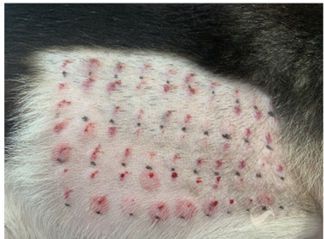
Fig. 2. Intradermal skin testing at the 15 minute postinjection reading time. The fourth and fifth wheals on the bottom row have the largest and most erythematous. These correspond to house dust mite allergens.
图 2.在注射后 15 分钟的皮肤点刺测试中。最下面一行中的第四个和第五个风团面积最大且红肿最为明显。这些风团对应的是屋尘螨过敏原。
Fig. 3. Microscope image at 1000xmagnification. Staphylococcus pseudintermedius bacteria are present both intracellularly and extracellularly. (Photo courtesy of Texas A&M University Veterinary Dermatology Teaching Collection.)
图3。放大1000倍的显微镜图像。假中间葡萄球菌存在于细胞内和细胞外。(图片来源:Texas A&M University Veterinary Dermatology Teaching Collection)
Fig. 4. A 8 year old mixed breed dog with chronic superficial and deep pyoderma. There are furuncles and draining tracts on the distal limbs. (Photo Christina Gentry.)
图4。一只8岁的混血犬患有慢性浅表和深部脓皮病。远端肢体有疖病和瘘道。(克里斯蒂娜·金特里摄) | 


 |Archiver|手机版|小黑屋|宠医帮
( 京ICP备2022012070号-2 )
|Archiver|手机版|小黑屋|宠医帮
( 京ICP备2022012070号-2 ) 




 发表于 2026-3-24 09:02:10

 收藏
收藏 转播
转播 分享
分享 淘帖
淘帖



 ?
?